
 physics
Similar presentations:





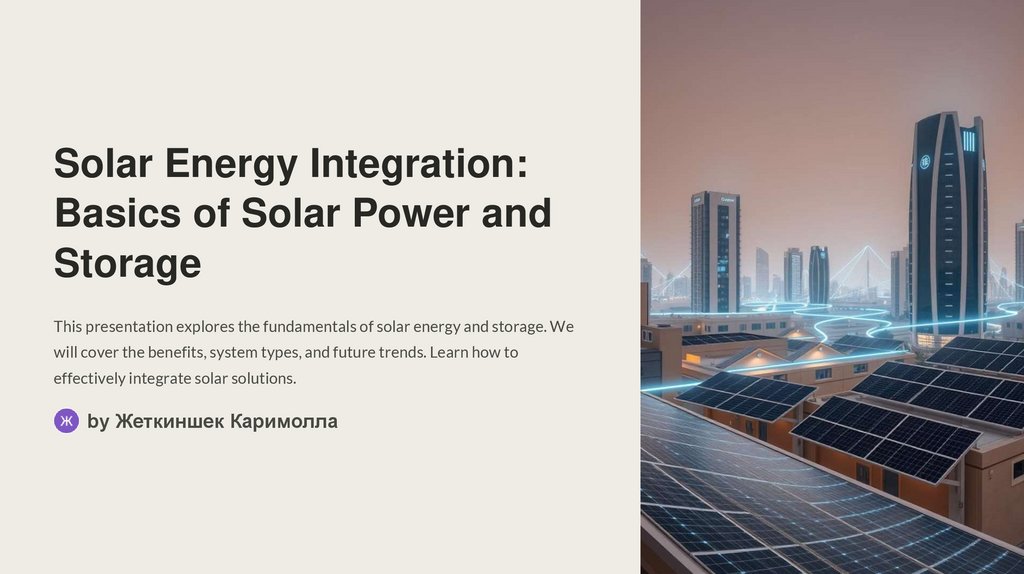
Solar Energy Integration: Basics of Solar Power and Storage
1.
Solar Energy Integration:Basics of Solar Power and
Storage
This presentation explores the fundamentals of solar energy and storage. We
will cover the benefits, system types, and future trends. Learn how to
effectively integrate solar solutions.
by Жеткиншек Каримолла
2.
What is Solar Energy and How Does it Work?Photovoltaic Effect
Inverters
Sunlight Absorption
Solar panels use photovoltaic cells. These
Inverters change the DC electricity to
When sunlight hits, electrons are freed.
cells convert sunlight directly into
AC. AC electricity is used in homes and
This creates an electric current within
electricity.
businesses.
the cells.
3.
B enefits of Us ing S olar E nergy1
Renewable Res ource
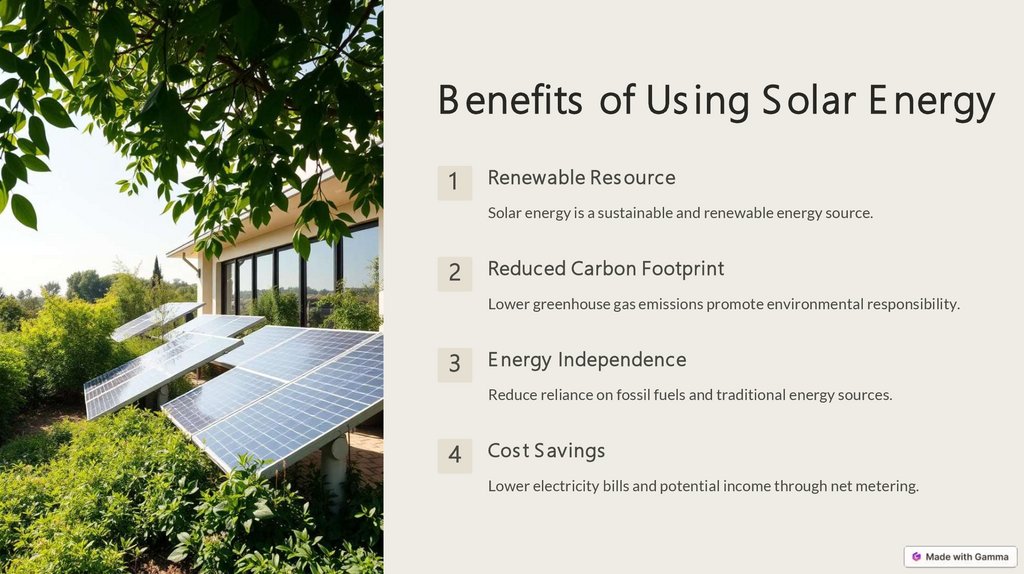
Solar energy is a sustainable and renewable energy source.
2
Reduced Carbon Footprint
Lower greenhouse gas emissions promote environmental responsibility.
3
E nergy Independence
Reduce reliance on fossil fuels and traditional energy sources.
4
Cos t S avings
Lower electricity bills and potential income through net metering.
4.
Types of Solar Panels andEnergy Storage Systems
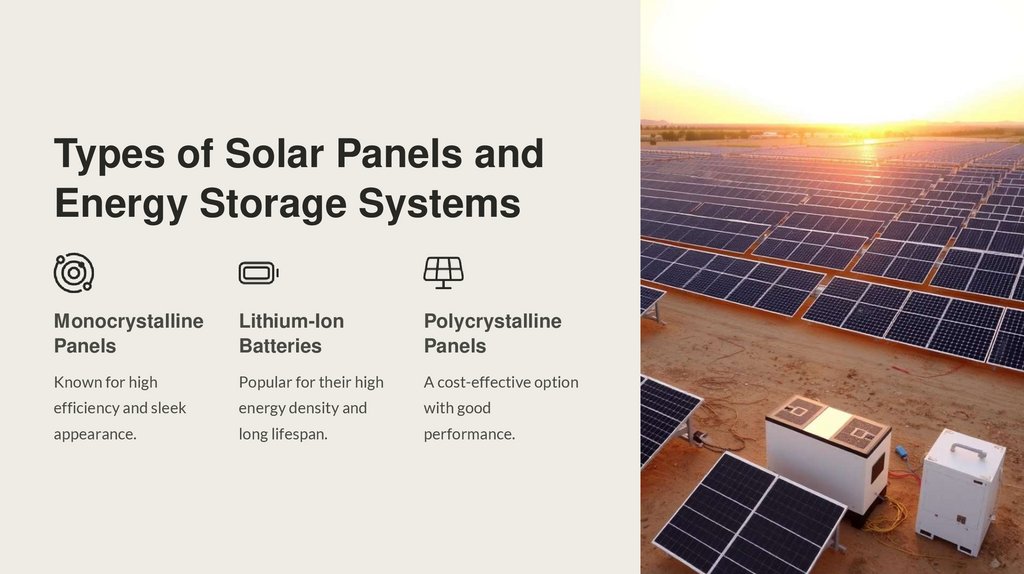
Monocrystalline
Panels
Lithium-Ion
Batteries
Polycrystalline
Panels
Known for high
Popular for their high
A cost-effective option
efficiency and sleek
energy density and
with good
appearance.
long lifespan.
performance.
5.
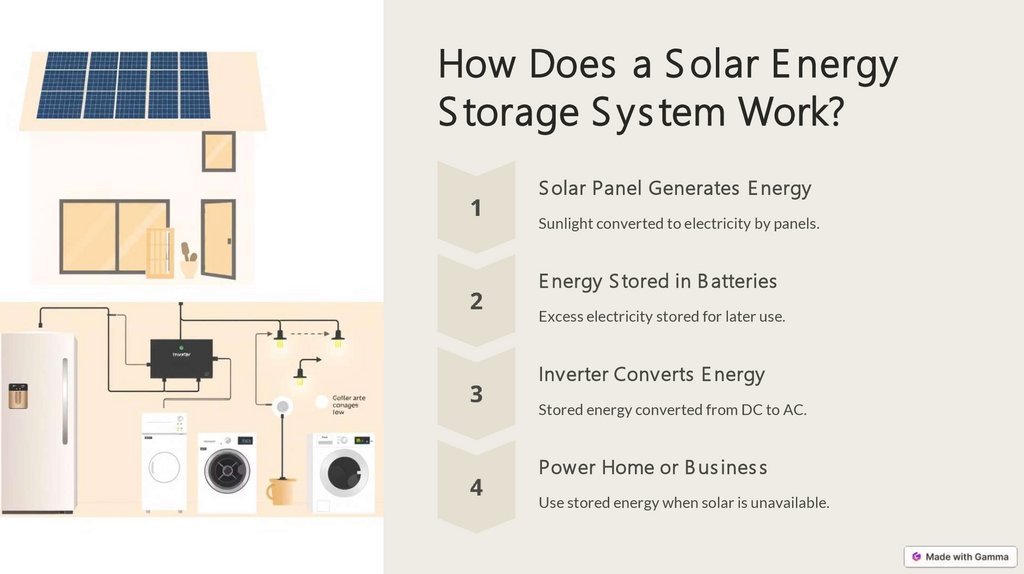
How Does a S olar E nergyS torage S ys tem Work?
S olar Panel Generates E nergy
Sunlight converted to electricity by panels.
E nergy S tored in B atteries
Excess electricity stored for later use.
Inverter Converts E nergy
Stored energy converted from DC to AC.
Power Home or B us ines s
Use stored energy when solar is unavailable.
6.
Factors to Consider WhenChoosing a Solar Energy Storage
System
Energy Needs
Assess your daily energy consumption.
Battery Capacity
Choose adequate storage capacity.
System Cost
Balance upfront costs with long-term savings.
Warranty and Support
Ensure reliable product support.
7.
Examples of S ucces s fulS olar E nergy and S torage
Integration
1
Res idential Homes
Powering homes during peak hours and outages.
2
Commercial B uildings
Reducing grid dependence and energy costs.
3
Remote Communities
Providing electricity to off-grid locations.
8.
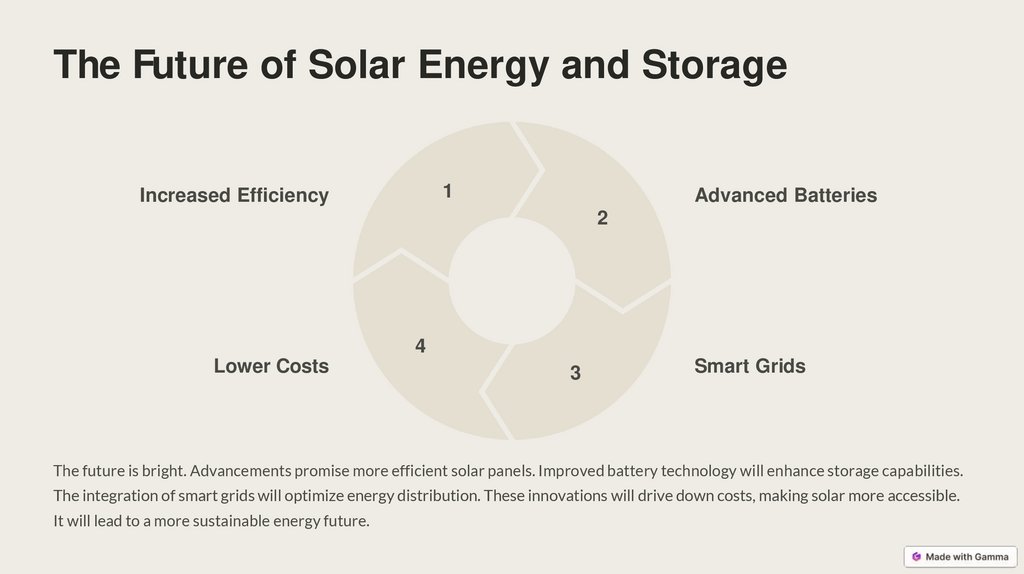
The Future of Solar Energy and Storage1
Increased Efficiency
Advanced Batteries
2
4
Lower Costs
3
Smart Grids
The future is bright. Advancements promise more efficient solar panels. Improved battery technology will enhance storage capabilities.
The integration of smart grids will optimize energy distribution. These innovations will drive down costs, making solar more accessible.
It will lead to a more sustainable energy future.