



 ecology
Similar presentations:







The Hungarian system of nature conservation areas
1.
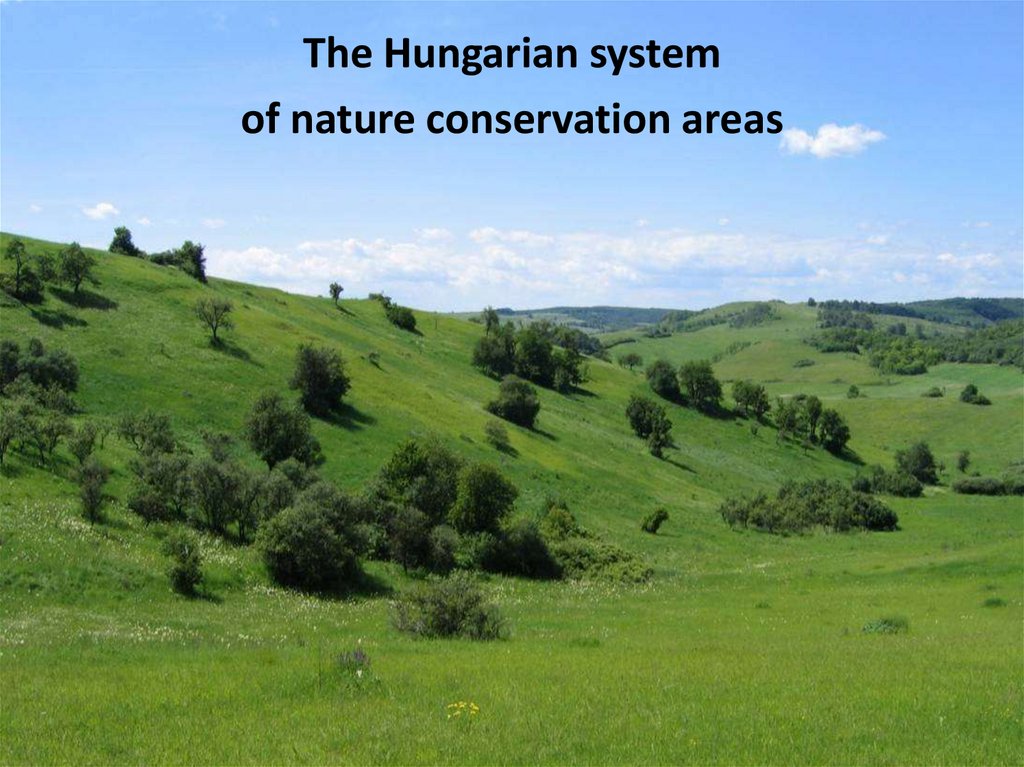
The Hungarian systemof nature conservation areas
2.
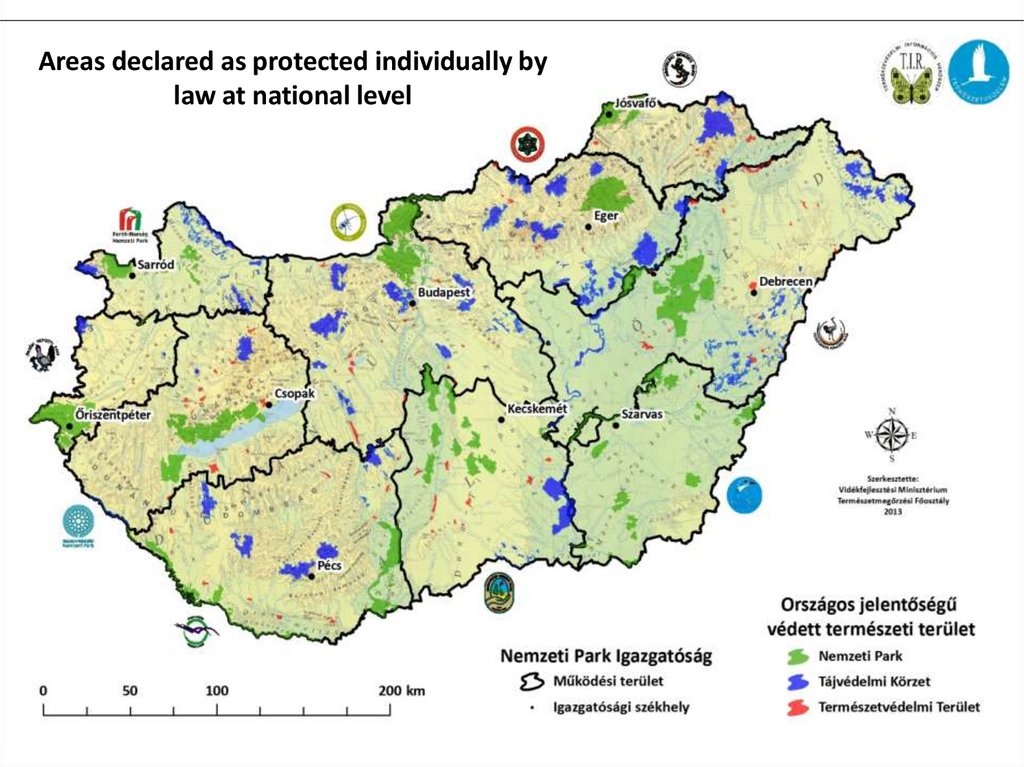
Areas declared as protectedindividually by law at national level
Protection status declared by ministerial
decrees. Sum area in HU cca. 850,000 ha.
Types in HU:
• national park (eg., Hortobágy ‚puszta’)
• landscape protection area (eg., Gödöllő Hills)
• nature conservation area (eg., Royal Castle
Park in Gödöllő)
• natural monument (eg., exact beehive rocks)
3.
National park (IUCN cat. II)• An area for conservation purposes, created and protected by
national governments. A symbol of national pride.
• One or several ecosystems not materially altered by human
exploitation and occupation, where plant and animal species,
geomorphological sites and habitats are of special scientific,
educational, and recreational interest or which contain a natural
landscape of great beauty; minimum 1,000 ha;
• Highest competent authority of the country has taken steps to
prevent or eliminate exploitation or occupation as soon as
possible in the whole area and to effectively enforce the respect
of ecological, geomorphological, or aesthetic features which have
led to its establishment; and
• Visitors are allowed to enter, under special conditions, for
inspirational, educative, cultural, and recreative purposes.
4.
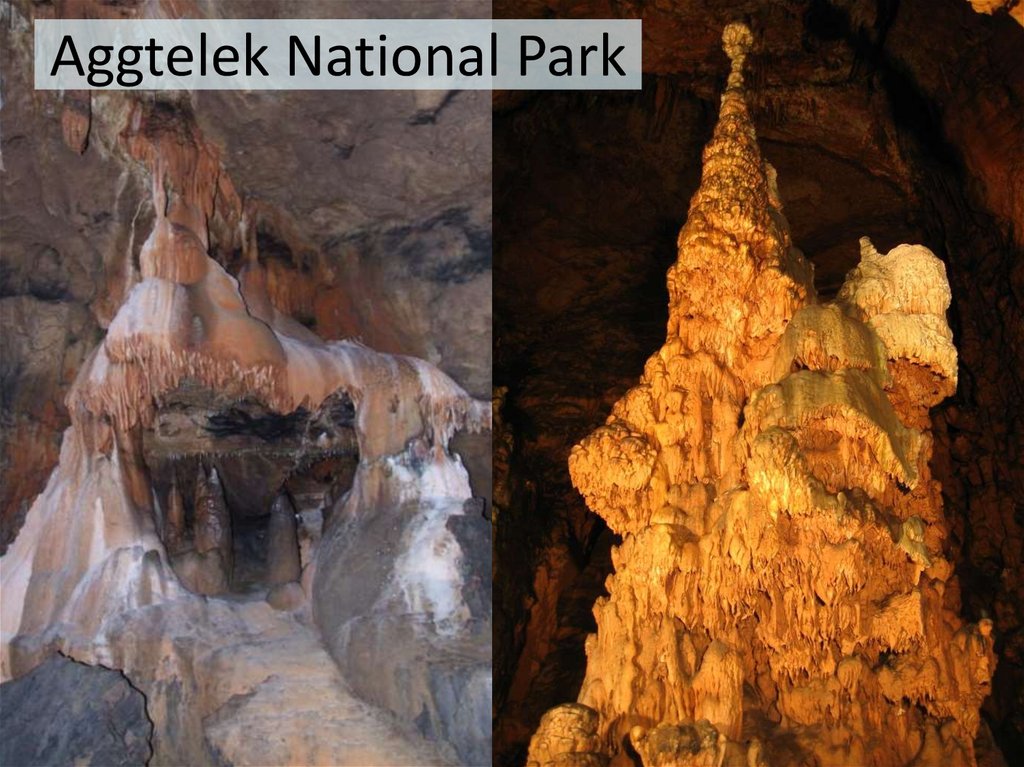
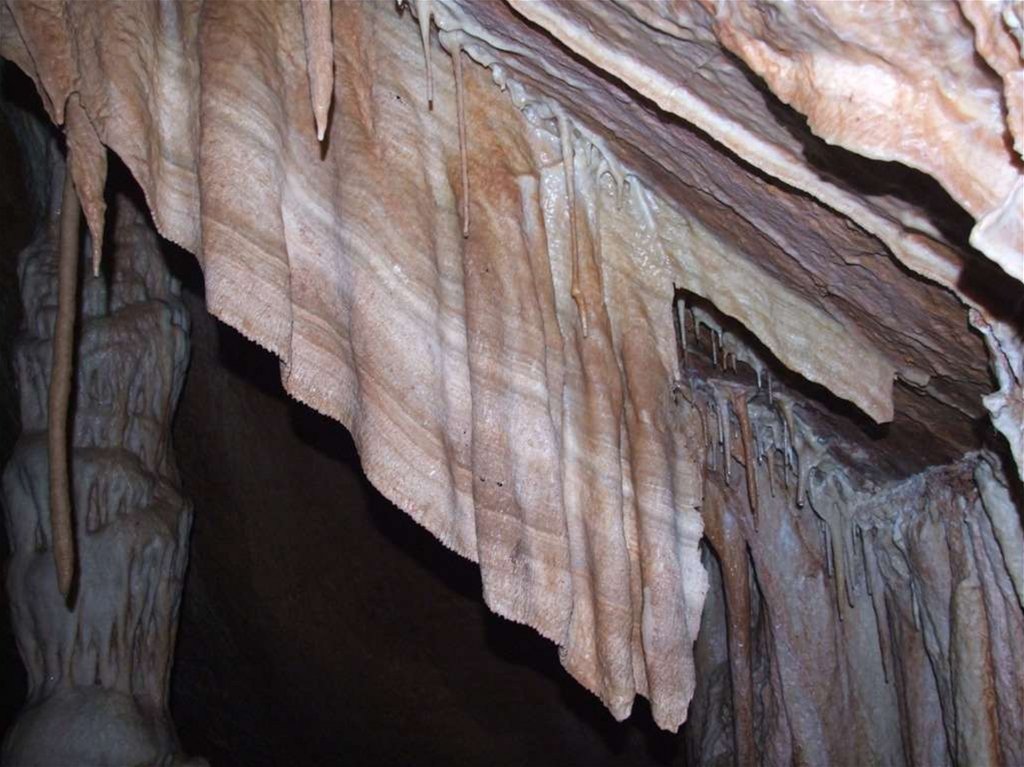
Aggtelek National Park5.
6.
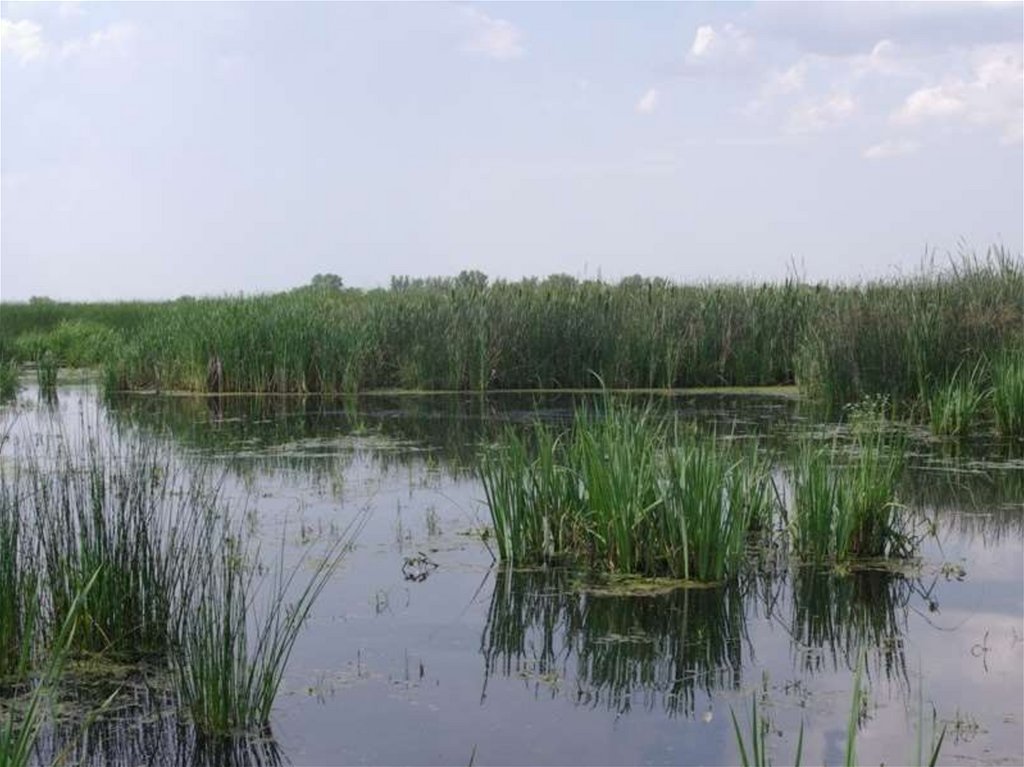
Körös-Maros National Park7.
8.
9.
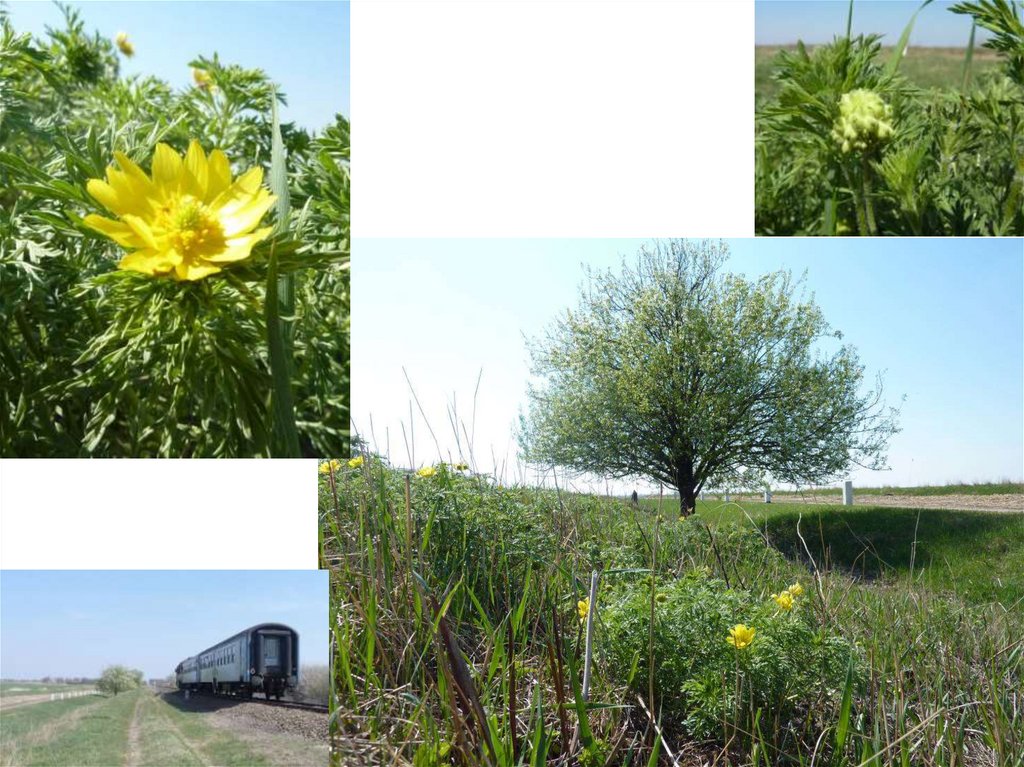
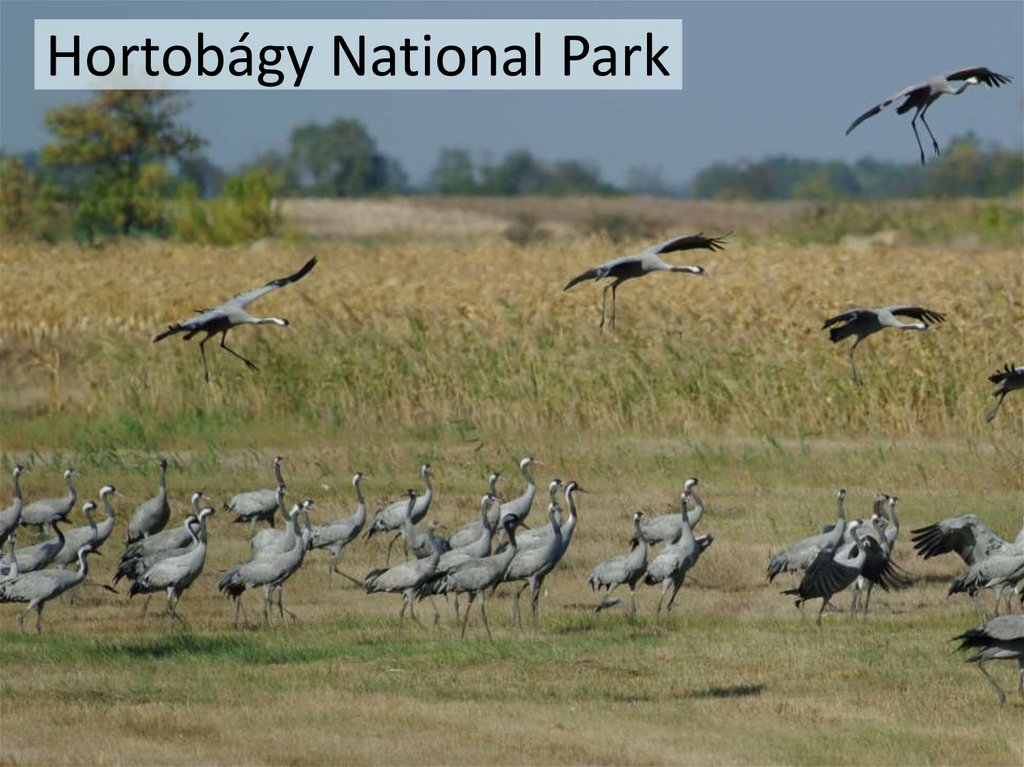
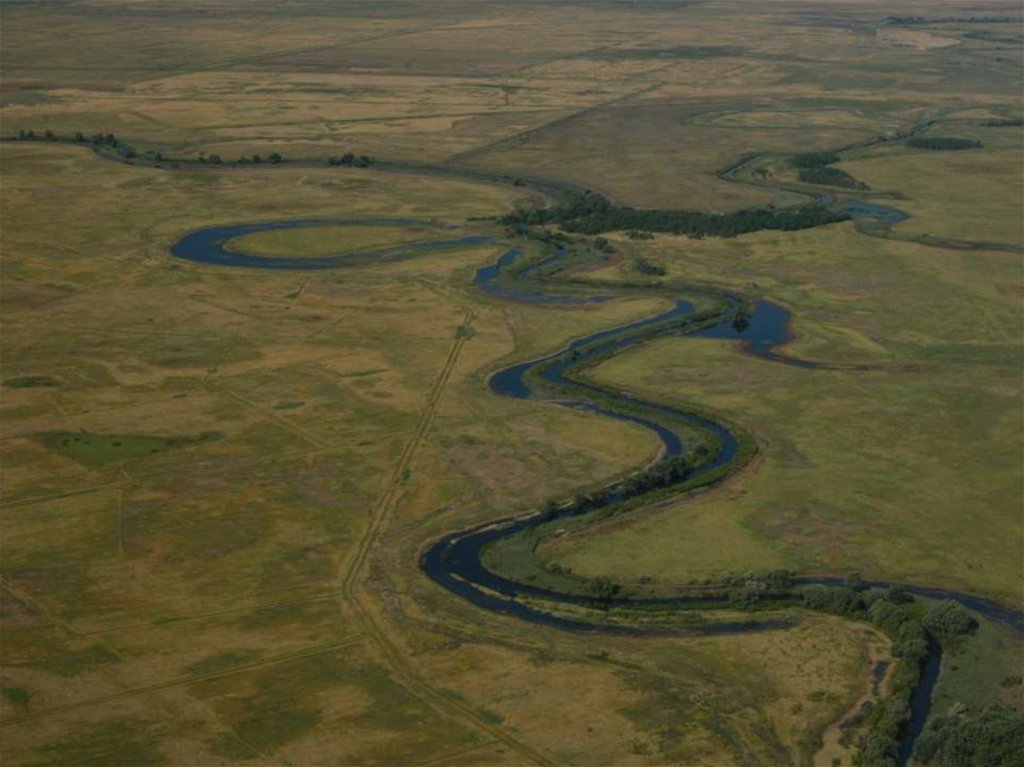
Hortobágy National Park10.
11.
12.
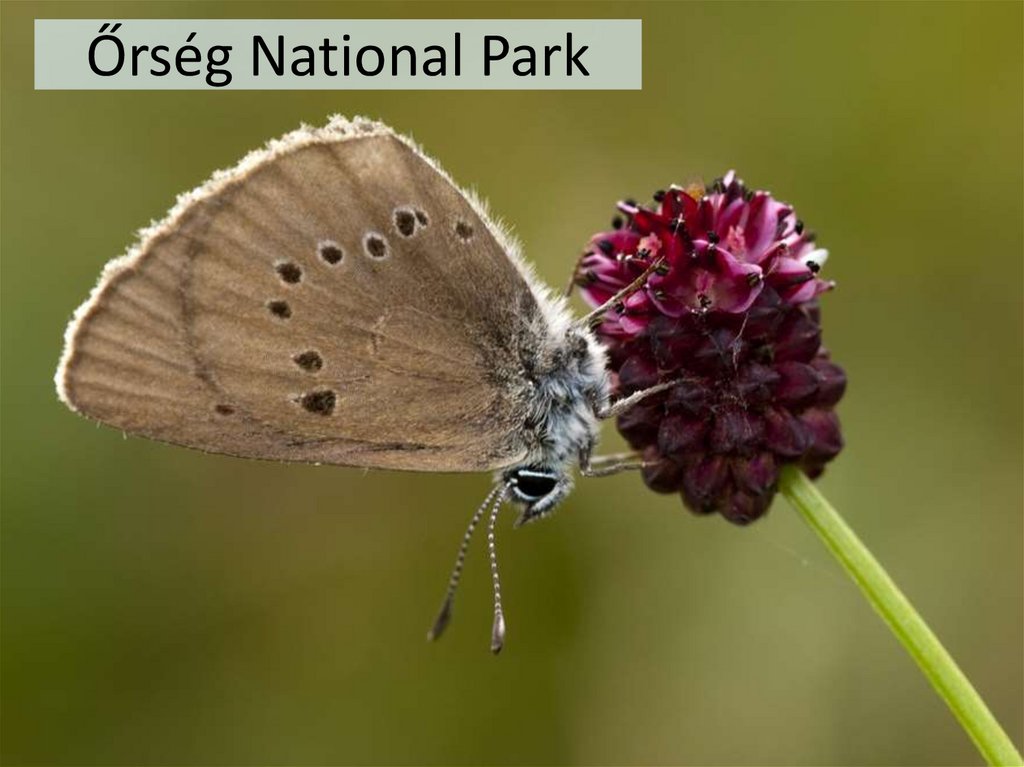
Őrség National Park13.
14.
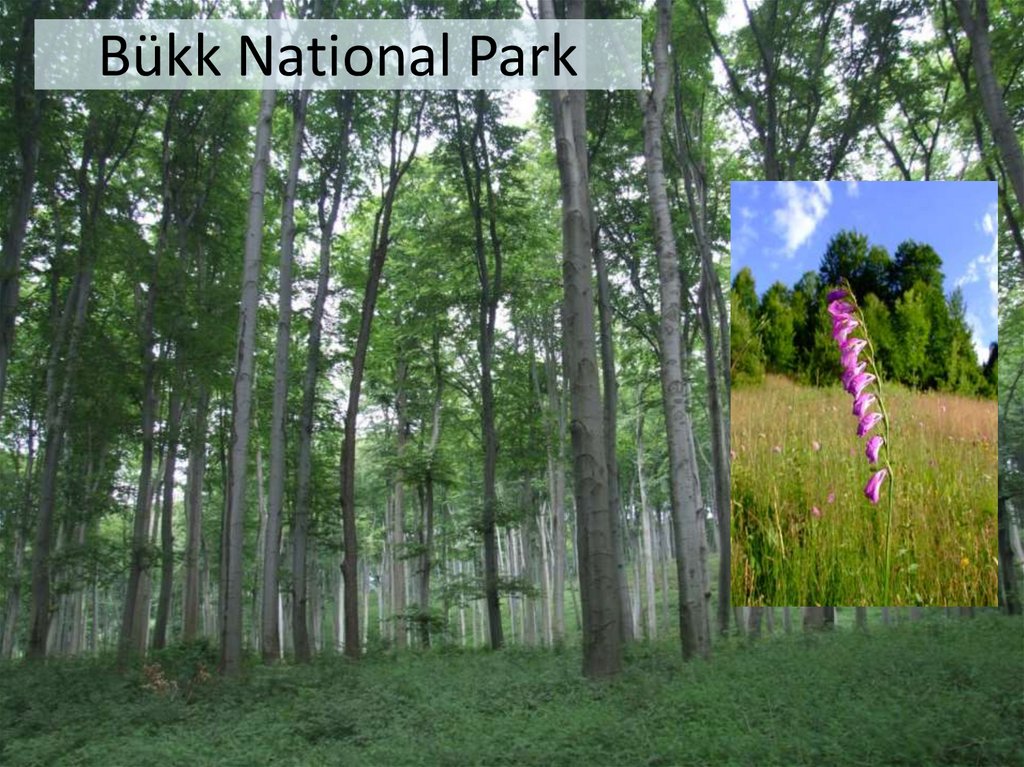
Bükk National Park15.
16.
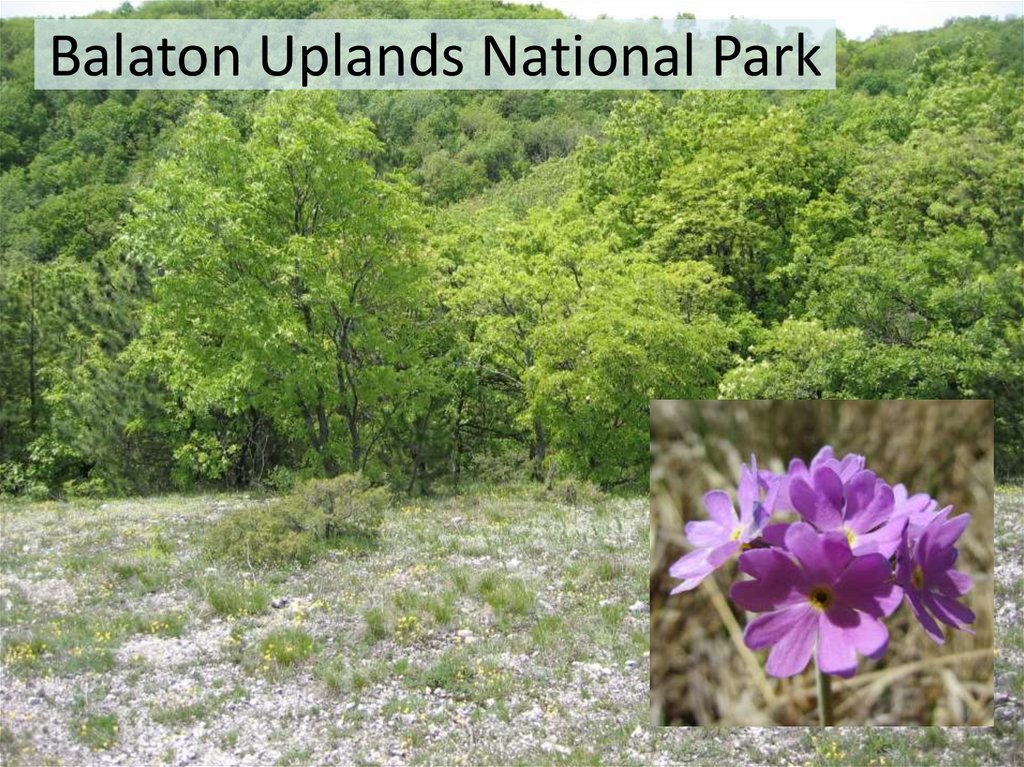
Balaton Uplands National Park17.
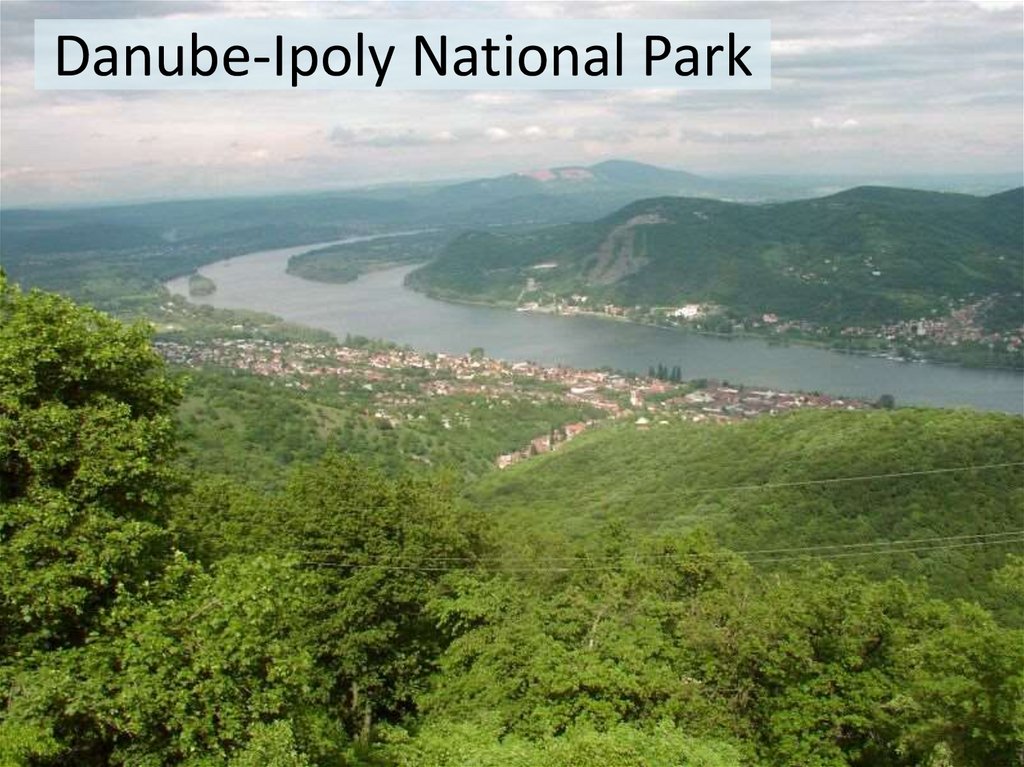
Danube-Ipoly National Park18.
19.
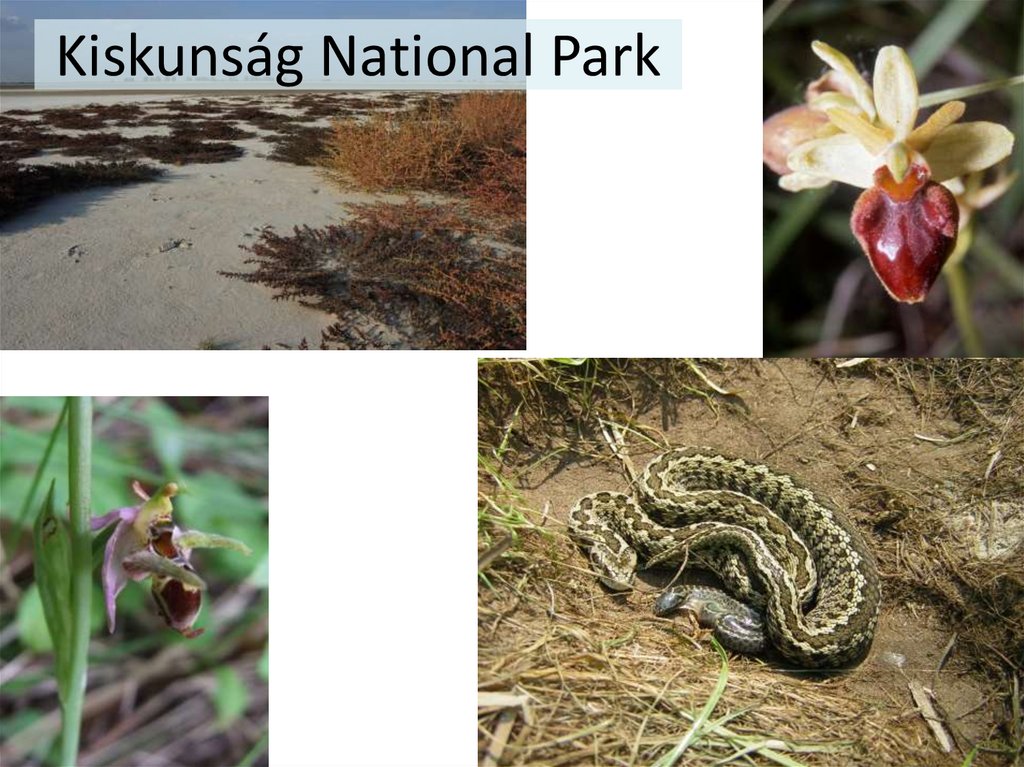
Kiskunság National Park20.
21.
22.
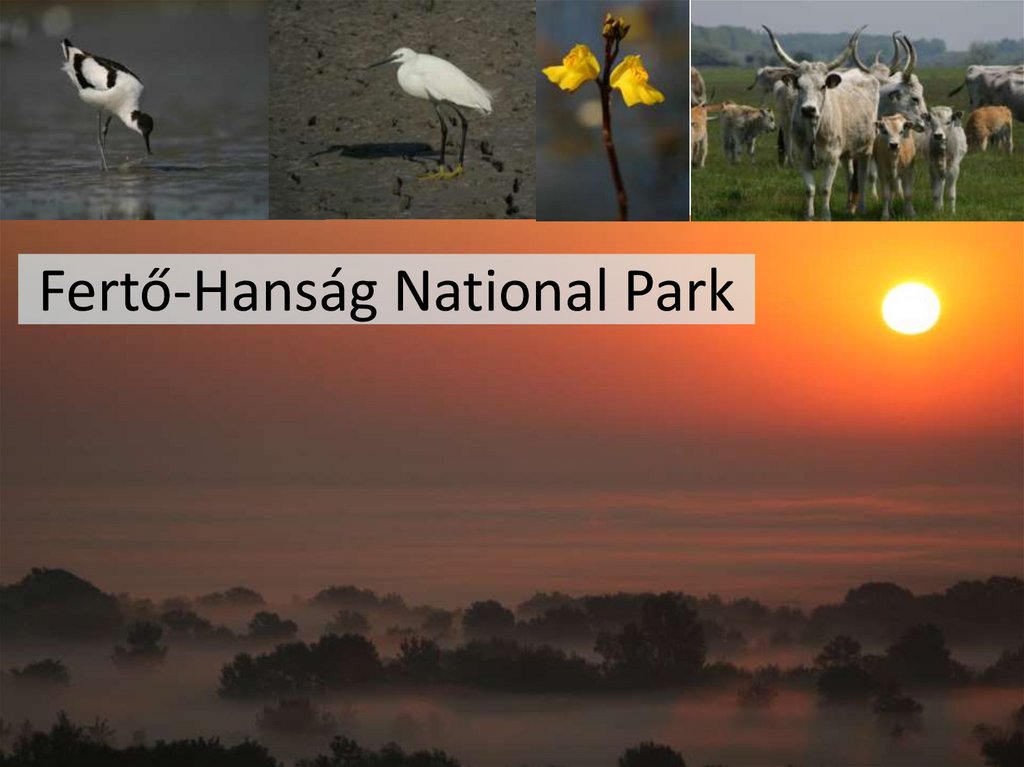
Fertő-Hanság National Park23.
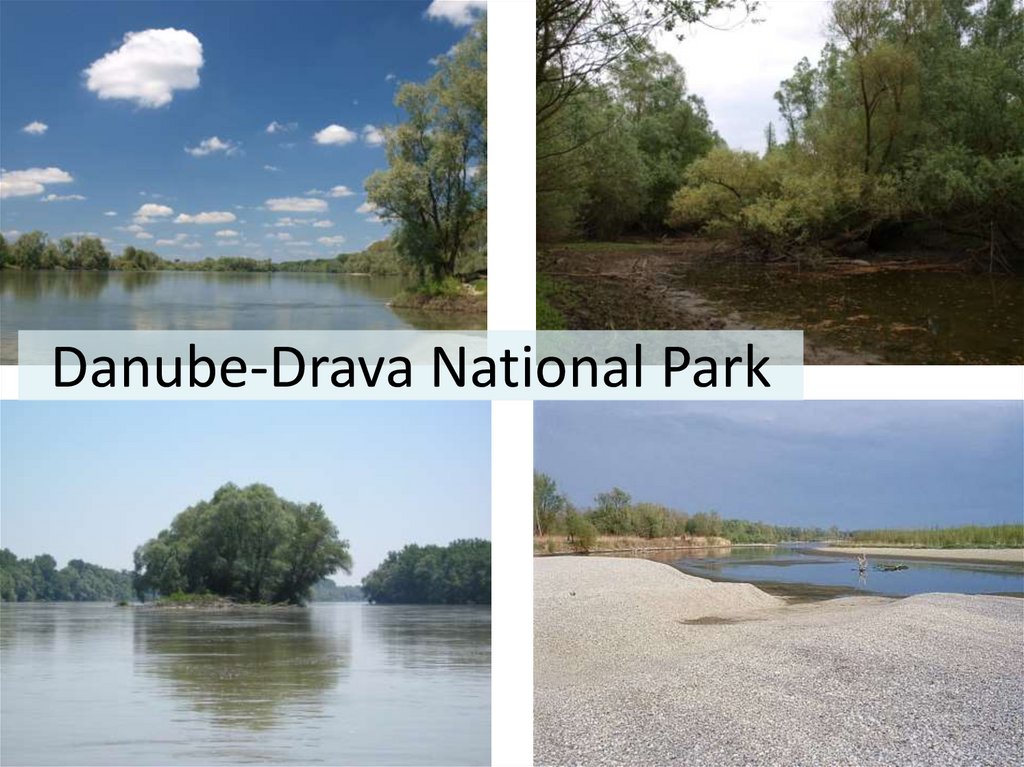
Danube-Drava National Park24.
Landscape protection areaa characteristic area, rich in natural and landscape values
relatively big (cca. 200 ha to 25,000 ha),
coherent (one big patch usually)
a distinctive character (from aspects of aesthetics, cultural,
and natural) due to man+nature interactions
• 39 in HU
25.
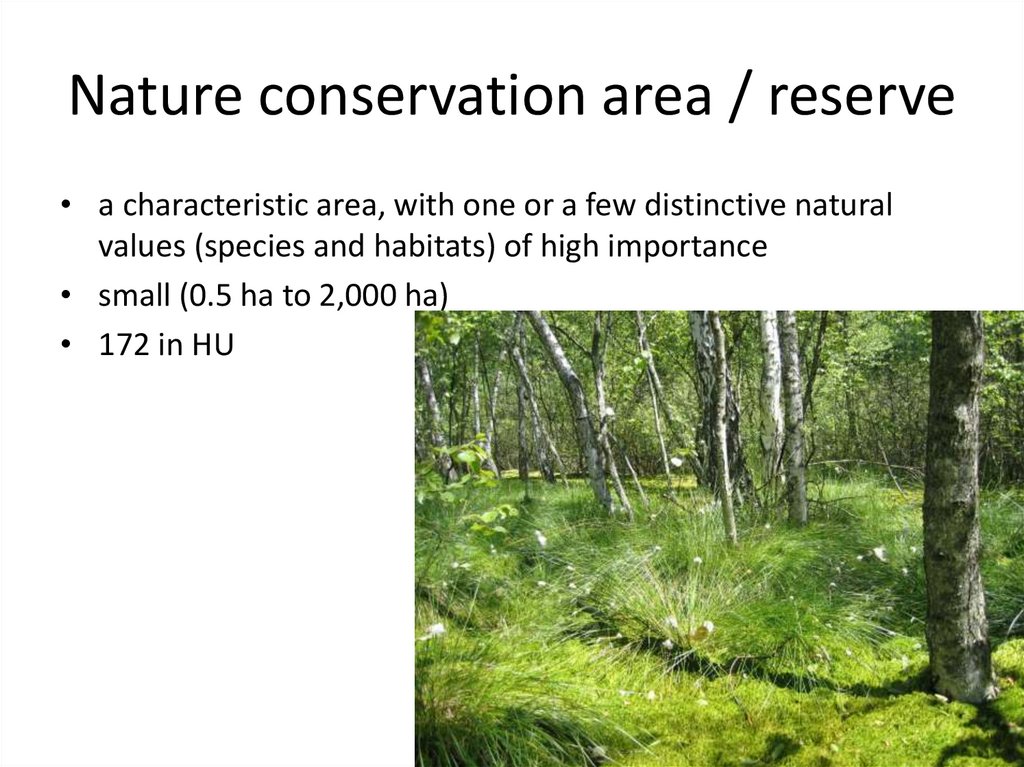
Nature conservation area / reserve• a characteristic area, with one or a few distinctive natural
values (species and habitats) of high importance
• small (0.5 ha to 2,000 ha)
• 172 in HU
26.
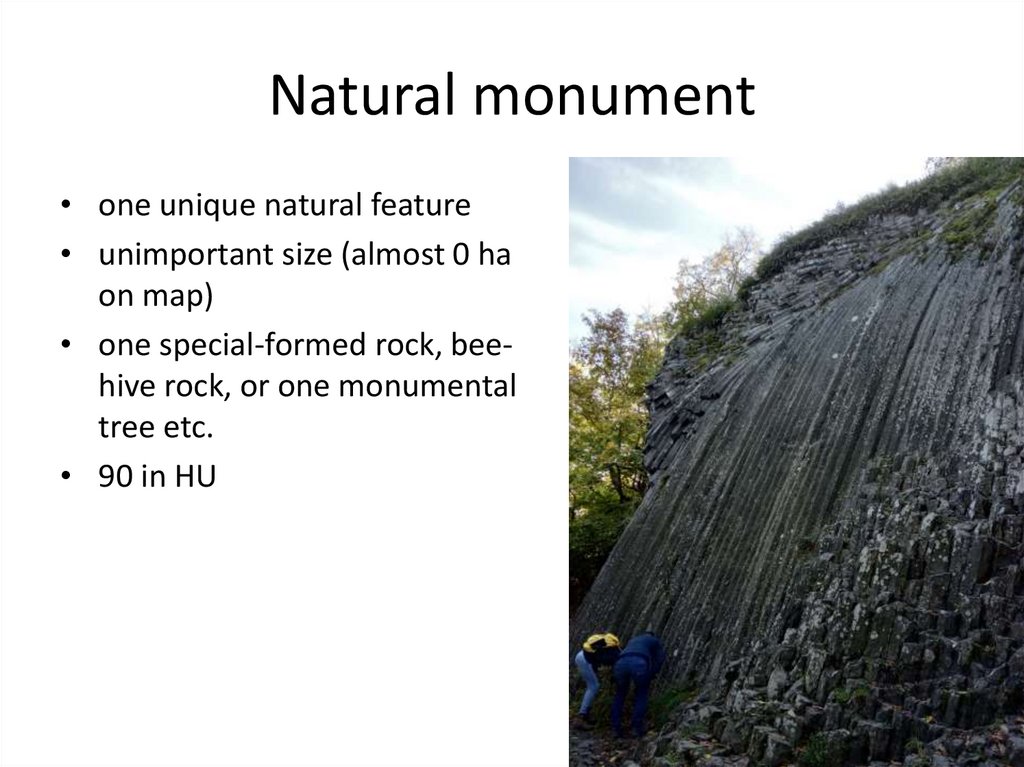
Natural monument• one unique natural feature
• unimportant size (almost 0 ha
on map)
• one special-formed rock, beehive rock, or one monumental
tree etc.
• 90 in HU
27.
Areas declared as protected individually bylaw at national level
28.
29.
• Strictly protected area = a part of a NP, LPA, orNCA, which needs special measures /
strategies, and ban on entering (visiting only
allowed on designated tourist routes)
• Anyone may initiate the procedure to give
legal protection to a certain area.
30.
Areas declared as protected by thegeneral force of law (ie., ex lege) at
national level
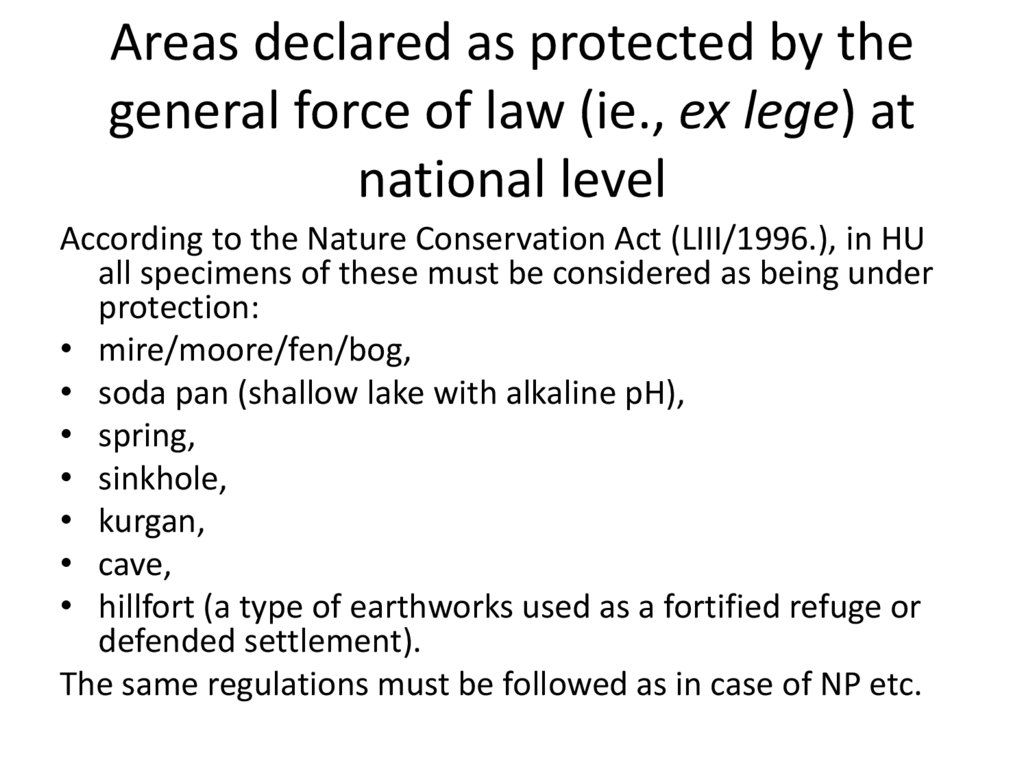
According to the Nature Conservation Act (LIII/1996.), in HU
all specimens of these must be considered as being under
protection:
• mire/moore/fen/bog,
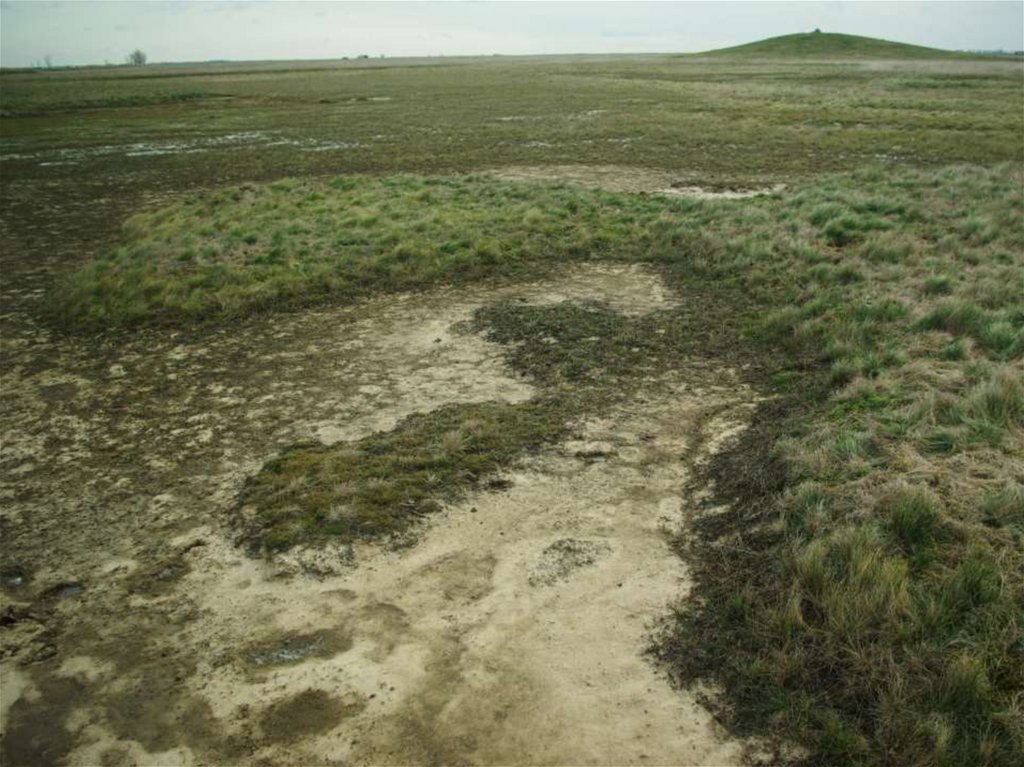
• soda pan (shallow lake with alkaline pH),
• spring,
• sinkhole,
• kurgan,
• cave,
• hillfort (a type of earthworks used as a fortified refuge or
defended settlement).
The same regulations must be followed as in case of NP etc.
31.
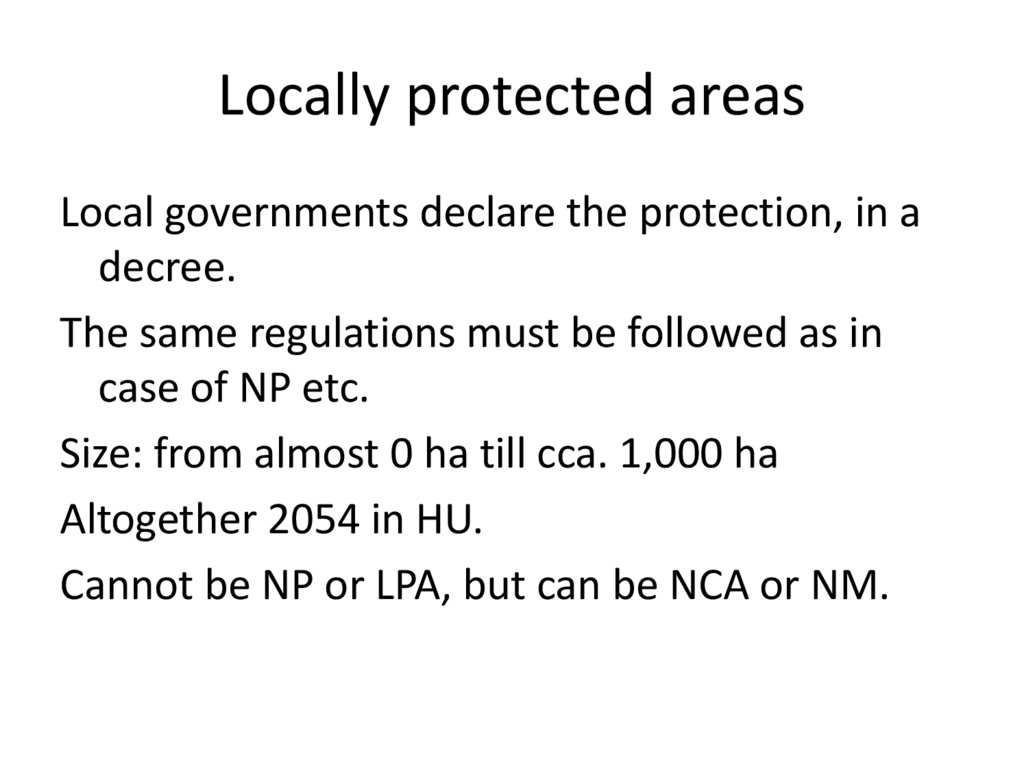
Locally protected areasLocal governments declare the protection, in a
decree.
The same regulations must be followed as in
case of NP etc.
Size: from almost 0 ha till cca. 1,000 ha
Altogether 2054 in HU.
Cannot be NP or LPA, but can be NCA or NM.
32.
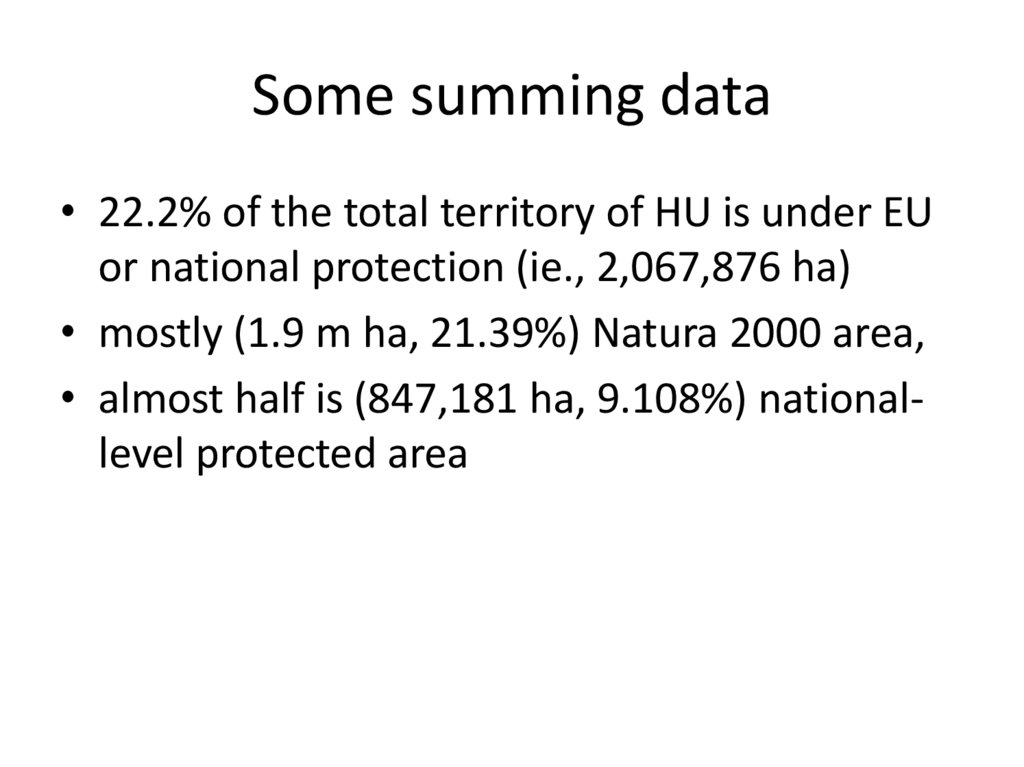
Some summing data• 22.2% of the total territory of HU is under EU
or national protection (ie., 2,067,876 ha)
• mostly (1.9 m ha, 21.39%) Natura 2000 area,
• almost half is (847,181 ha, 9.108%) nationallevel protected area
33.
Areas with international declaration• Ramsar sites
• European Diploma of Protected Areas
• Biosphere reserve
• Geopark
• World heritage site
• Dark sky park
34.
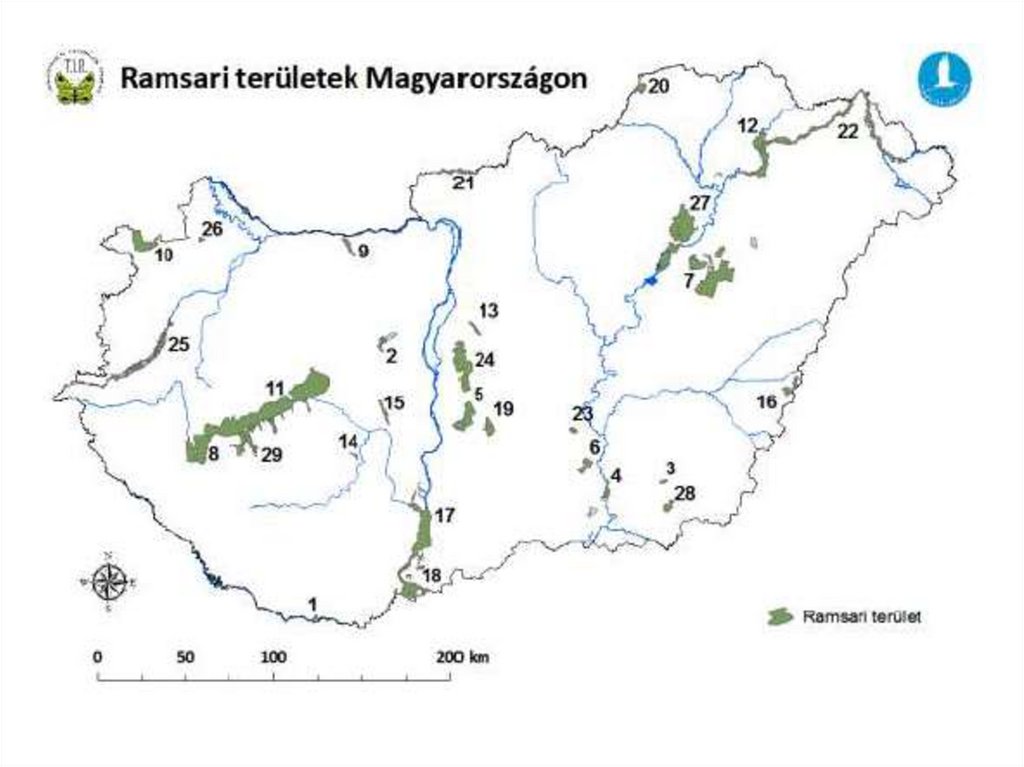
Ramsar sites29 in HU, sum 243,000 ha
2.HABIT-CHANGE Partner Meeting
This project is implemented through the CENTRAL
Lake Neusiedl / Fertö-Hánsag National Park, Illmitz
EUROPE Programme co-financed by the ERDF
35.
36.
European Diploma of Protected AreasEstablished in 1965, is a diploma awarded by the Council of
Europe to protected areas (natural or semi-natural) of
exceptional European conservational interest.
It is awarded for a five-year period at a time and is renewable.
Over 60 areas in 23 states have received the award so far.
37.
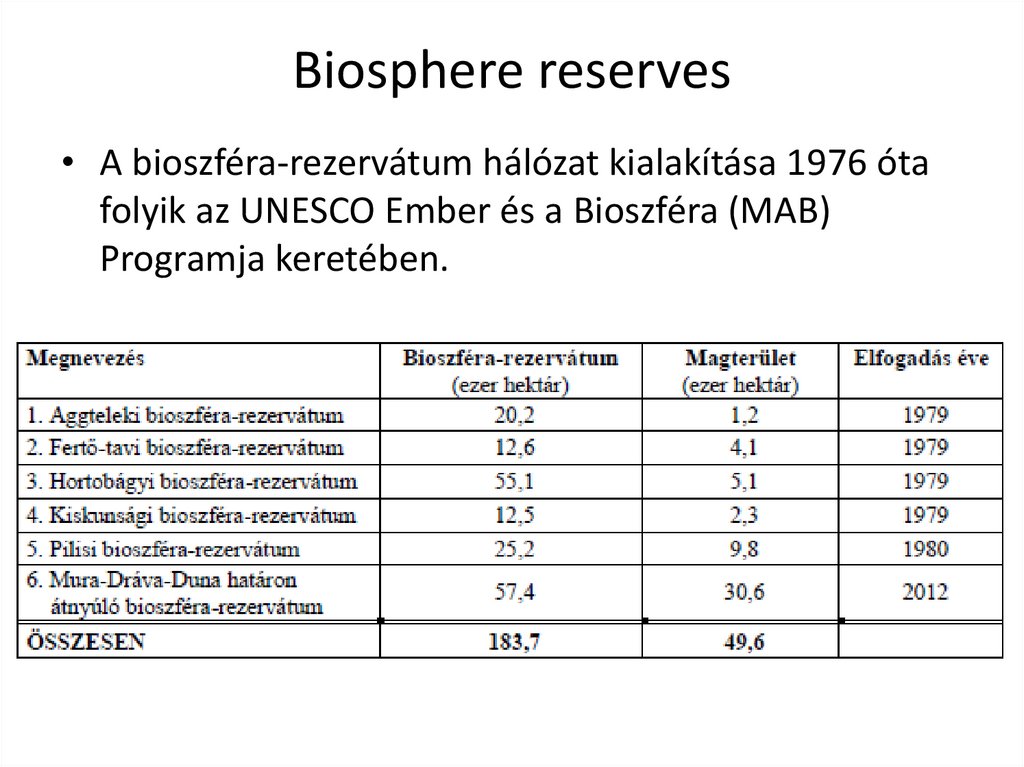
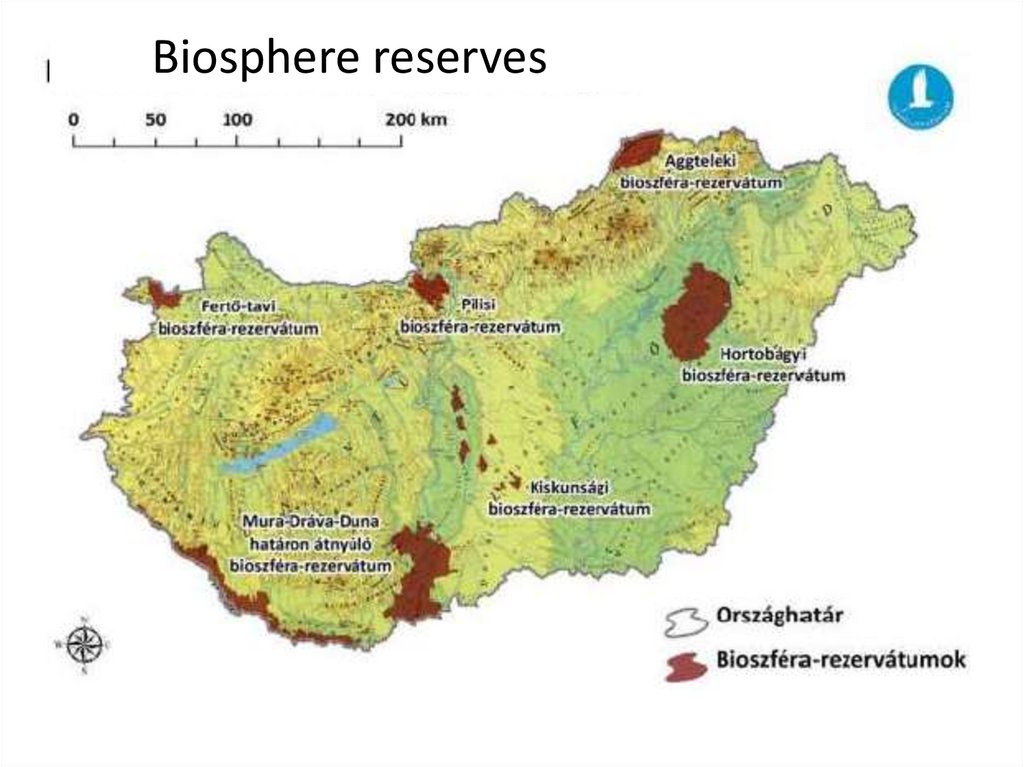
Biosphere reserves• A bioszféra-rezervátum hálózat kialakítása 1976 óta
folyik az UNESCO Ember és a Bioszféra (MAB)
Programja keretében.
38.
Biosphere reserves39.
Park Ranger ServiceState park rangers are members of the Park Ranger Service
at the national park directorates
public servants
task is to protect the natural and protected natural areas and
values and to preserve archaeological sites and findings and to
prevent their damage.
Local autohorities are allowed to preserve protected nature
conservation areas by municipality park rangers.
Rangers have the right for appropriate actions which is
compulsory for them at the same time;
official persons, equipped with small arms and other technical
devices and protected by stronger legal defence.
cca. 250 rangers working for the national park directorates.
Consequently, the operational field of one ranger currently
covers 372 km² in average, 34 km² of which is protected natural
area and 79 km² Natura 2000 area
40.
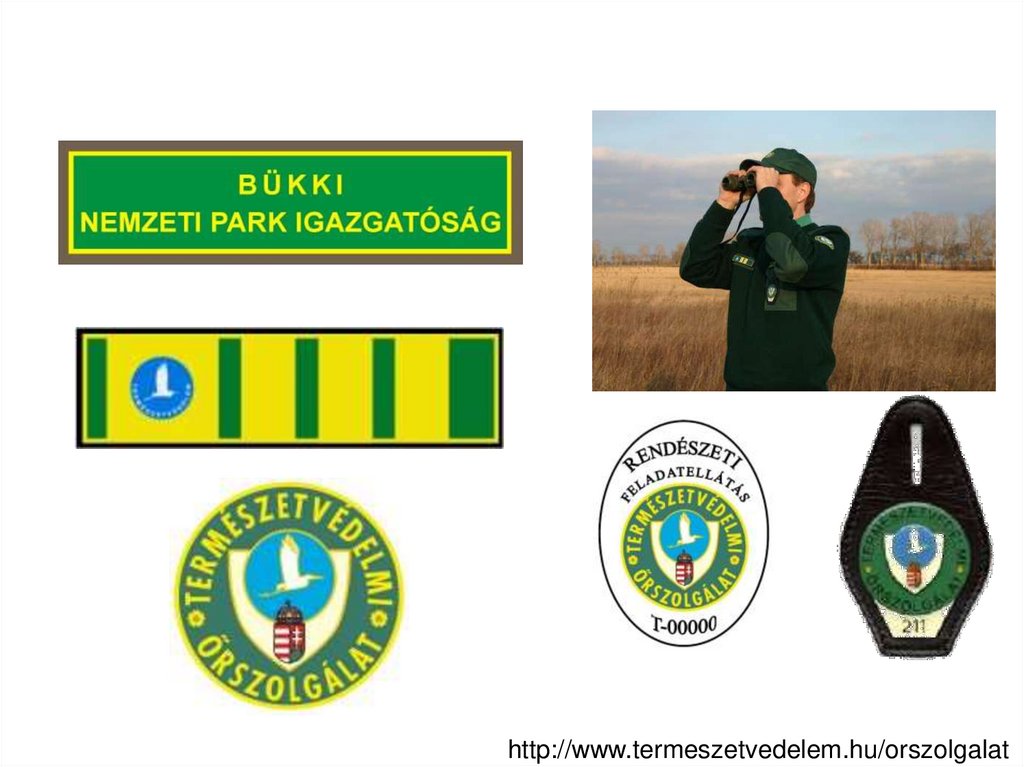
http://www.termeszetvedelem.hu/orszolgalat41.
Civilian park rangers• Park rangers’ work can be assisted by the
public as civilian park rangers in voluntary
or institutionally organised form.
• currently cca. 700
• International Ranger Federation (IRF)
42.
Legal authorityAt every county-level government agency (ie.,
19 places)
Secondary legal level at the Pest County
Government Agency.
43.
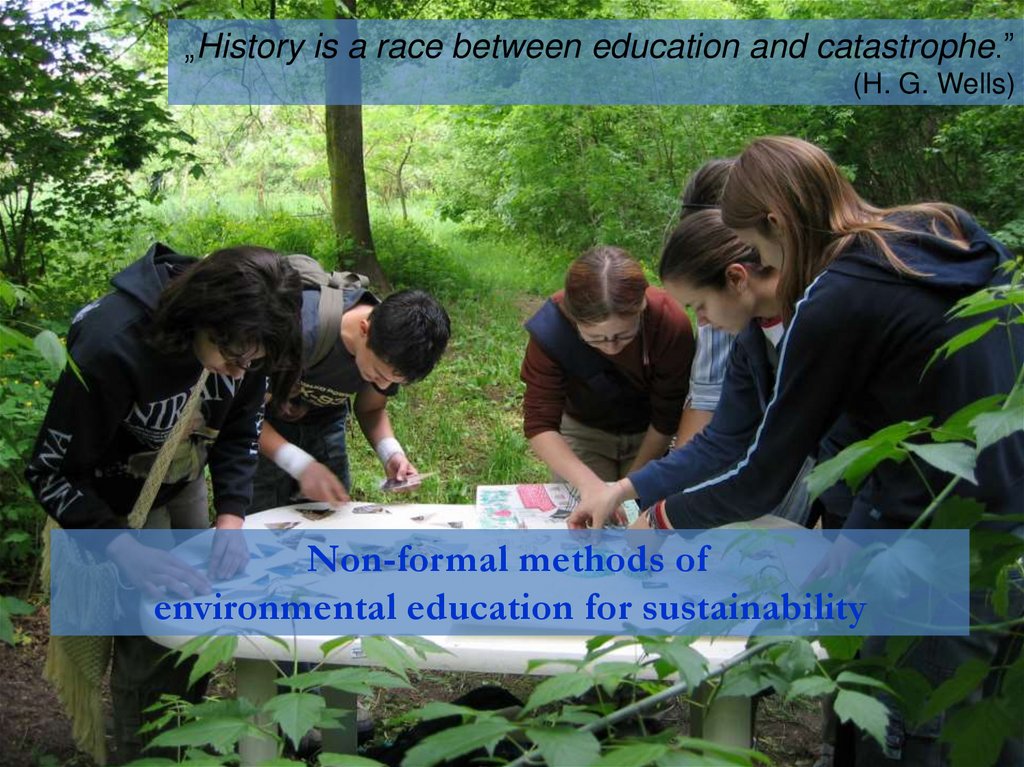
„History is a race between education and catastrophe.”(H. G. Wells)
Non-formal methods of
environmental education for sustainability
44.
Mediums of environmental educationRelationship to a certain aim or theme depends mainly
on view – attitude.
Relationships that make a long-term effect can be used
well:
• Education within the family,
• Formal education (at nursery, prinary/secondary
school, higher education, special education),
• Media as a formal communication channel,
• Informal communication channels (interpersonal
comunication),
• Common actions for wider public,
• Every action showing examples for a certain group of
people.
45.
Role of primary, secondary and highereducation
• The Hungarian National Curricula states that environmental
knowledge has to be integrated into every subject.
• According to this, env. educ. cannot be dealed by a certain
subject – it has to be handled as interdisciplinary.
• Appears as an own subject or facultation in some schools, but
even this cannot satisfy the need to integrate into every
subject.
• The surroundings of education, the schools themselves have to
be converted into an environmentally centered atmosphere.
This is the ecological culture of the institution.
• This needs, among others, education on prevention, waste
minimization, selective collection, energy and water saving,
conservation of built and natural environment etc.
46.
Role of primary, secondary and highereducation 2.
• Attention is needed for giving positive signs about
the aims achieved.
• Messages have to be formed as short and well
understandable to the stakeholders, e.g. with
drawings and humour.
• Work for the aim that environmentally concerned
lifestyle doesn’t seem to be a plus task, but be selfunderstandable.
47.
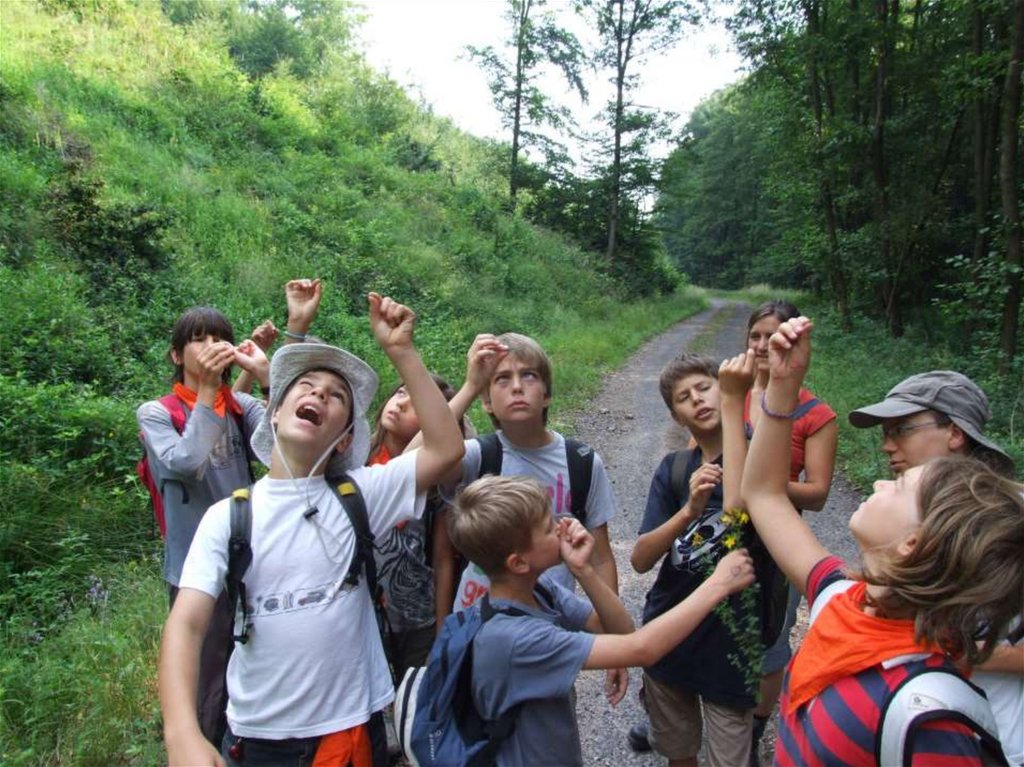
Informal tools of env. educ.Forest schools
• Getting to know natural and cultural values, land use,
possibilities of protection at a certain area,
• Gaining direct experience through observations
made by the students themselves, open-air,
• Living together for a couple of days – communityorganising power, socialization.
• Run by NGOs, forestries, national park directorates,
or enterprises.
• Plenty of programs for thousands of children, plus
shorter tours, excursions.
48.
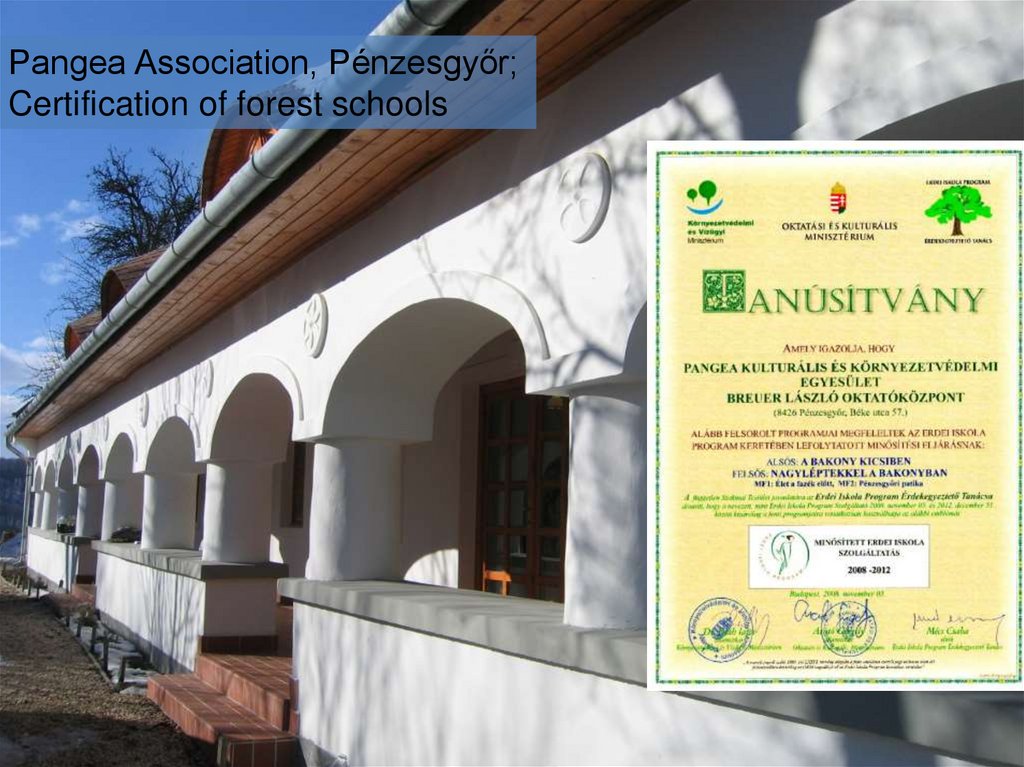
Pangea Association, Pénzesgyőr;Certification of forest schools
49.
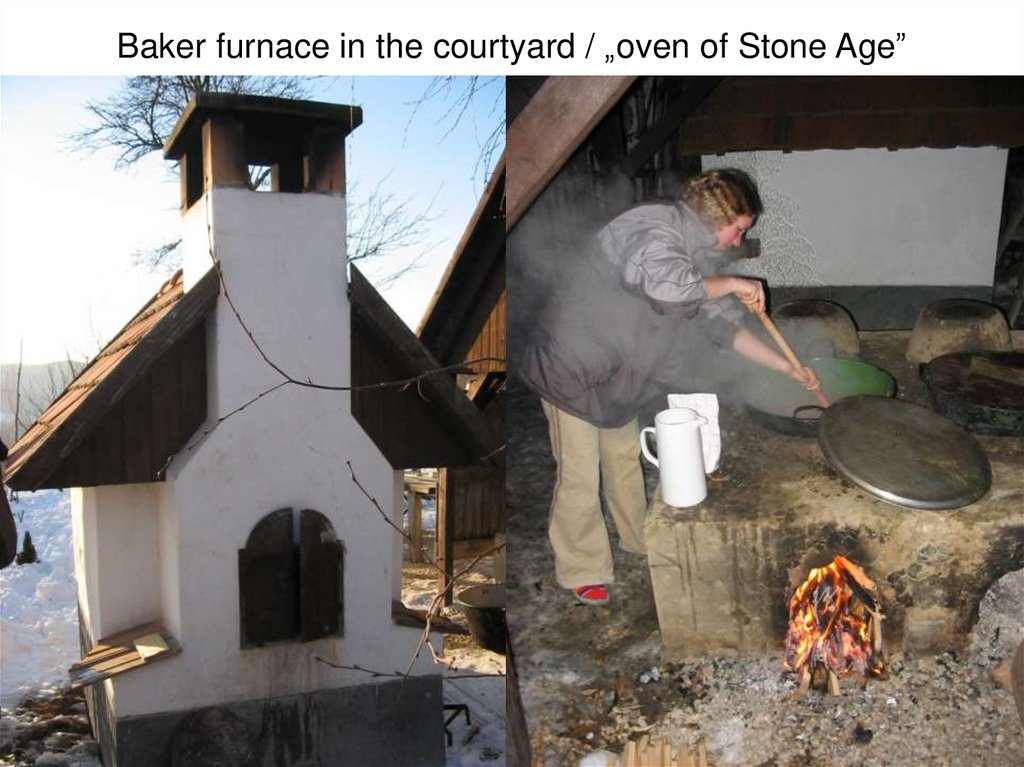
Baker furnace in the courtyard / „oven of Stone Age”50.
51.
52.
53.
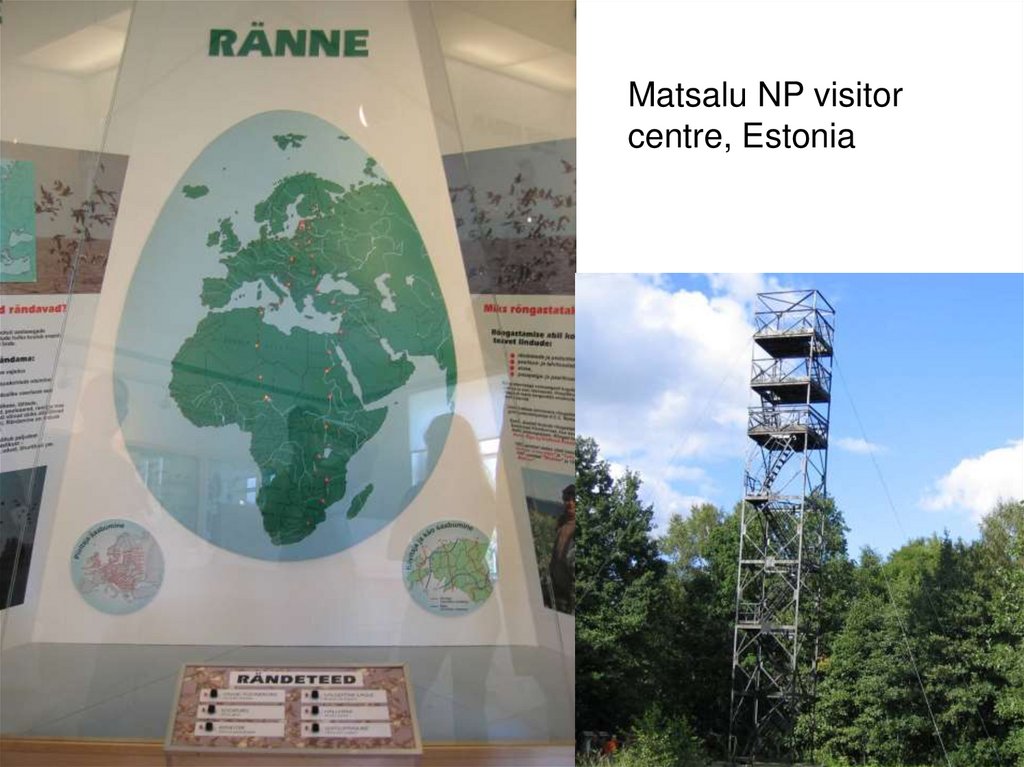
Matsalu NP visitorcentre, Estonia
54.
55.
56.
57.
58.
59.
60.
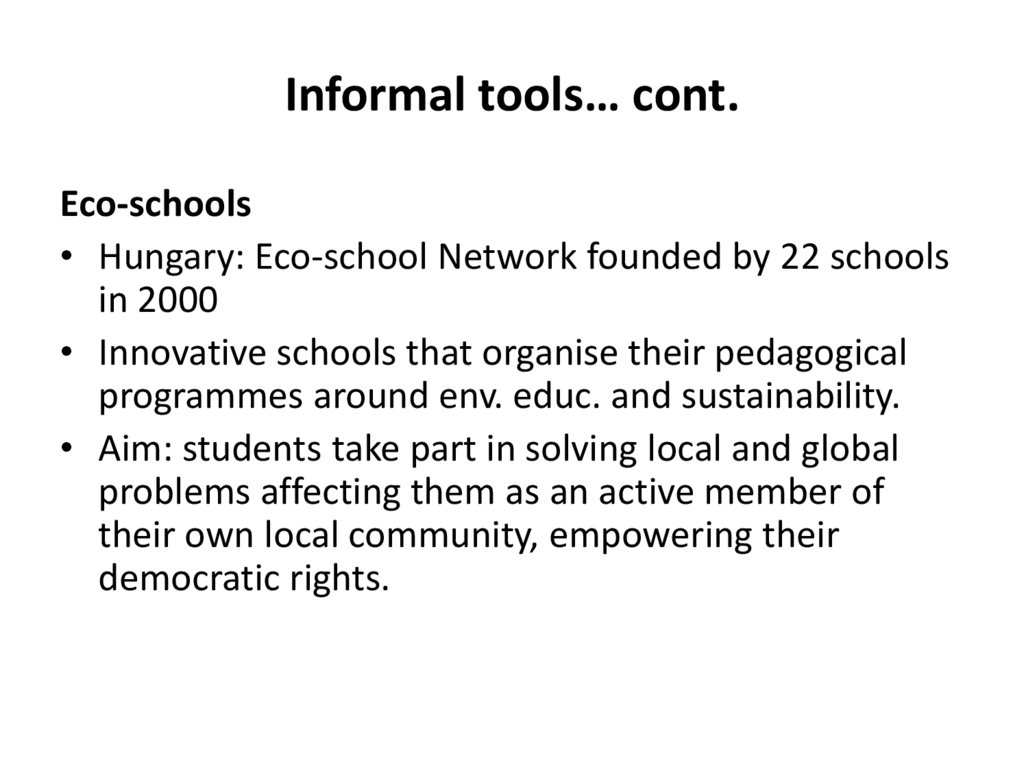
Informal tools… cont.Eco-schools
• Hungary: Eco-school Network founded by 22 schools
in 2000
• Innovative schools that organise their pedagogical
programmes around env. educ. and sustainability.
• Aim: students take part in solving local and global
problems affecting them as an active member of
their own local community, empowering their
democratic rights.
61.
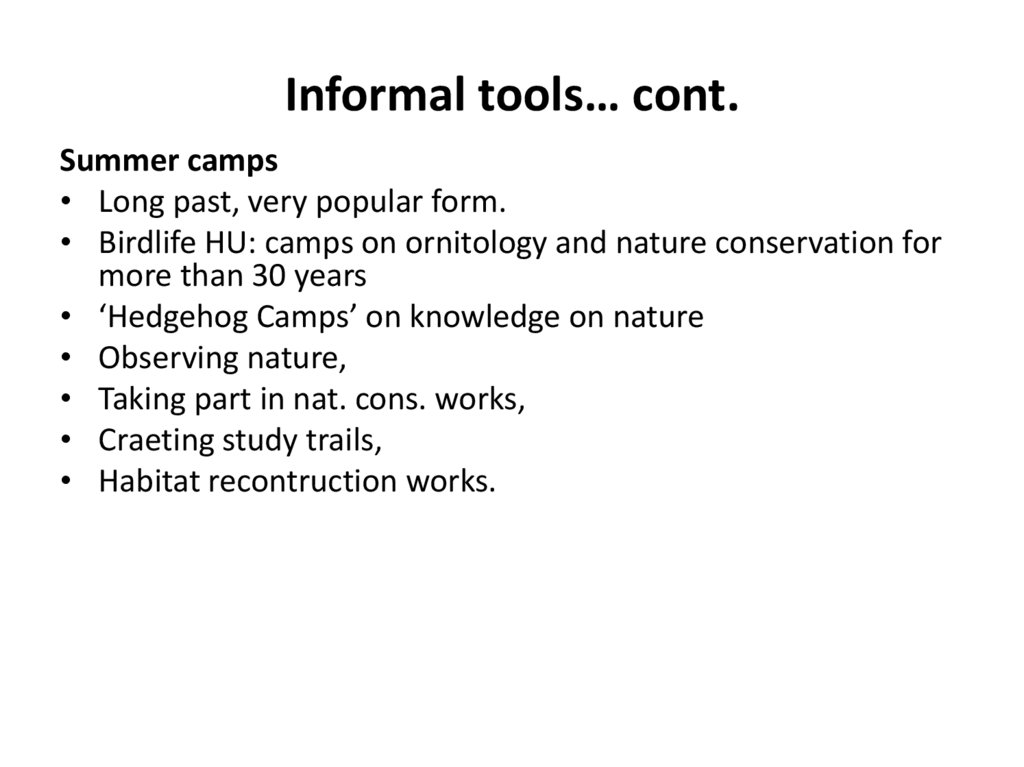
Informal tools… cont.Summer camps
• Long past, very popular form.
• Birdlife HU: camps on ornitology and nature conservation for
more than 30 years
• ‘Hedgehog Camps’ on knowledge on nature
• Observing nature,
• Taking part in nat. cons. works,
• Craeting study trails,
• Habitat recontruction works.
62.
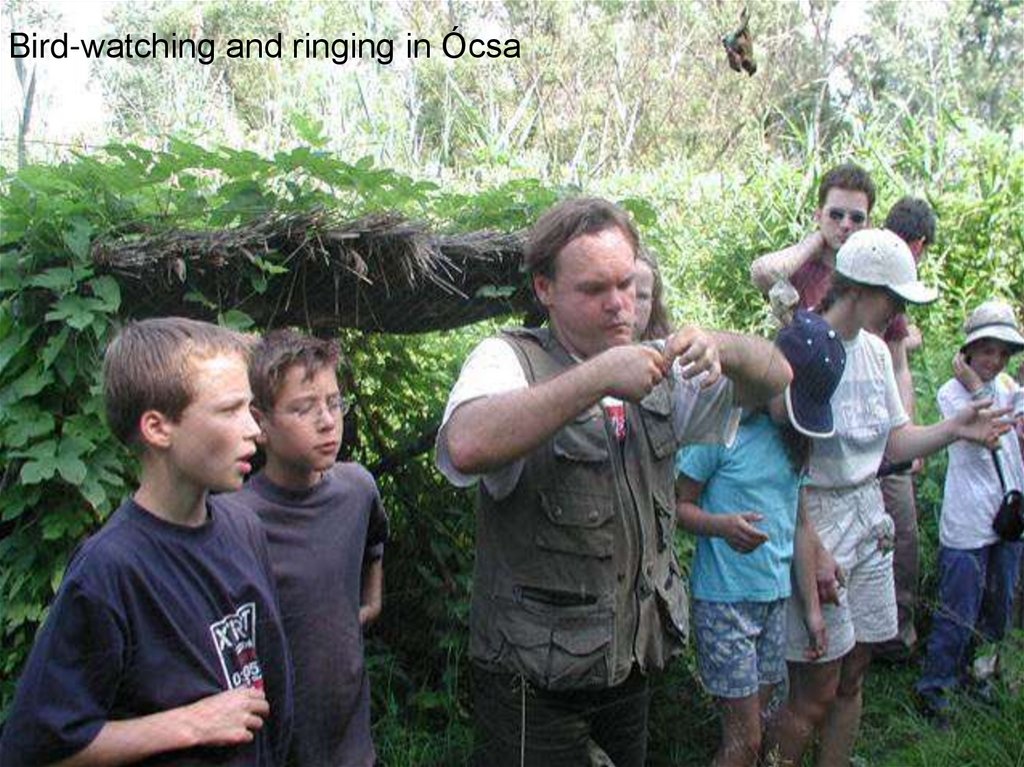
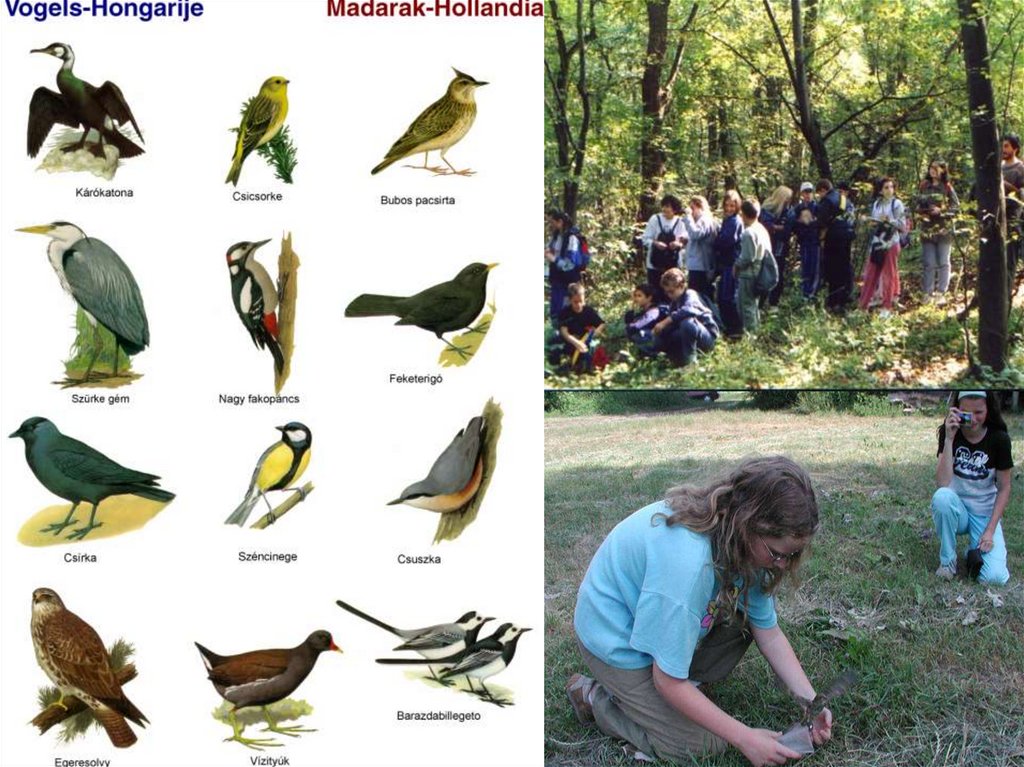
Bird-watching and ringing in Ócsa63.
64.
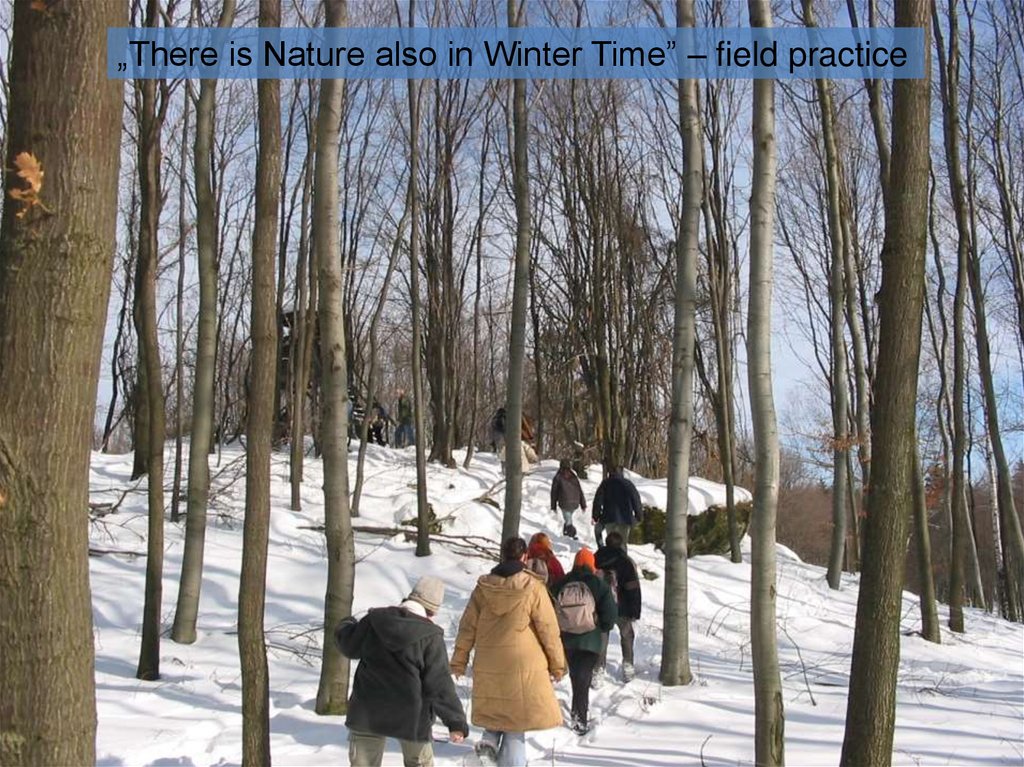
„There is Nature also in Winter Time” – field practice65.
Informal tools… cont.Special lessons
• Practical tasks and tools,
• Forming emotional development,
• Study circles,
• Participation in international programs (GLOBE, BISEL, lichen
observing),
• Visiting composting stations, waste handling plants etc,
• Educational and visitor centres,
• Crucial role of plays: getting-to-know-each-other, group
forming, development of memory, feeling space and forms,
communication, fntasy, creativity, attention-centred, foodchain etc.
66.
67.
68.
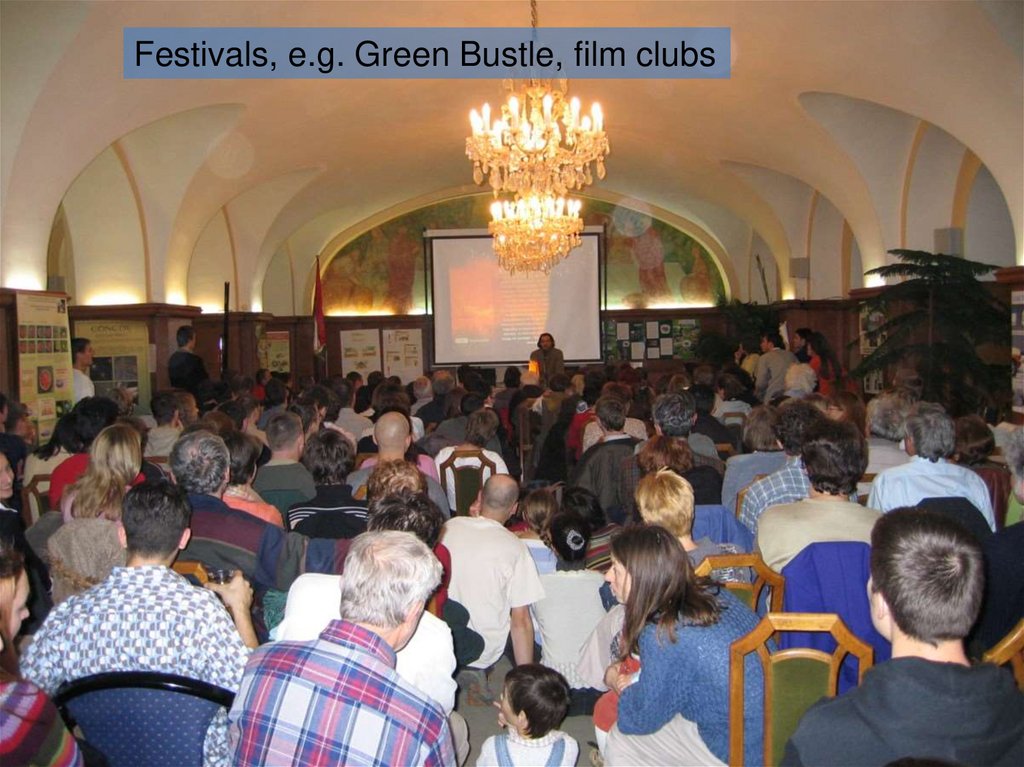
Festivals, e.g. Green Bustle, film clubs69.
Informal tools… cont.Competitions – at schooldesk and in open air
Study trails
• Getting to know natural values and creating claim for
their effective conservation
• With various routes, easily accessible, giving plenty of
info
• With information panels and/or brochures, sometimes
with a guide
• Changes: besides showing the values (nat./cult.
heritage), also env. problems, conscius lifestyle.
70.
Functions of study trails• Giving information and knowledge
• Motivate the visitors, forming their
attitude/view
• Recreation, ensuring experiences
71.
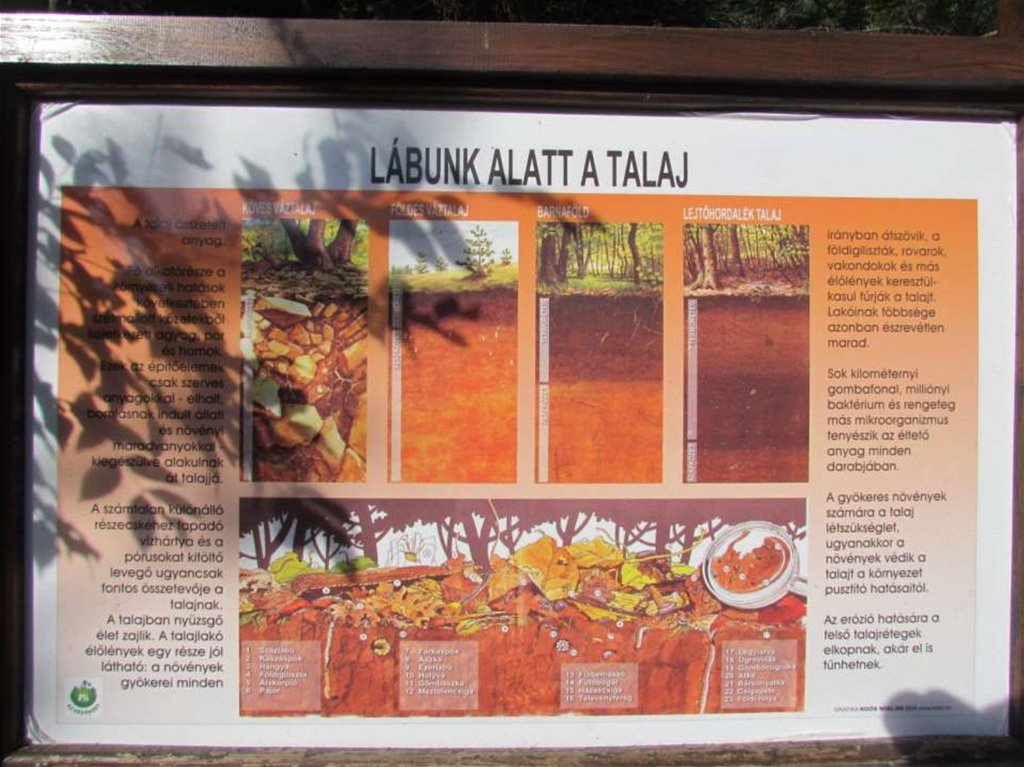
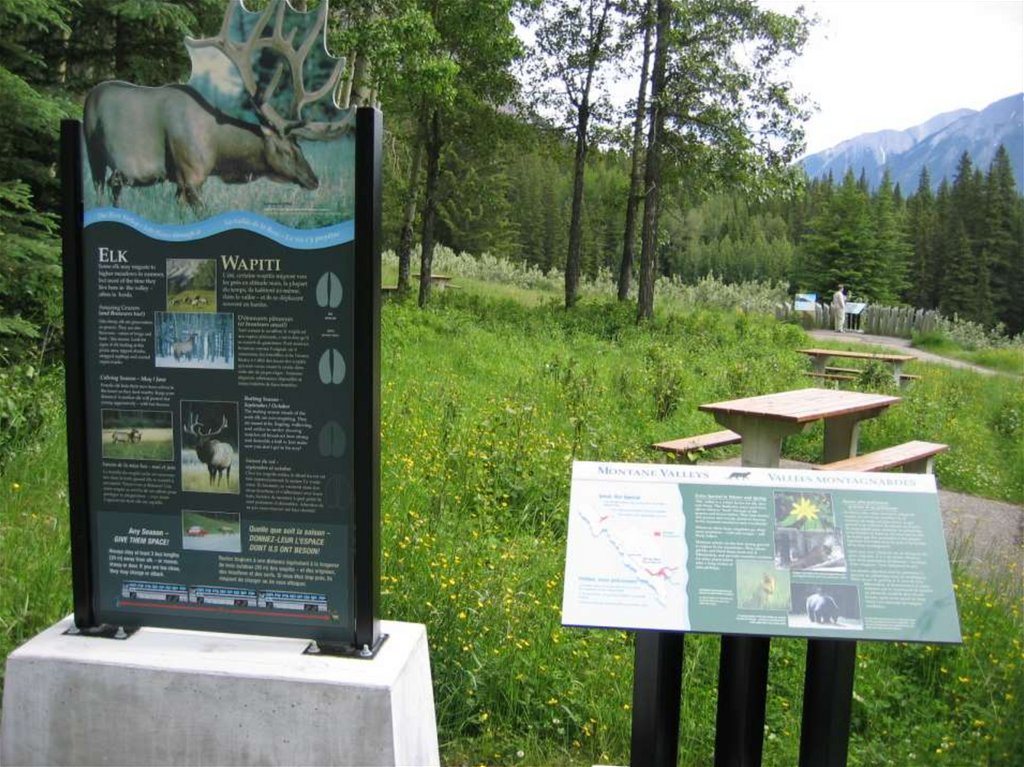
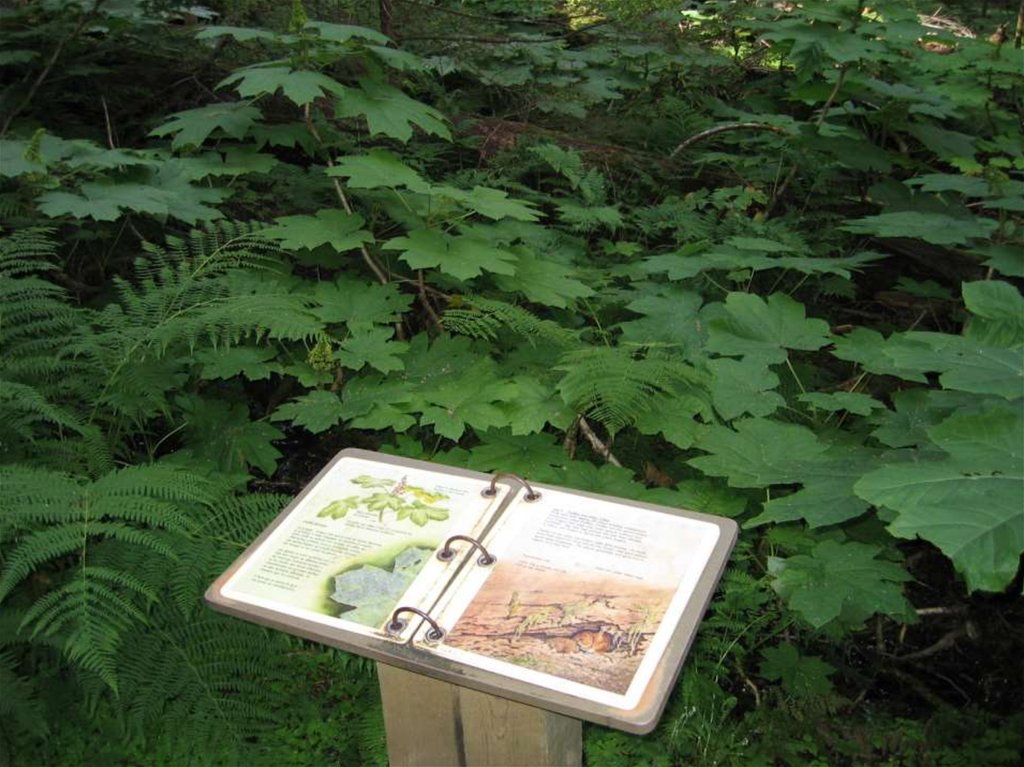
Types of study trailsBased on the method of giving info:
• Panels: info is written on panels in-situ
• Stick-and-book: an information brochure can be
bought in the nearest places and there are only
sticks with numbers (referring to the number in
the brochure) in the trail
• Mix type: mixing the two above
72.
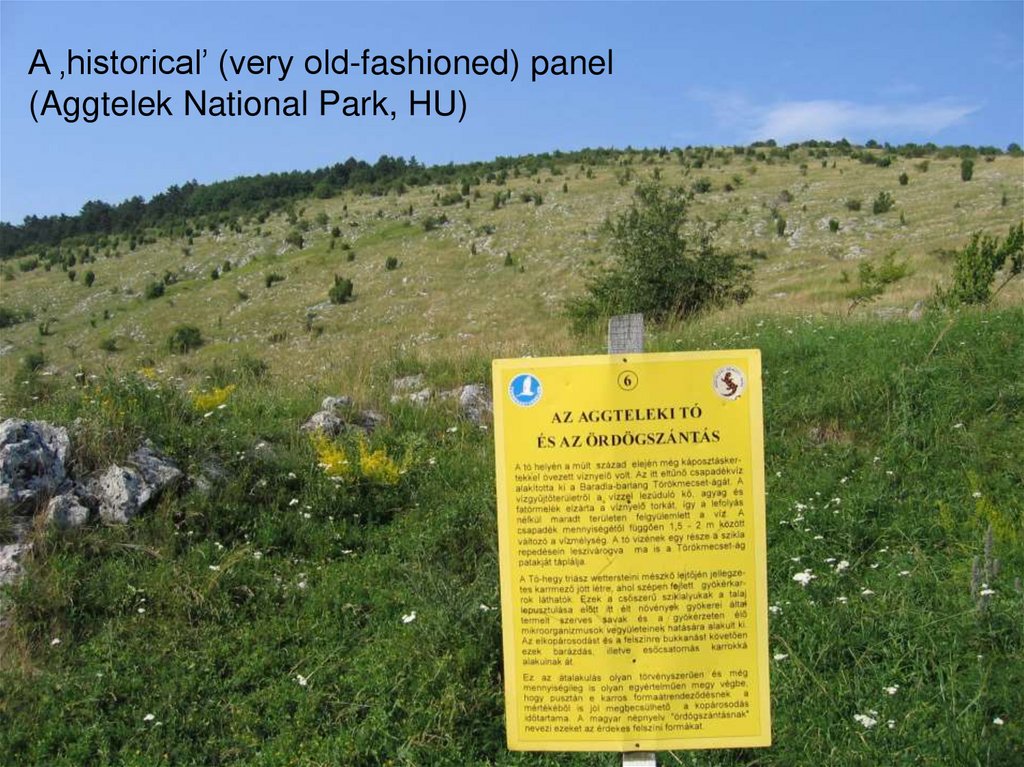
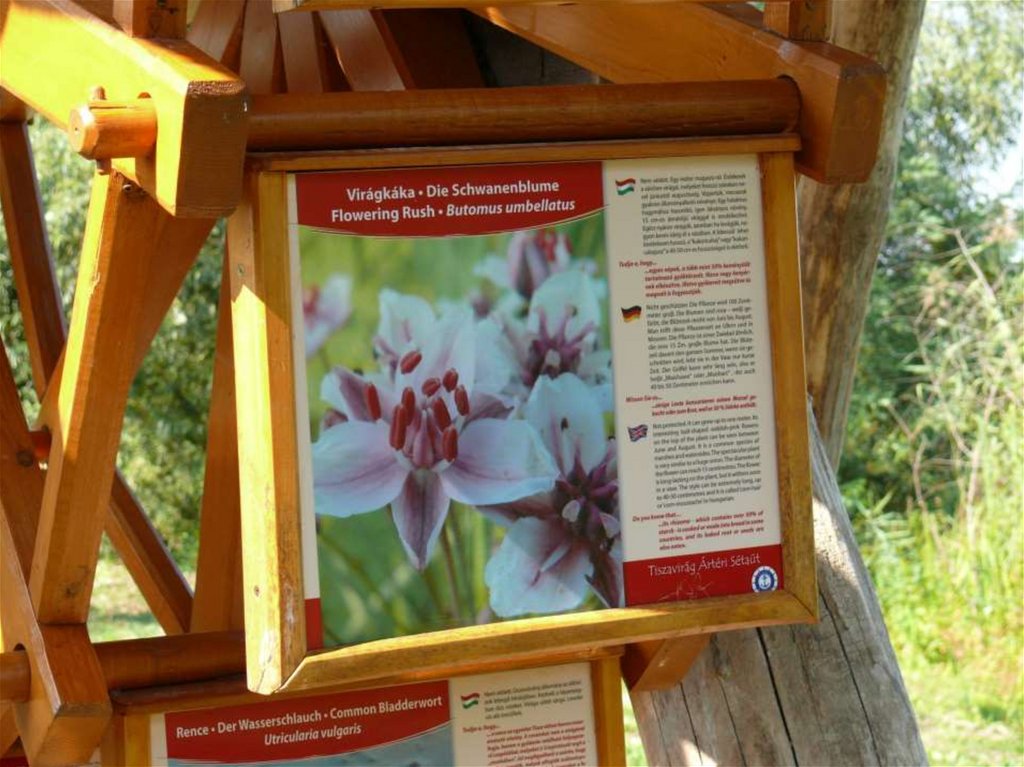
A ‚historical’ (very old-fashioned) panel(Aggtelek National Park, HU)
73.
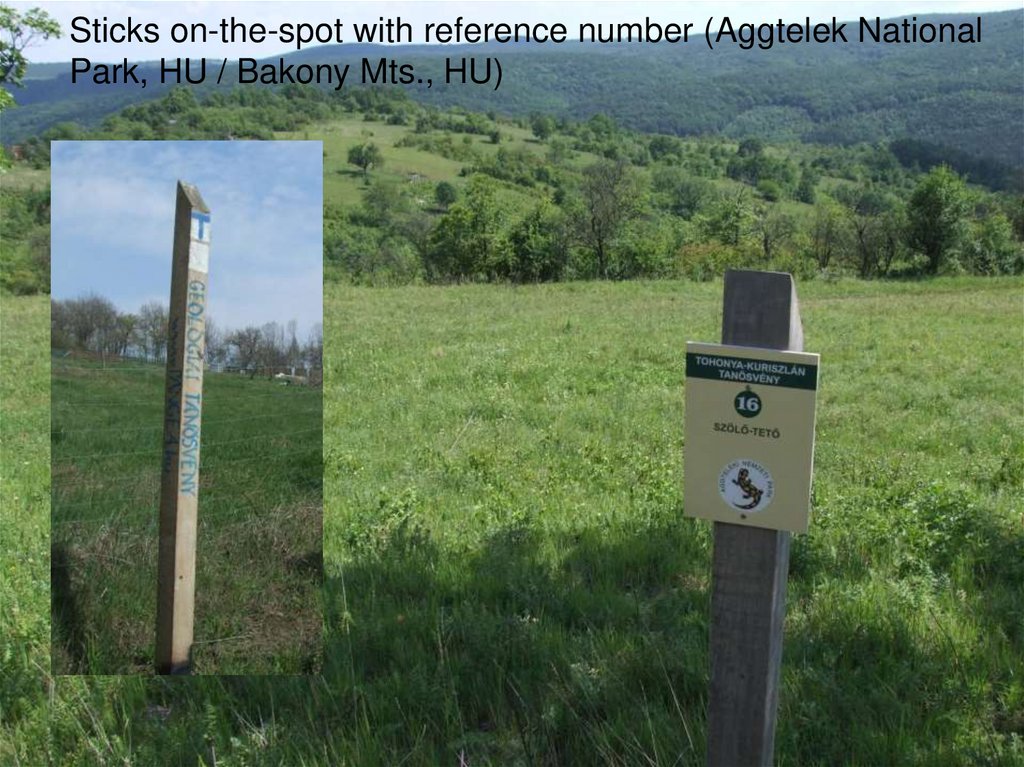
Sticks on-the-spot with reference number (Aggtelek NationalPark, HU / Bakony Mts., HU)
74.
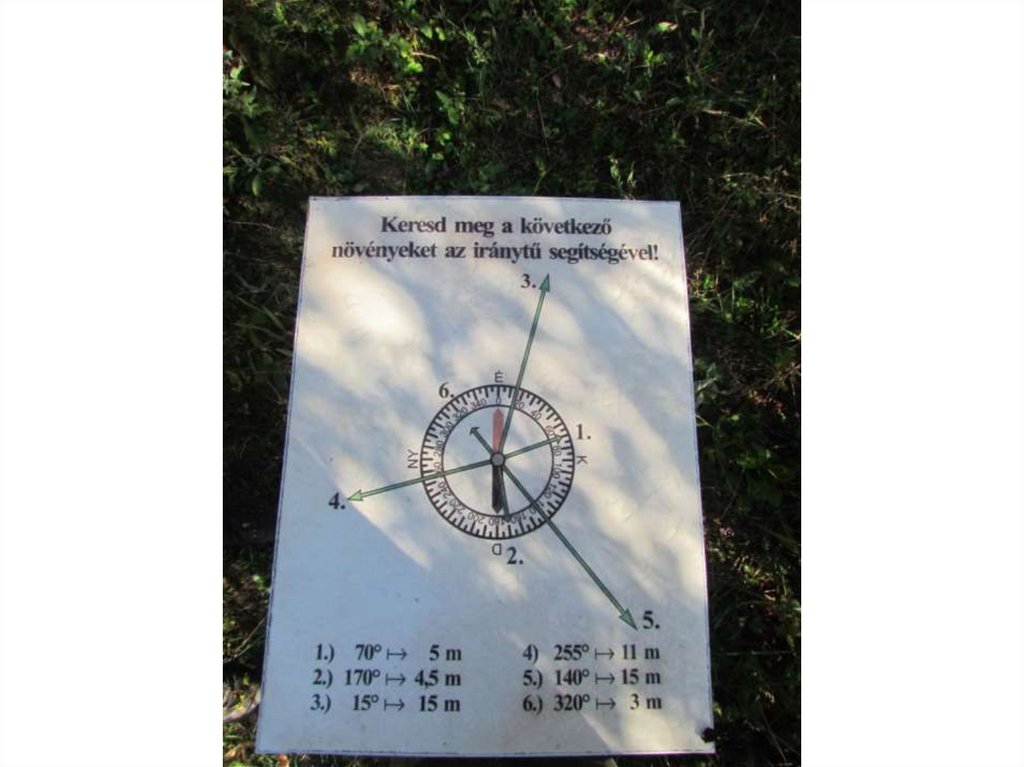
Types of study trails 2Based on the method of giving knowledge:
• Exhibitory study trail: visitors gain info from the
panels and/or brochures
• Motivating/activating study trail: visitors get
tasks/exercises from the brochure during their
way on the trail.
75.
Types of study trails 3Based on the knowledge to be presented:
• Complex trail: main aim is to form a thorough
ecological view.
• Thematic trail: main aim is to deeply present
one or two environmental factors / landscape
elements.
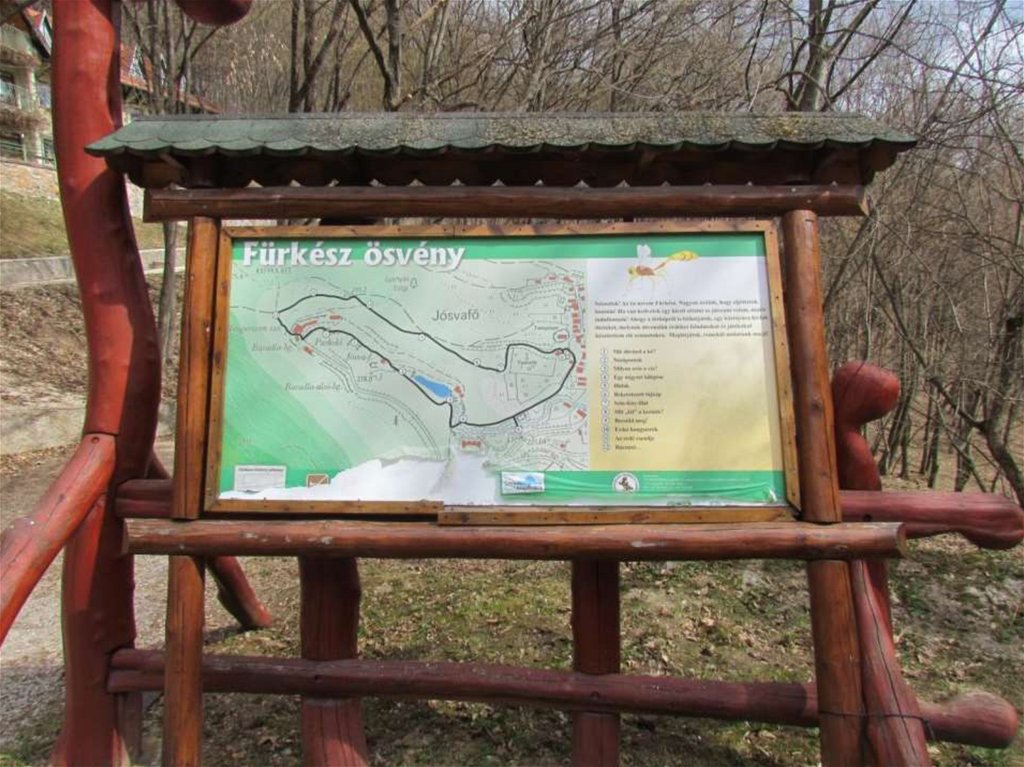
76.
Spy wasp trail, Jósvafő, HU77.
Types of study trails 4Based on means of visiting:
• Pedestrian
• Bicycle
• Horse
• Water
78.
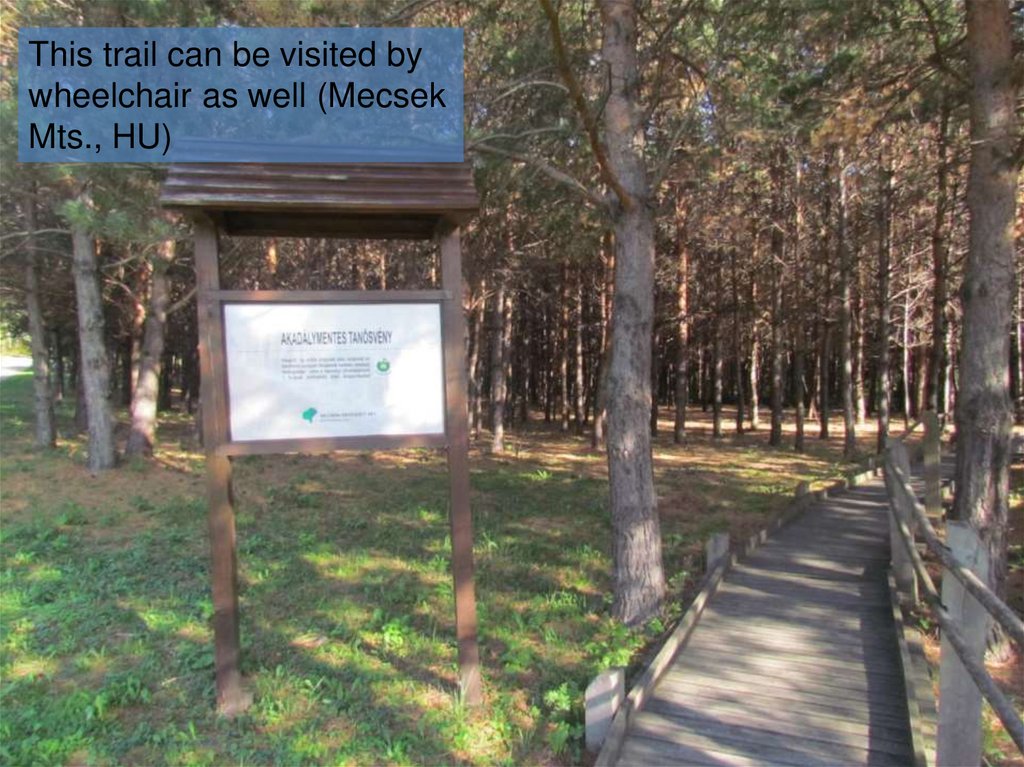
This trail can be visited bywheelchair as well (Mecsek
Mts., HU)
79.
80.
81.
82.
83.
Types of study trails 5Based on its length:
• Walking distance: max 2 km long, without steep
slopes, and with built elements.
• Tour: more then 2 km long (may be even 15-20
km), with strenuous sections
84.
85.
86.
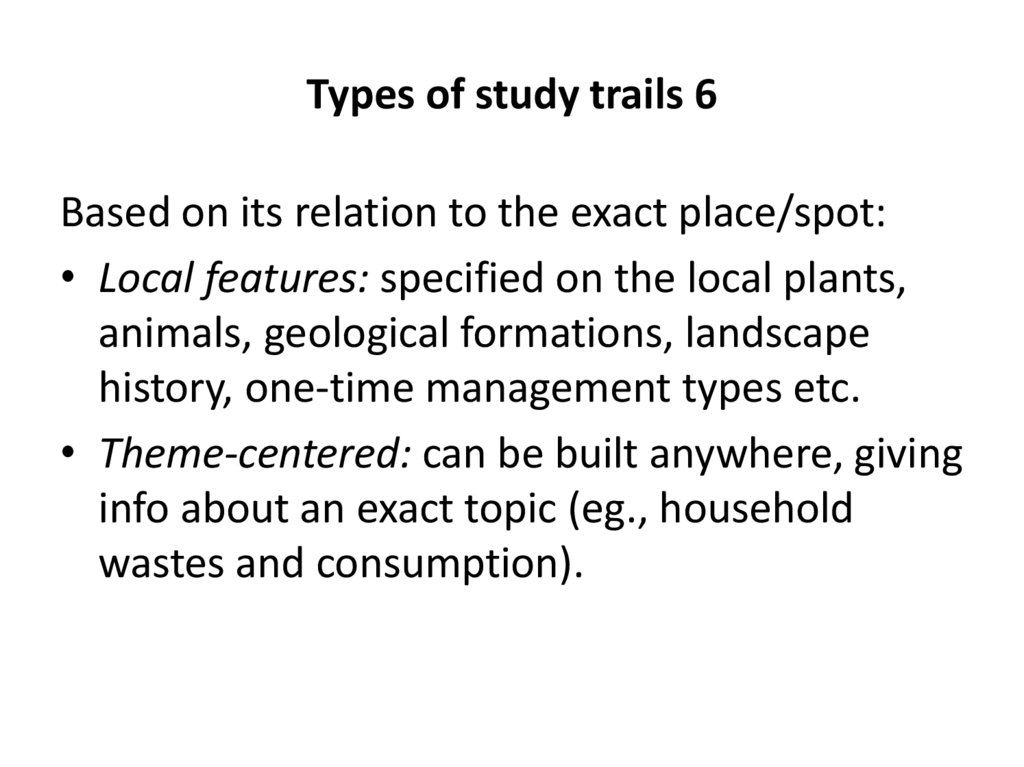
Types of study trails 6Based on its relation to the exact place/spot:
• Local features: specified on the local plants,
animals, geological formations, landscape
history, one-time management types etc.
• Theme-centered: can be built anywhere, giving
info about an exact topic (eg., household
wastes and consumption).
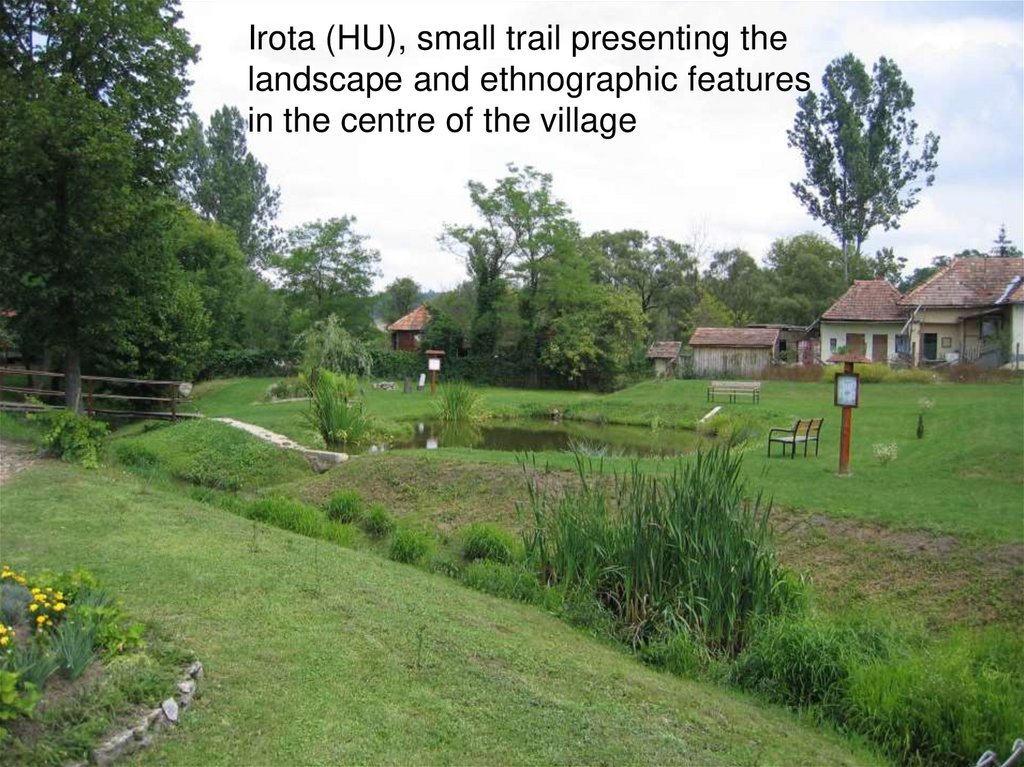
87.
Irota (HU), small trail presenting thelandscape and ethnographic features
in the centre of the village
88.
89.
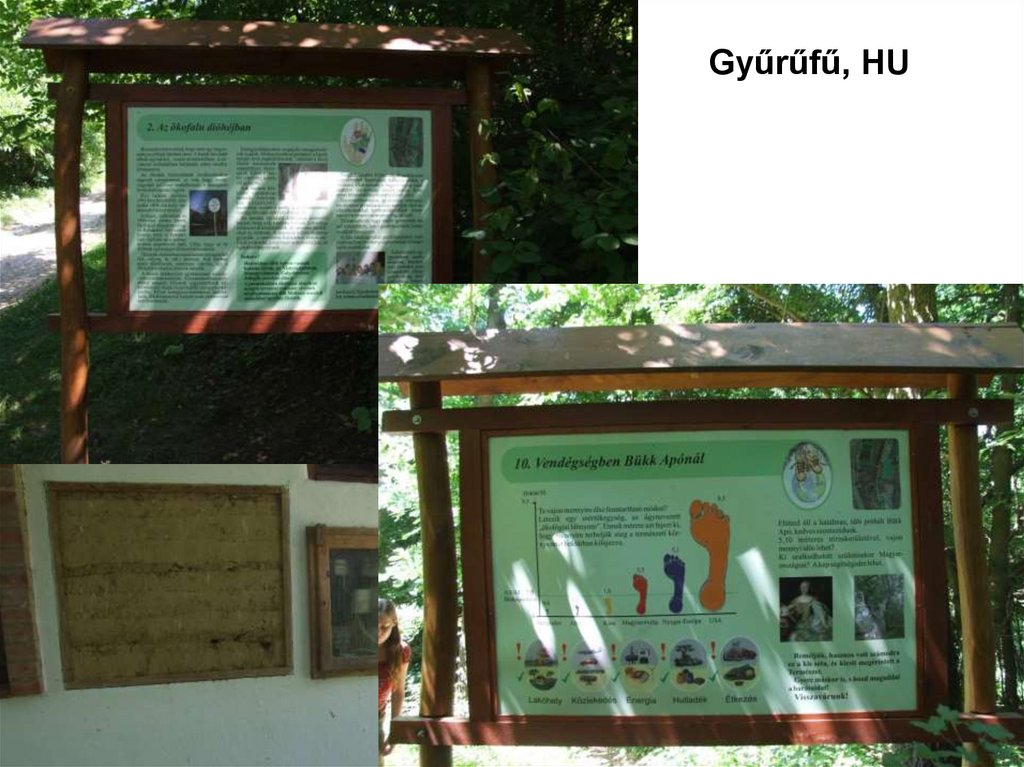
Gyűrűfű, HU90.
91.
92.
93.
94.
95.
Informal tools… cont.Exhibitons, displays
• Visitor centres, landscape houses, educ. centres, museums: global
or thematic displays.
• Important Days: popular actions, creative/interactive exhib’s.
• Good, if encourage visitors for change in their lifestyles.
Other actions
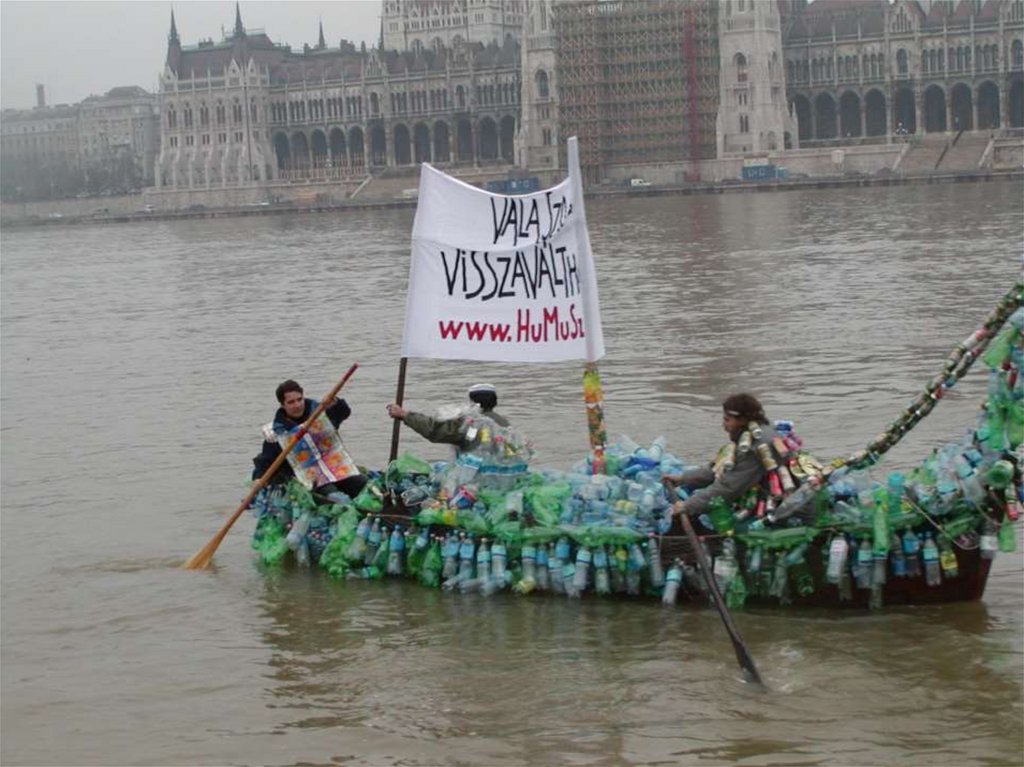
• Demonstrations,
• ‘Landscape surgery’ and ‘Adopt a stream’ programs,
• Spectacular actions, forums of NGOs,
• Birdwatching Days,
• ‘Buy Nothing Day’ (or Day of Conscious Consumption),
• ‘Deposittable Chritmas Tree’ - actions
• ‘To school/work by bike’, ‘school/workplace greening’ actions.
96.
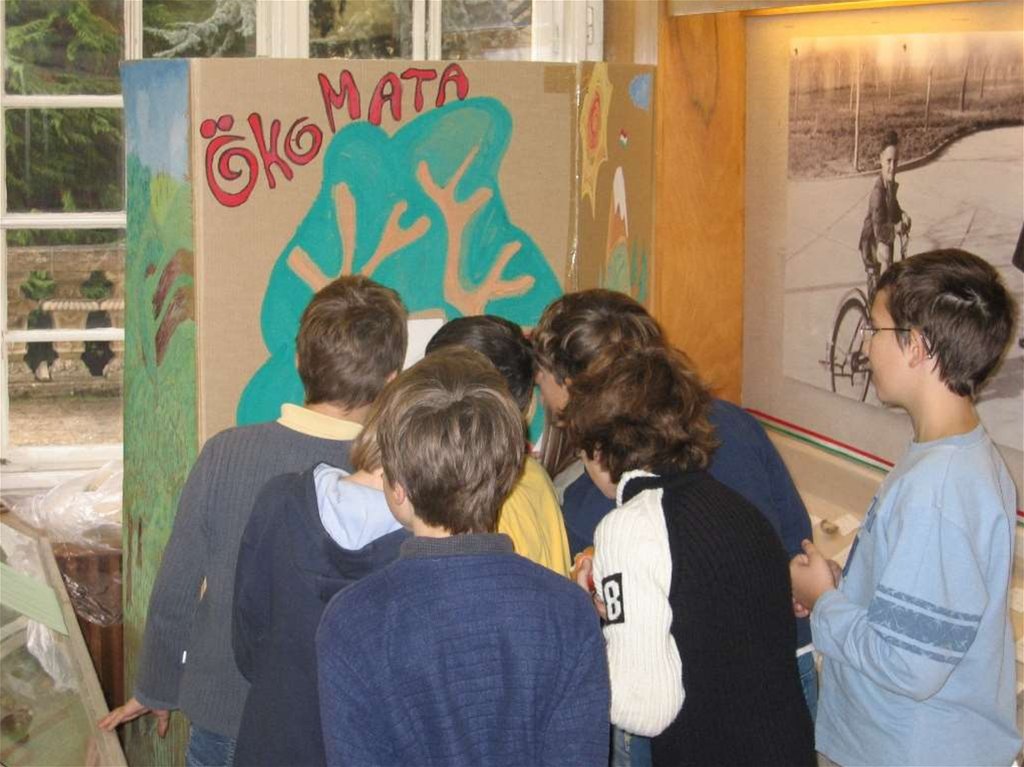
Green Bridge programme‘Waste festivals’ in towns/villages feasts (e.g.
Gödöllő: Beer Festival, Civic Street):
– ‘Dustbin Fairy’ board game for the smallest
ones
– ‘Waste show’ for teenagers
– ‘Eco-mata’ – green automat for everyone
97.
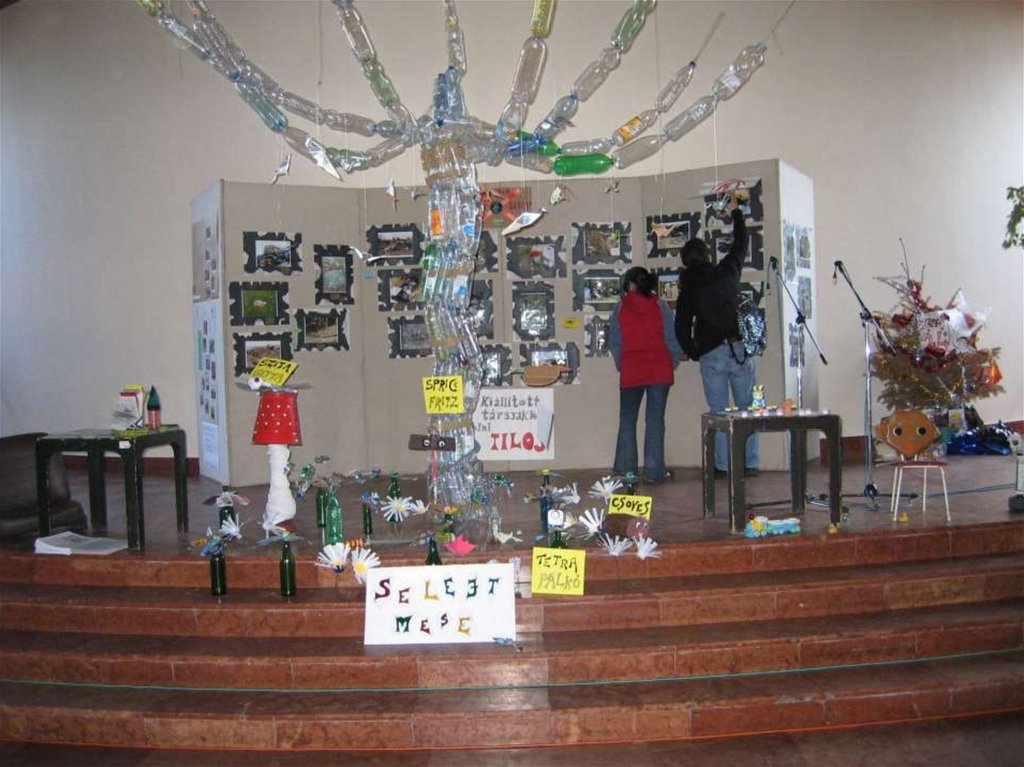
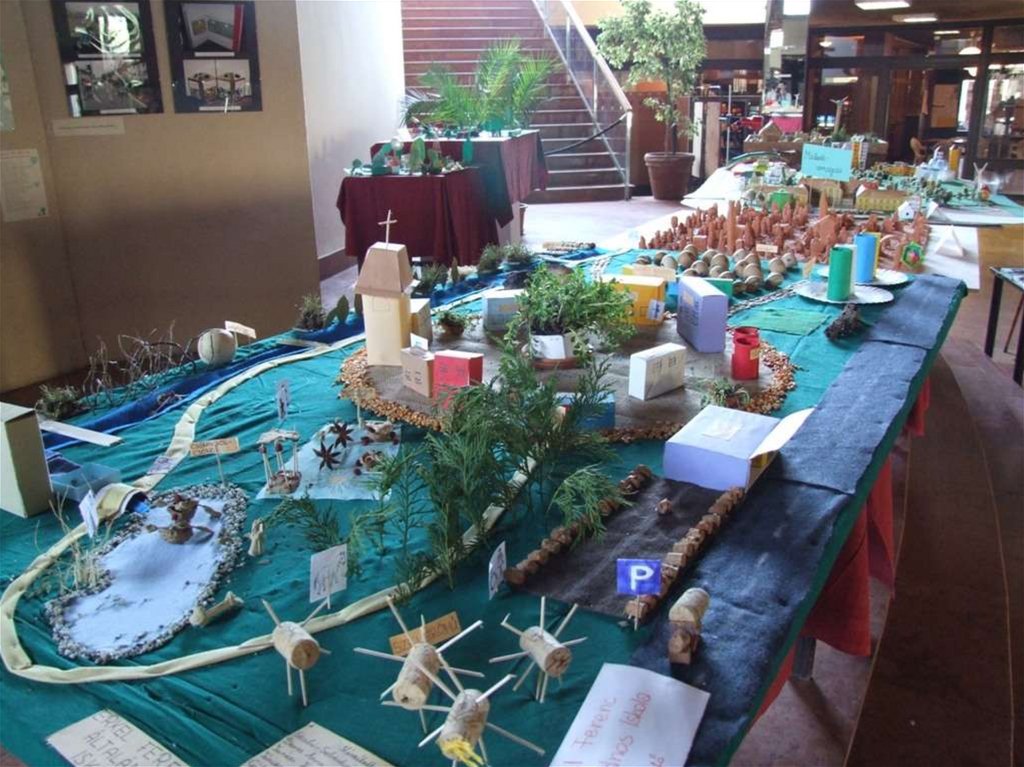
Creative / interactive exhibitionsMain Hall of Culture House – everyone who enters!
• Week of Forests 2005
• Wind-swept, Nature-carved Creations 2006
• Everyone’s Town 2007
• Products from Waste 2008
• Together for the Sustainable Gödöllő 2009
98.
99.
Other actions...• Demonstartions...
• forums,
• actions,
• rechargable Christmas Tree...,
• „by bike to school/office”