 english
Similar presentations:





Passive voice. Grundlagen Englisch
1.
Grundlagen EnglischPassive voice
HFW Bern
2.
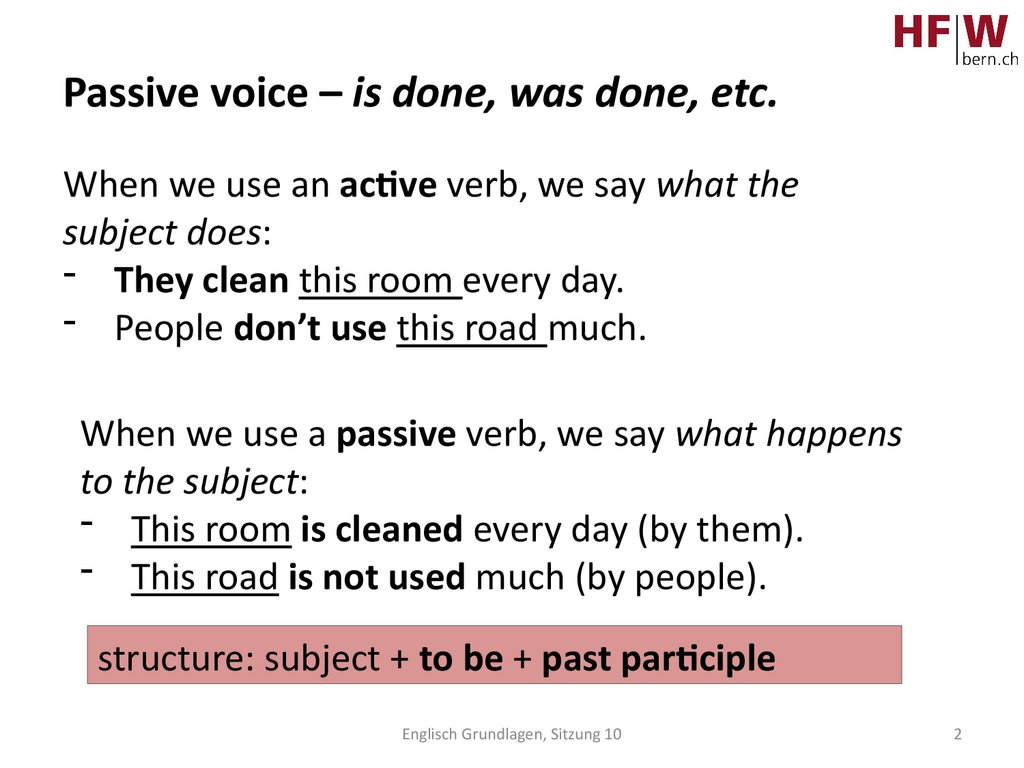
Passive voice – is done, was done, etc.When we use an active verb, we say what the
subject does:
- They clean this room every day.
- People don’t use this road much.
When we use a passive verb, we say what happens
to the subject:
- This room is cleaned every day (by them).
- This road is not used much (by people).
structure: subject + to be + past participle
Englisch Grundlagen, Sitzung 10
2
3.
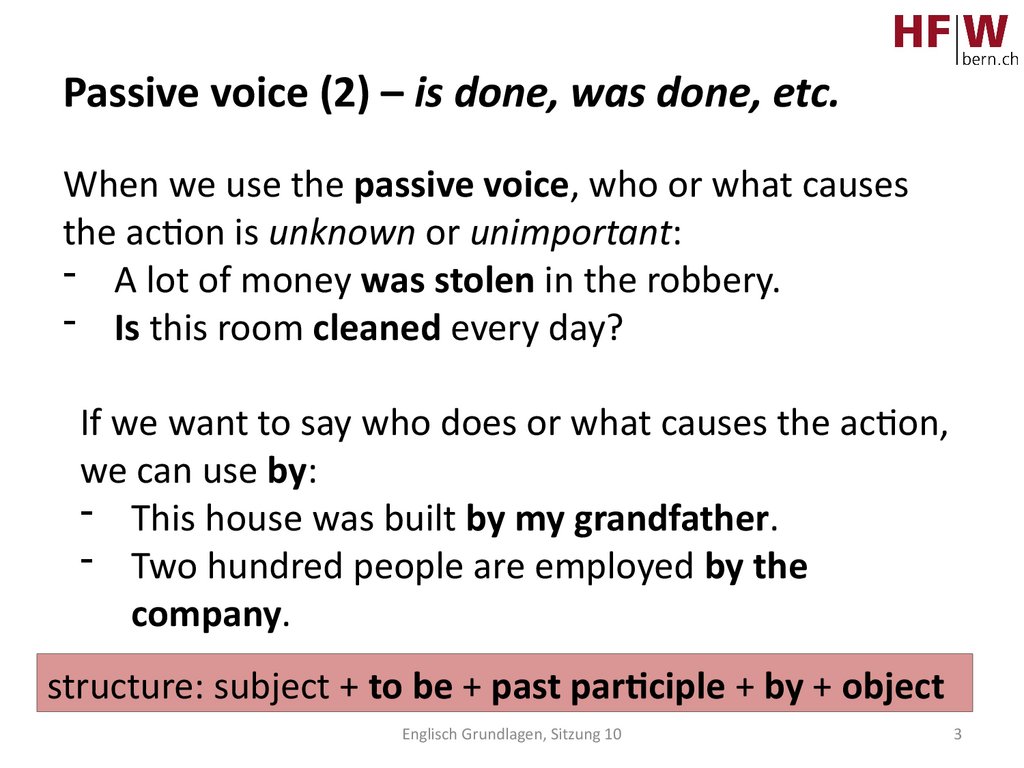
Passive voice (2) – is done, was done, etc.When we use the passive voice, who or what causes
the action is unknown or unimportant:
- A lot of money was stolen in the robbery.
- Is this room cleaned every day?
If we want to say who does or what causes the action,
we can use by:
- This house was built by my grandfather.
- Two hundred people are employed by the
company.
structure: subject + to be + past participle + by + object
Englisch Grundlagen, Sitzung 10
3
4.
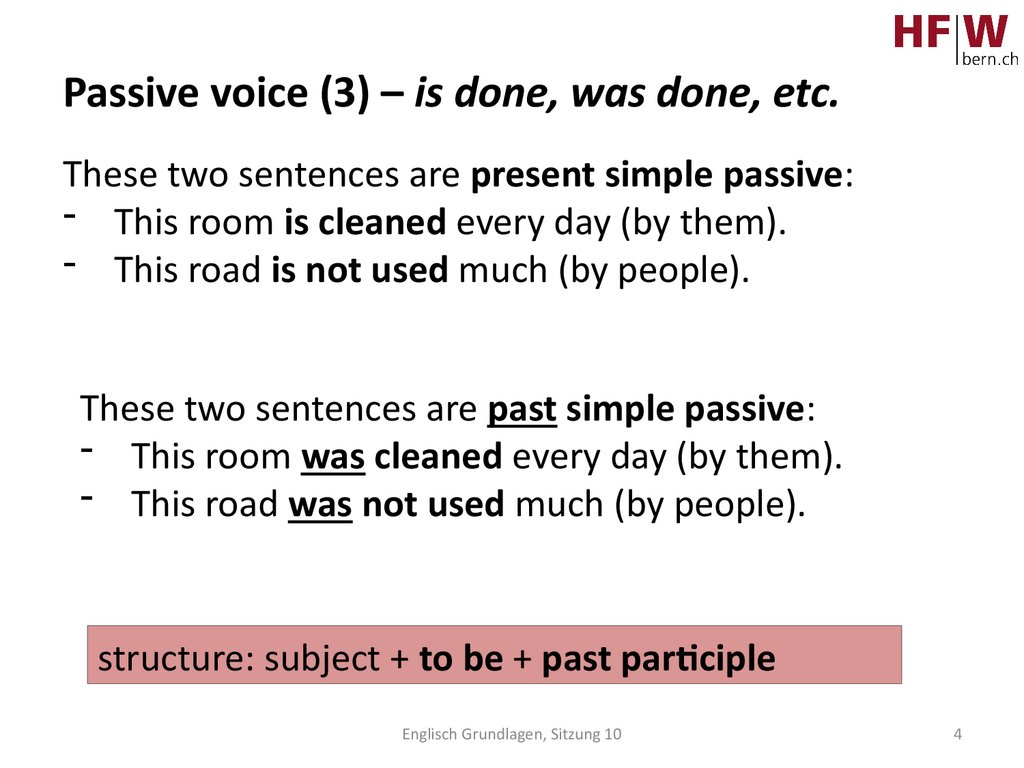
Passive voice (3) – is done, was done, etc.These two sentences are present simple passive:
- This room is cleaned every day (by them).
- This road is not used much (by people).
These two sentences are past simple passive:
- This room was cleaned every day (by them).
- This road was not used much (by people).
structure: subject + to be + past participle
Englisch Grundlagen, Sitzung 10
4
5.
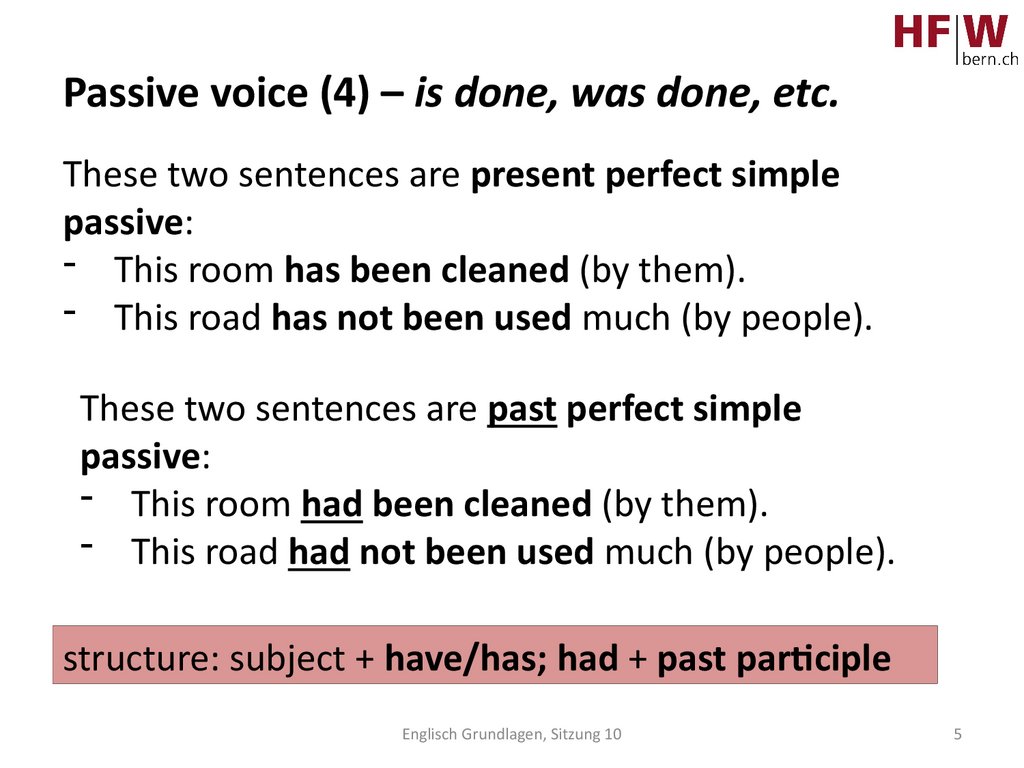
Passive voice (4) – is done, was done, etc.These two sentences are present perfect simple
passive:
- This room has been cleaned (by them).
- This road has not been used much (by people).
These two sentences are past perfect simple
passive:
- This room had been cleaned (by them).
- This road had not been used much (by people).
structure: subject + have/has; had + past participle
Englisch Grundlagen, Sitzung 10
5
6.
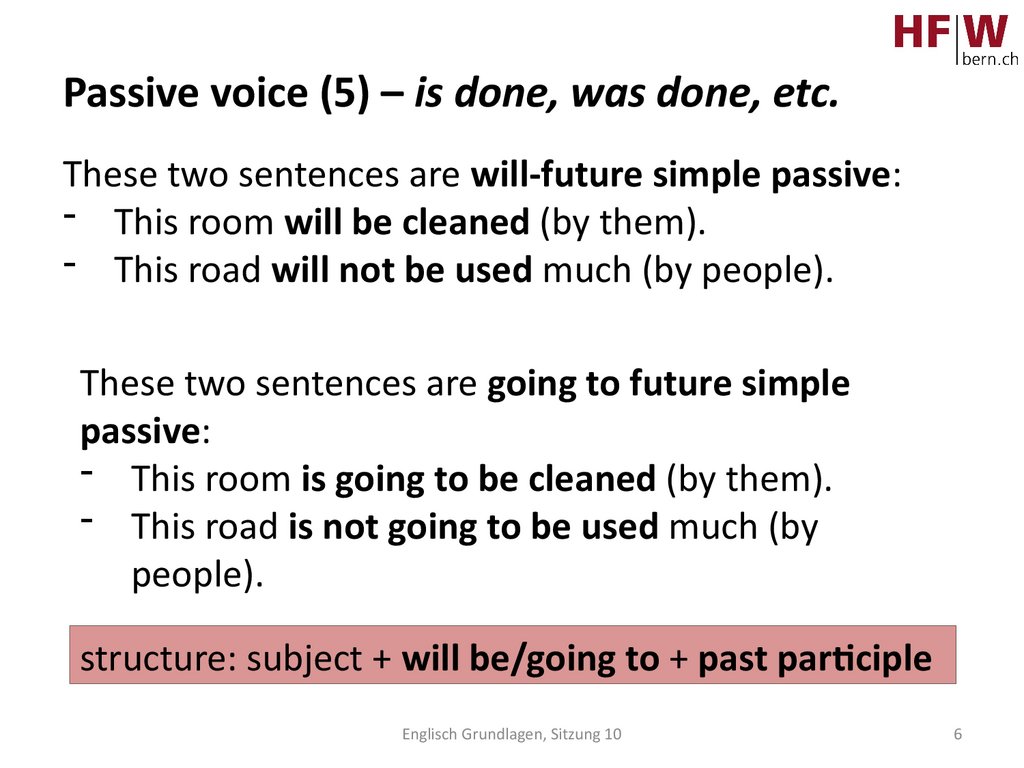
Passive voice (5) – is done, was done, etc.These two sentences are will-future simple passive:
- This room will be cleaned (by them).
- This road will not be used much (by people).
These two sentences are going to future simple
passive:
- This room is going to be cleaned (by them).
- This road is not going to be used much (by
people).
structure: subject + will be/going to + past participle
Englisch Grundlagen, Sitzung 10
6
7.
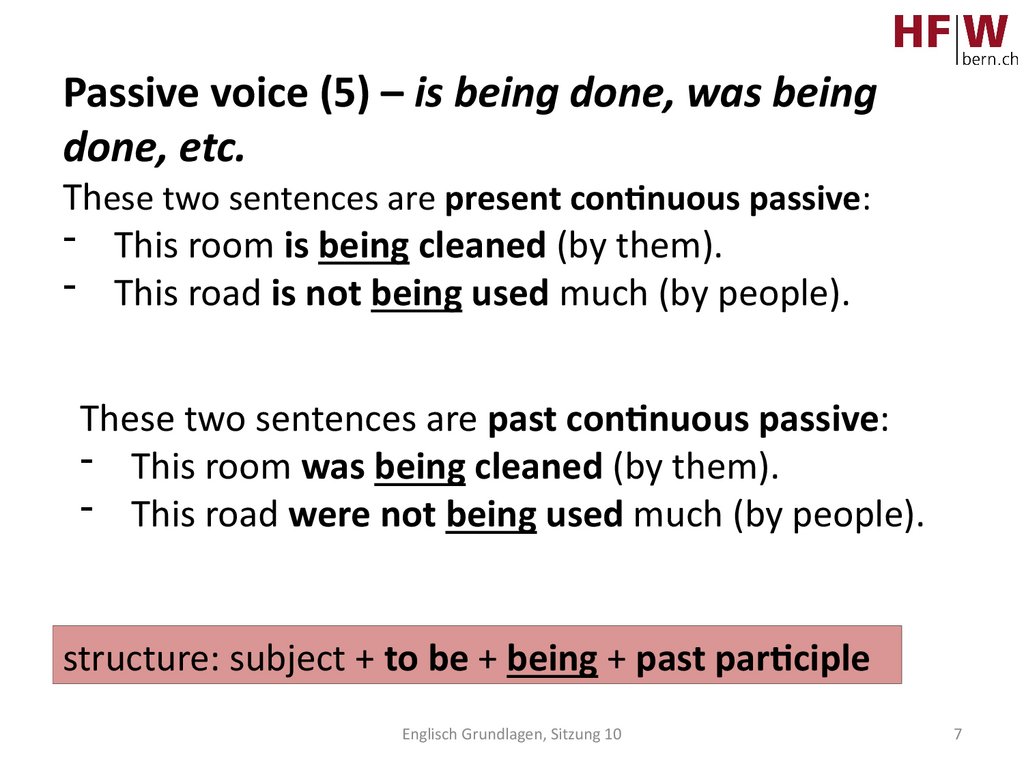
Passive voice (5) – is being done, was beingdone, etc.
These two sentences are present continuous passive:
- This room is being cleaned (by them).
- This road is not being used much (by people).
These two sentences are past continuous passive:
- This room was being cleaned (by them).
- This road were not being used much (by people).
structure: subject + to be + being + past participle
Englisch Grundlagen, Sitzung 10
7
8.
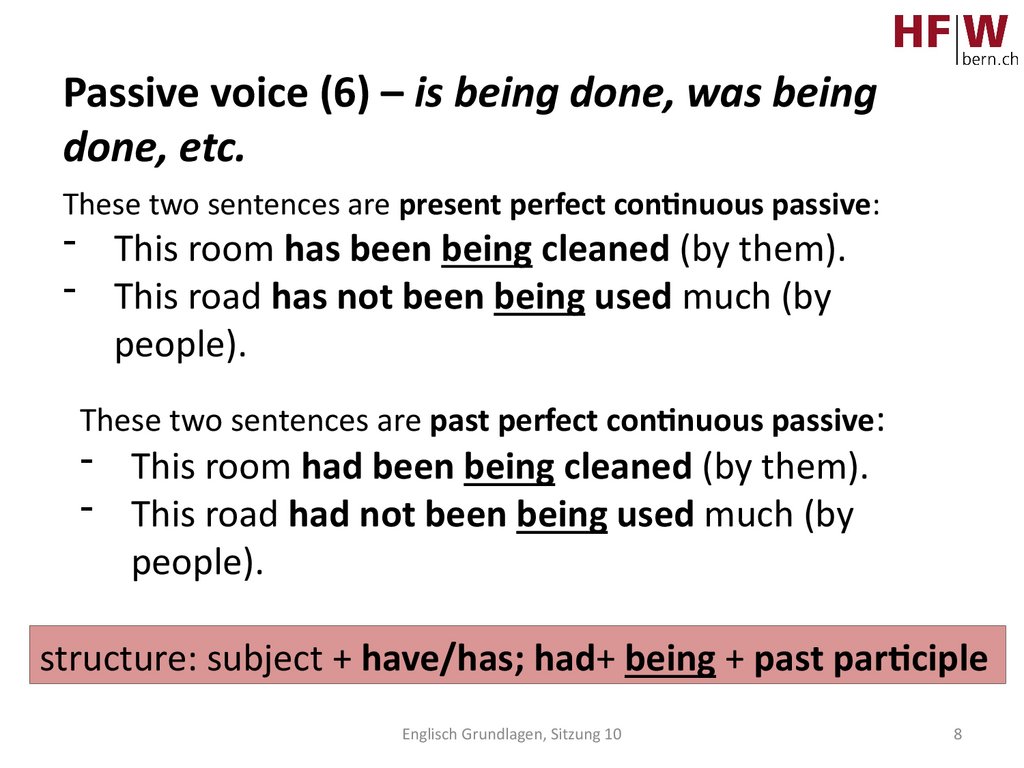
Passive voice (6) – is being done, was beingdone, etc.
These two sentences are present perfect continuous passive:
- This room has been being cleaned (by them).
- This road has not been being used much (by
people).
These two sentences are past perfect continuous passive:
- This room had been being cleaned (by them).
- This road had not been being used much (by
people).
structure: subject + have/has; had+ being + past participle
Englisch Grundlagen, Sitzung 10
8
9.
Passive voice (7) – is being done, was beingdone, etc.
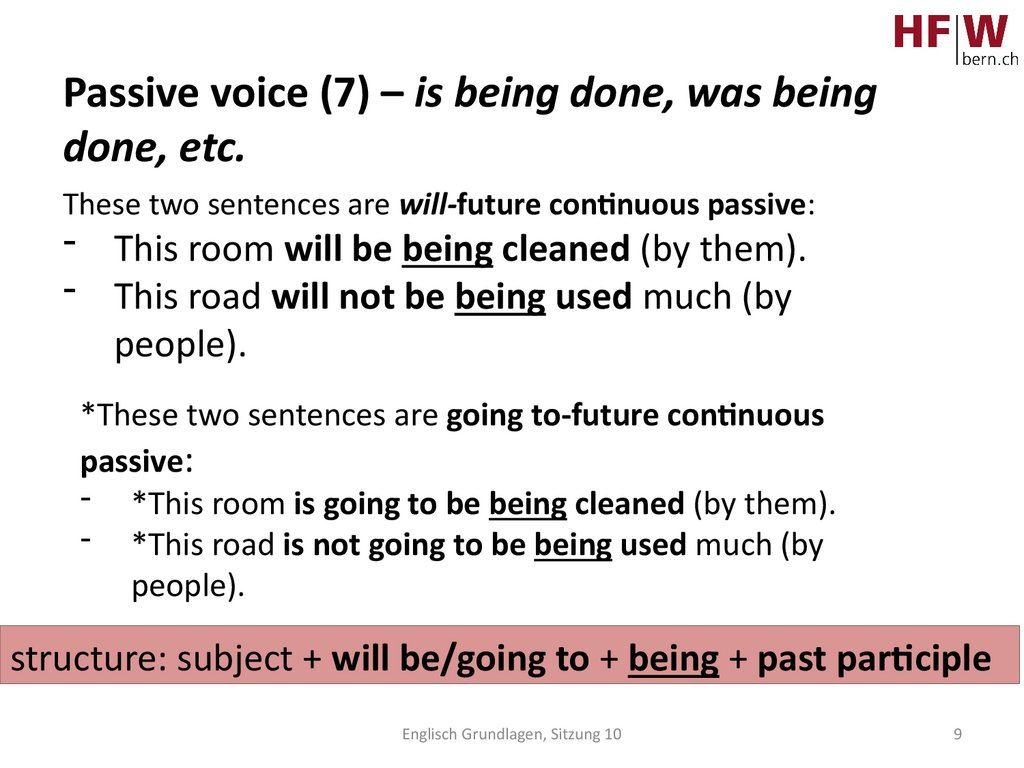
These two sentences are will-future continuous passive:
- This room will be being cleaned (by them).
- This road will not be being used much (by
people).
*These two sentences are going to-future continuous
passive:
- *This room is going to be being cleaned (by them).
- *This road is not going to be being used much (by
people).
structure: subject + will be/going to + being + past participle
Englisch Grundlagen, Sitzung 10
9
10.
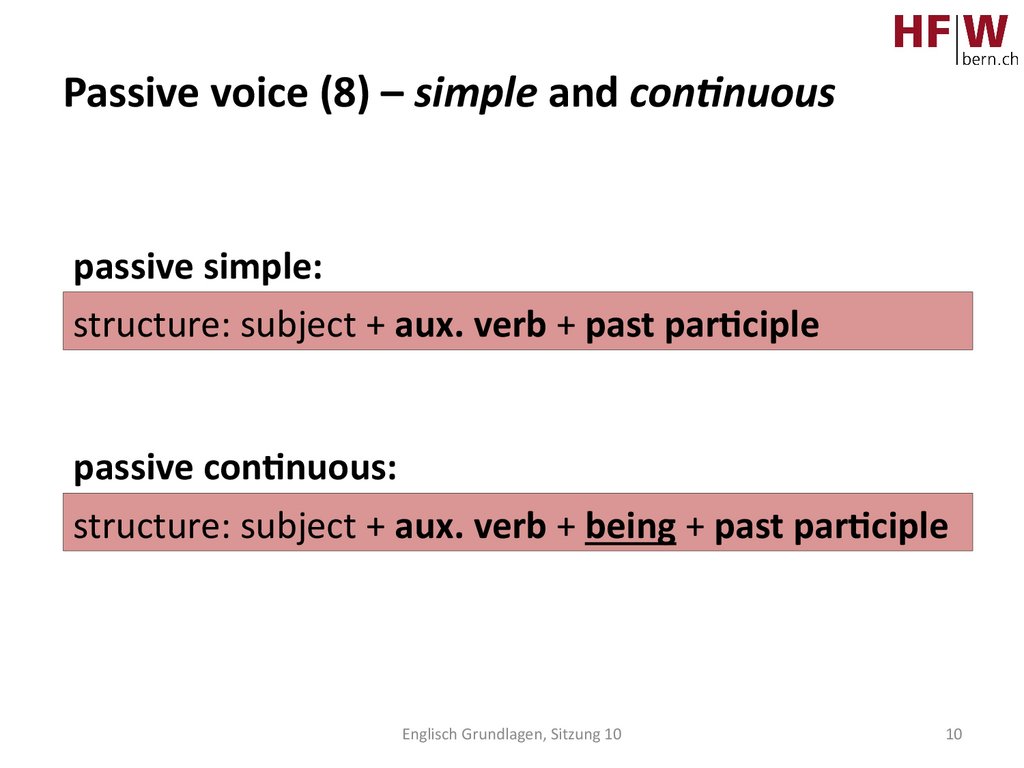
Passive voice (8) – simple and continuouspassive simple:
structure: subject + aux. verb + past participle
passive continuous:
structure: subject + aux. verb + being + past participle
Englisch Grundlagen, Sitzung 10
10
11.
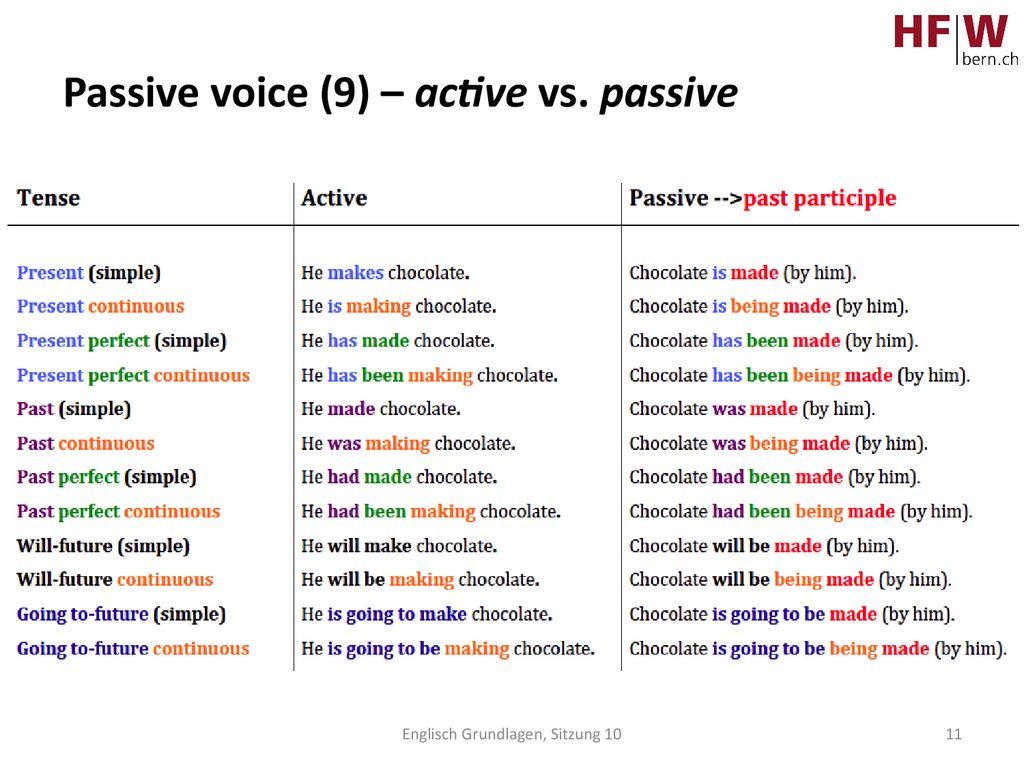
Passive voice (9) – active vs. passiveEnglisch Grundlagen, Sitzung 10
11
12.
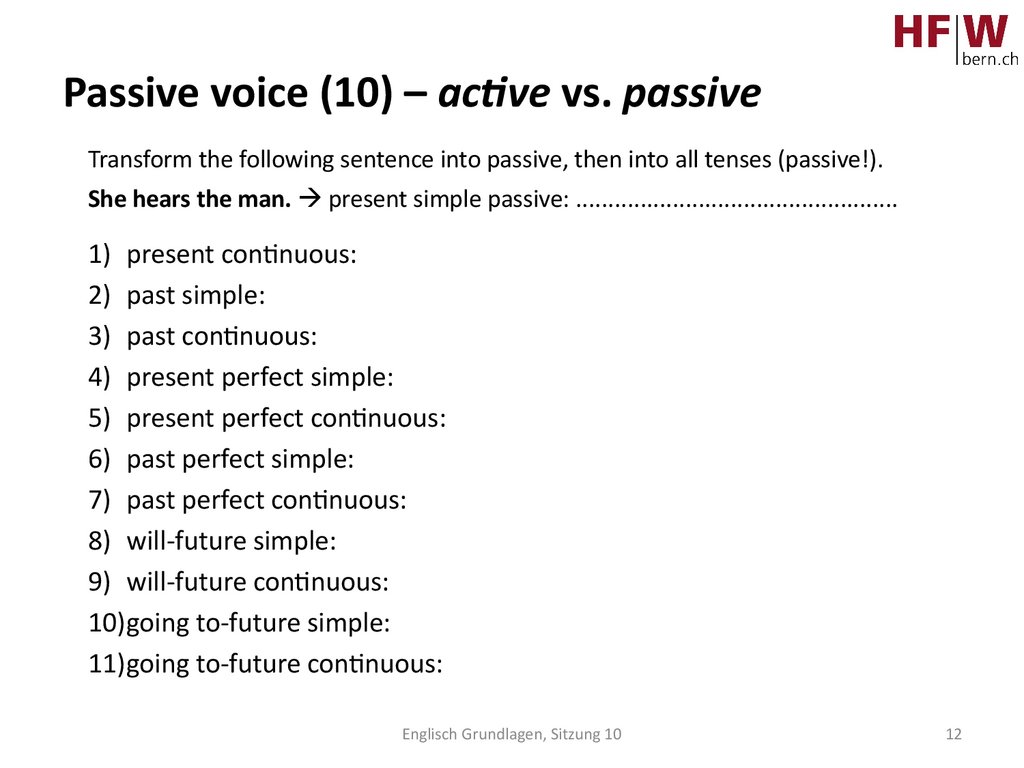
Passive voice (10) – active vs. passiveTransform the following sentence into passive, then into all tenses (passive!).
She hears the man. present simple passive: ..................................................
1) present continuous:
2) past simple:
3) past continuous:
4) present perfect simple:
5) present perfect continuous:
6) past perfect simple:
7) past perfect continuous:
8) will-future simple:
9) will-future continuous:
10)going to-future simple:
11)going to-future continuous:
Englisch Grundlagen, Sitzung 10
12
13.
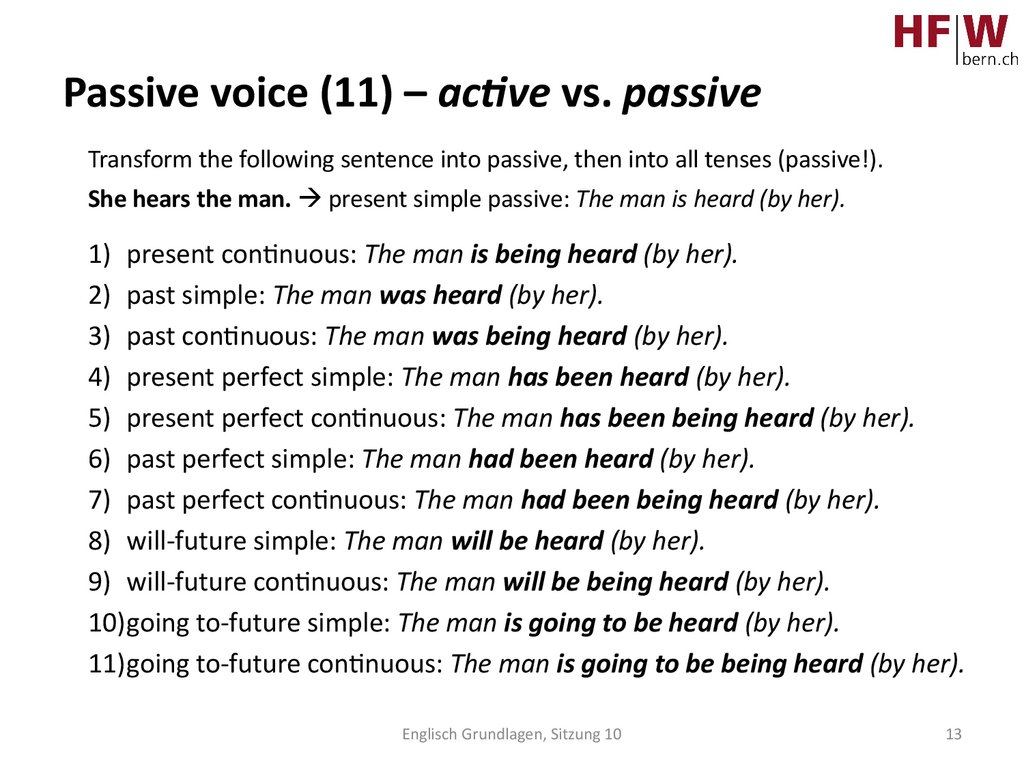
Passive voice (11) – active vs. passiveTransform the following sentence into passive, then into all tenses (passive!).
She hears the man. present simple passive: The man is heard (by her).
1) present continuous: The man is being heard (by her).
2) past simple: The man was heard (by her).
3) past continuous: The man was being heard (by her).
4) present perfect simple: The man has been heard (by her).
5) present perfect continuous: The man has been being heard (by her).
6) past perfect simple: The man had been heard (by her).
7) past perfect continuous: The man had been being heard (by her).
8) will-future simple: The man will be heard (by her).
9) will-future continuous: The man will be being heard (by her).
10)going to-future simple: The man is going to be heard (by her).
11)going to-future continuous: The man is going to be being heard (by her).
Englisch Grundlagen, Sitzung 10
13
14.
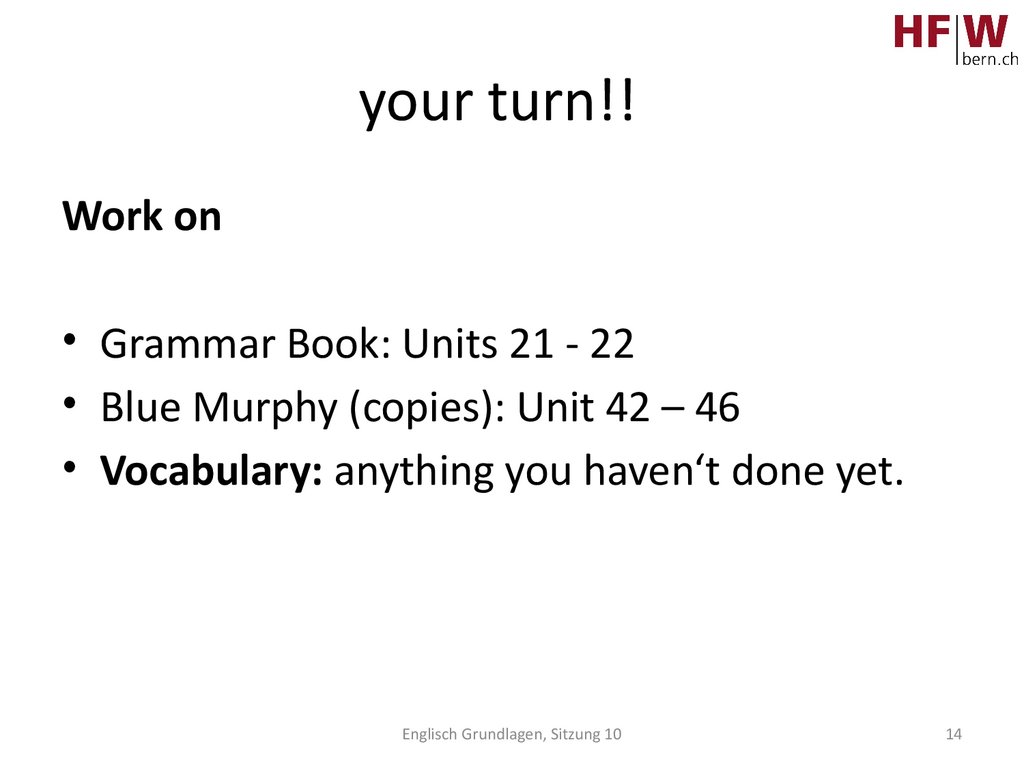
your turn!!Work on
• Grammar Book: Units 21 - 22
• Blue Murphy (copies): Unit 42 – 46
• Vocabulary: anything you haven‘t done yet.
Englisch Grundlagen, Sitzung 10
14
15.
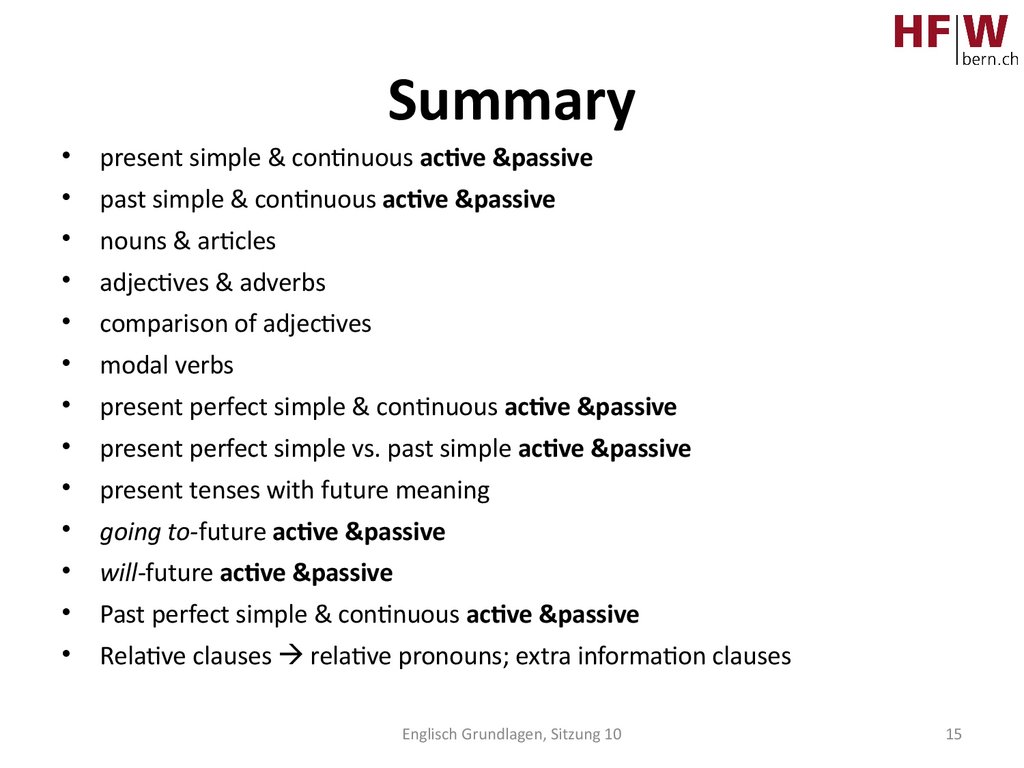
Summarypresent simple & continuous active &passive
past simple & continuous active &passive
nouns & articles
adjectives & adverbs
comparison of adjectives
modal verbs
present perfect simple & continuous active &passive
present perfect simple vs. past simple active &passive
present tenses with future meaning
going to-future active &passive
will-future active &passive
Past perfect simple & continuous active &passive
Relative clauses relative pronouns; extra information clauses
Englisch Grundlagen, Sitzung 10
15