

 english
Similar presentations:





Modern English lexicology
1. Modern English lexicology Lecture One : Lexicology as a linguistic science
MODERN ENGLISH LEXICOLOGYLECTURE ONE :
LEXICOLOGY AS A LINGUISTIC SCIENCE
Lecturer:
M.Kh. Dalieva
DSc, Associate professor
1
2.
23.
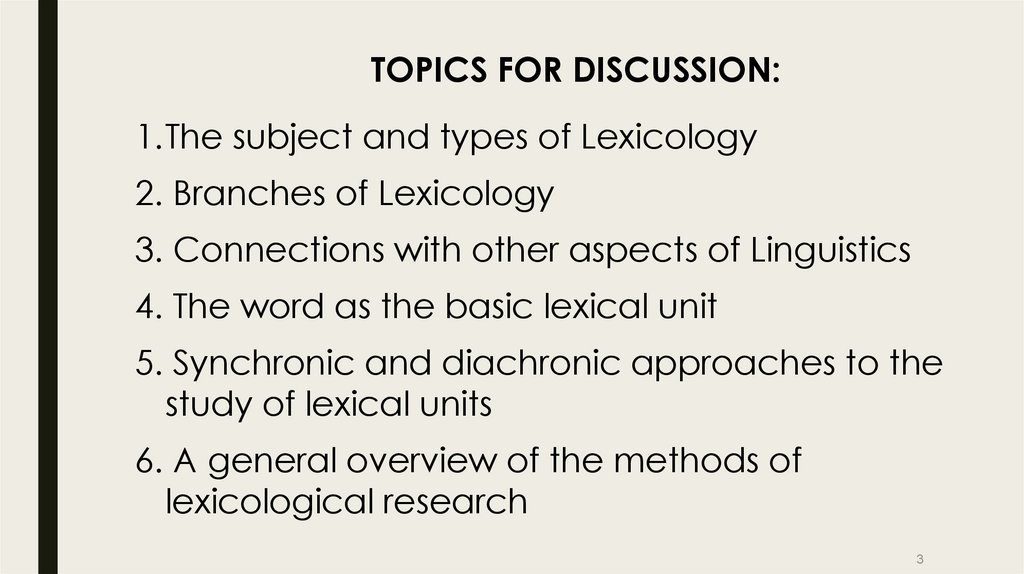
TOPICS FOR DISCUSSION:1.The subject and types of Lexicology
2. Branches of Lexicology
3. Connections with other aspects of Linguistics
4. The word as the basic lexical unit
5. Synchronic and diachronic approaches to the
study of lexical units
6. A general overview of the methods of
lexicological research
3
4. Branches of Linguistics
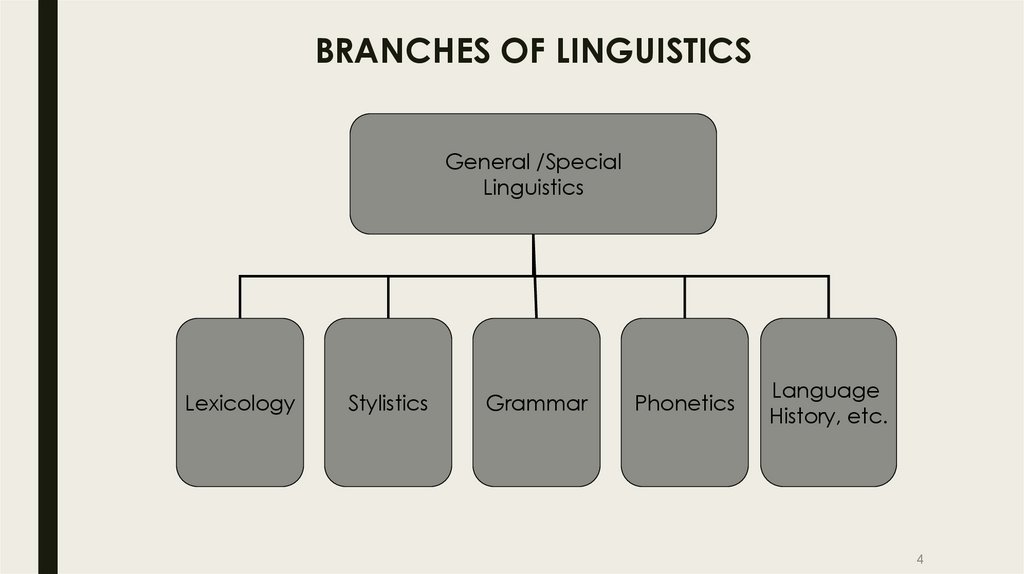
BRANCHES OF LINGUISTICSGeneral /Special
Linguistics
Lexicology
Stylistics
Grammar
Phonetics
Language
History, etc.
4
5. Branches of Lexicology
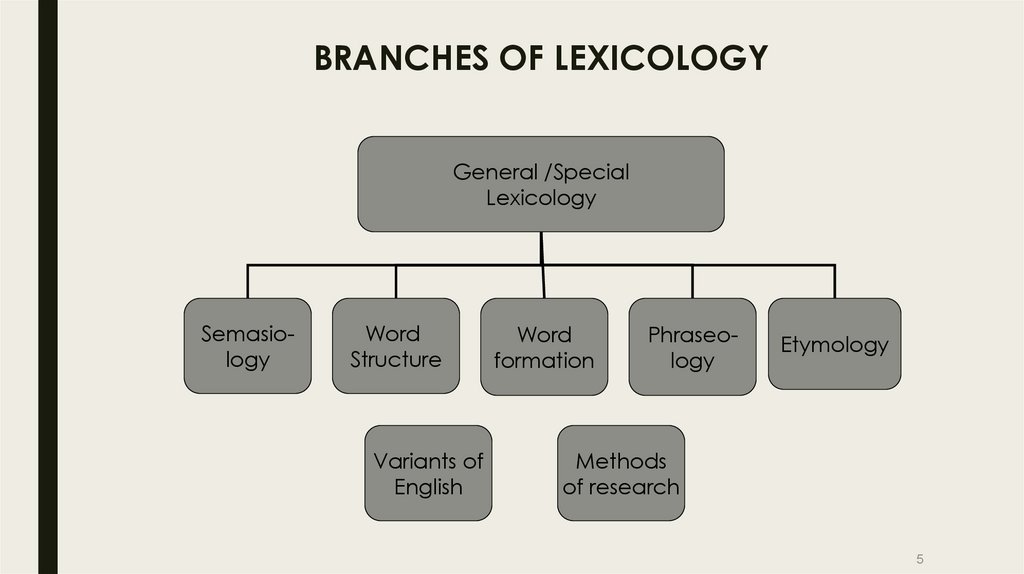
BRANCHES OF LEXICOLOGYGeneral /Special
Lexicology
Semasiology
Word
Structure
Variants of
English
Word
formation
Phraseology
Etymology
Methods
of research
5
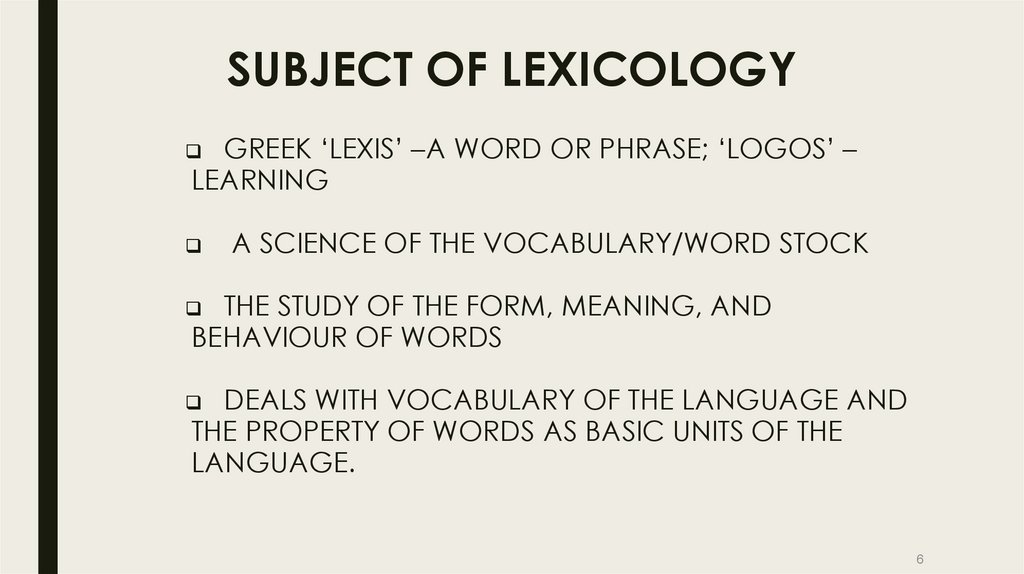
6. SUBJECT OF LEXICOLOGY
GREEK ‘LEXIS’ –A WORD OR PHRASE; ‘LOGOS’ –LEARNING
A SCIENCE OF THE VOCABULARY/WORD STOCK
THE STUDY OF THE FORM, MEANING, AND
BEHAVIOUR OF WORDS
DEALS WITH VOCABULARY OF THE LANGUAGE AND
THE PROPERTY OF WORDS AS BASIC UNITS OF THE
LANGUAGE.
6
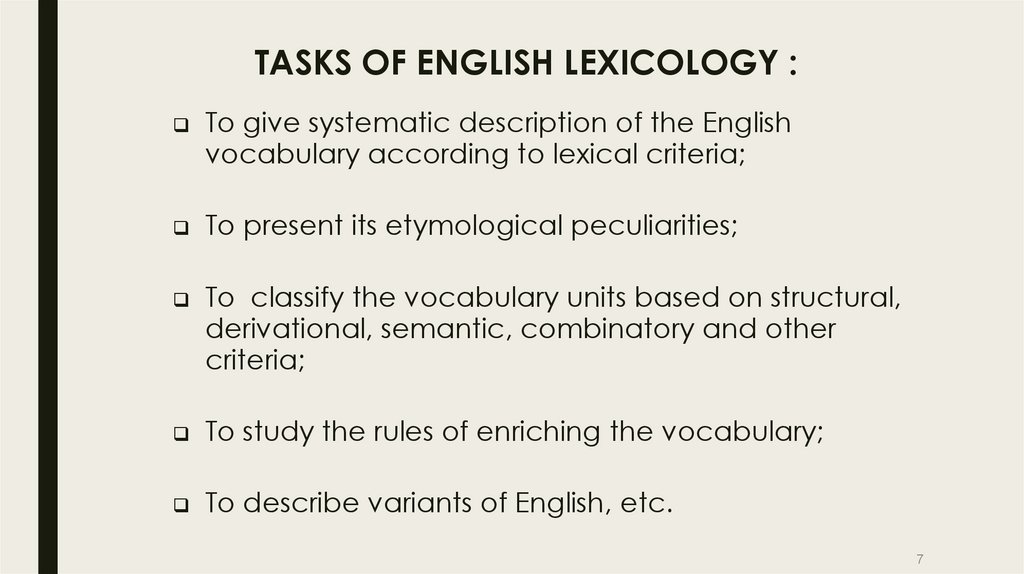
7. TASKS OF ENGLISH LEXICOLOGY :
To give systematic description of the Englishvocabulary according to lexical criteria;
To present its etymological peculiarities;
To classify the vocabulary units based on structural,
derivational, semantic, combinatory and other
criteria;
To study the rules of enriching the vocabulary;
To describe variants of English, etc.
7
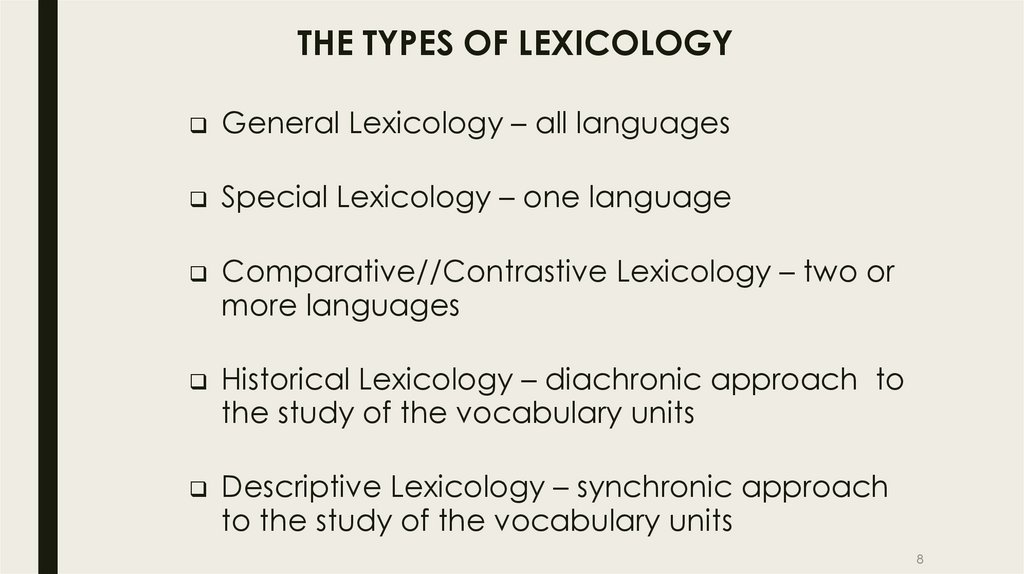
8. The types of Lexicology
THE TYPES OF LEXICOLOGYGeneral Lexicology – all languages
Special Lexicology – one language
Comparative//Contrastive Lexicology – two or
more languages
Historical Lexicology – diachronic approach
the study of the vocabulary units
to
Descriptive Lexicology – synchronic approach
to the study of the vocabulary units
8
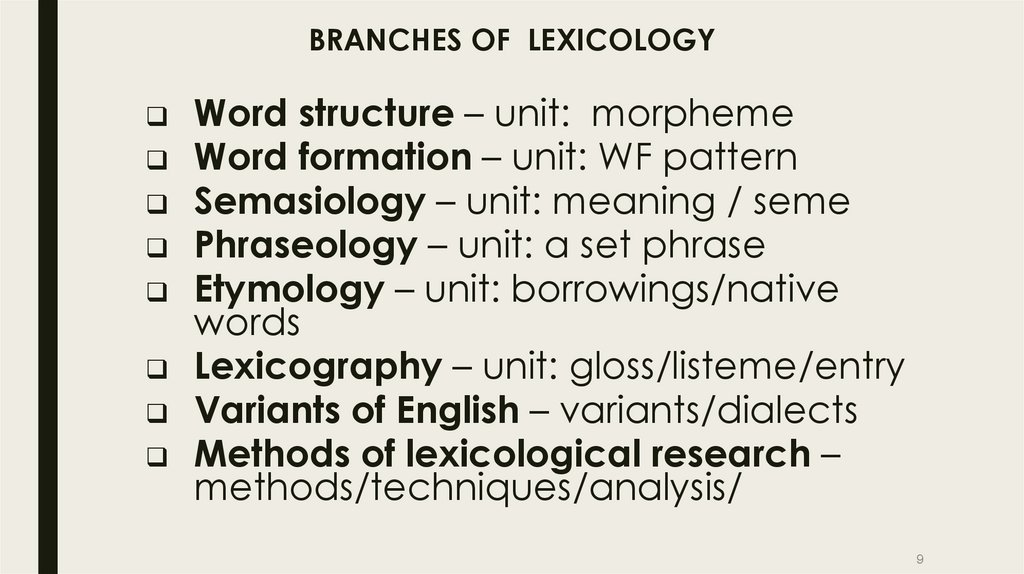
9. branches of Lexicology
BRANCHES OF LEXICOLOGYWord structure – unit: morpheme
Word formation – unit: WF pattern
Semasiology – unit: meaning / seme
Phraseology – unit: a set phrase
Etymology – unit: borrowings/native
words
Lexicography – unit: gloss/listeme/entry
Variants of English – variants/dialects
Methods of lexicological research –
methods/techniques/analysis/
9
10. Vocabulary /Lexicology units
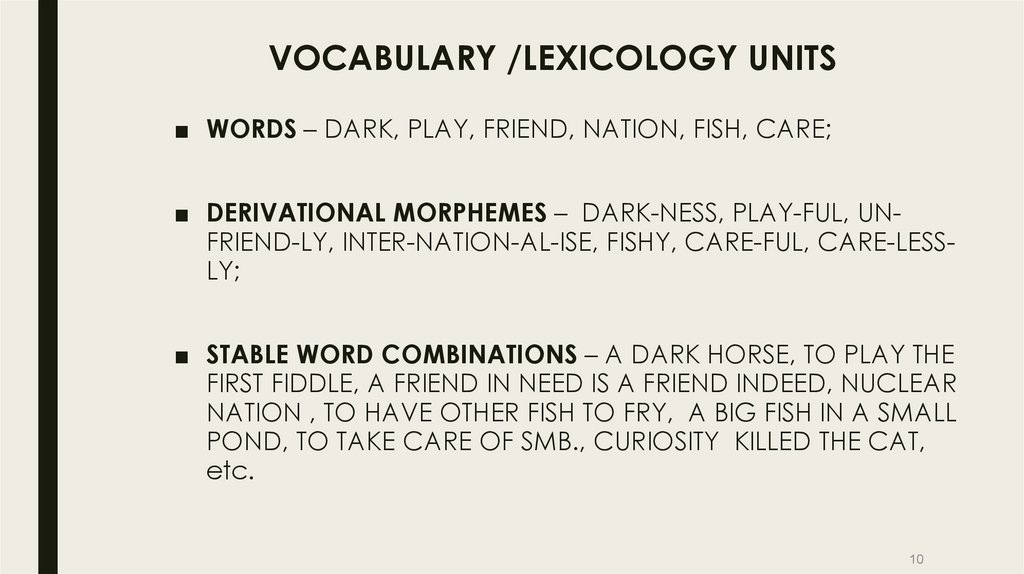
VOCABULARY /LEXICOLOGY UNITS■ WORDS – DARK, PLAY, FRIEND, NATION, FISH, CARE;
■ DERIVATIONAL MORPHEMES – DARK-NESS, PLAY-FUL, UNFRIEND-LY, INTER-NATION-AL-ISE, FISHY, CARE-FUL, CARE-LESSLY;
■ STABLE WORD COMBINATIONS – A DARK HORSE, TO PLAY THE
FIRST FIDDLE, A FRIEND IN NEED IS A FRIEND INDEED, NUCLEAR
NATION , TO HAVE OTHER FISH TO FRY, A BIG FISH IN A SMALL
POND, TO TAKE CARE OF SMB., CURIOSITY KILLED THE CAT,
etc.
10
11. Methods of lexicological research:
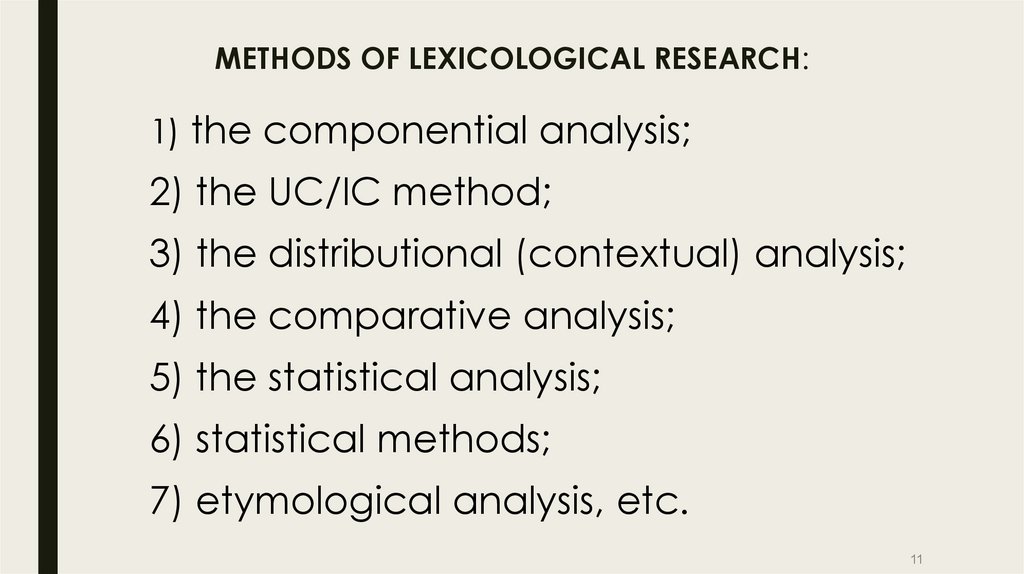
METHODS OF LEXICOLOGICAL RESEARCH:1) the componential analysis;
2) the UC/IC method;
3) the distributional (contextual) analysis;
4) the comparative analysis;
5) the statistical analysis;
6) statistical methods;
7) etymological analysis, etc.
11
12. CONCLUSION
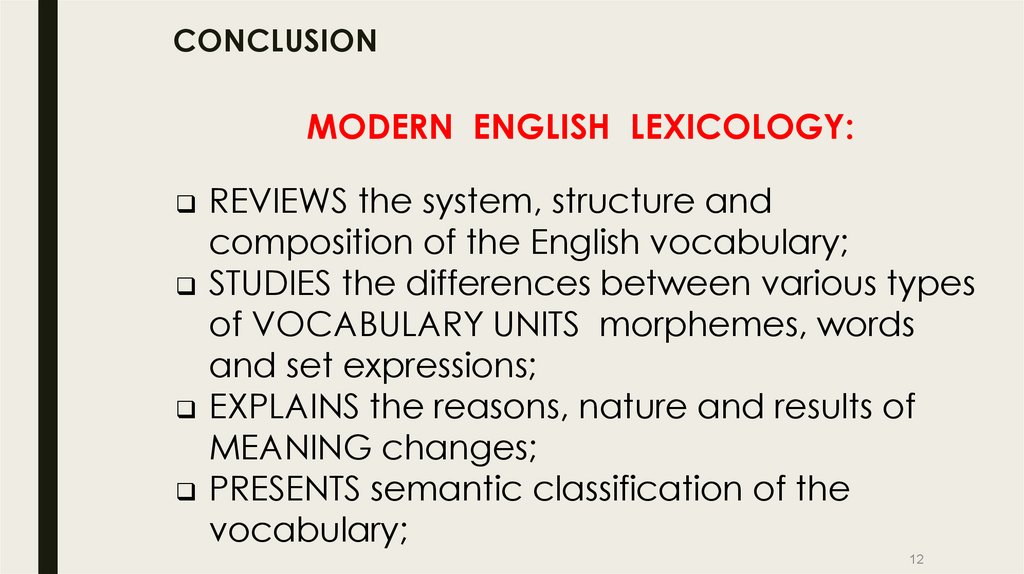
MODERN ENGLISH LEXICOLOGY:REVIEWS the system, structure and
composition of the English vocabulary;
STUDIES the differences between various types
of VOCABULARY UNITS morphemes, words
and set expressions;
EXPLAINS the reasons, nature and results of
MEANING changes;
PRESENTS semantic classification of the
vocabulary;
12
13. Modern English Lexicology
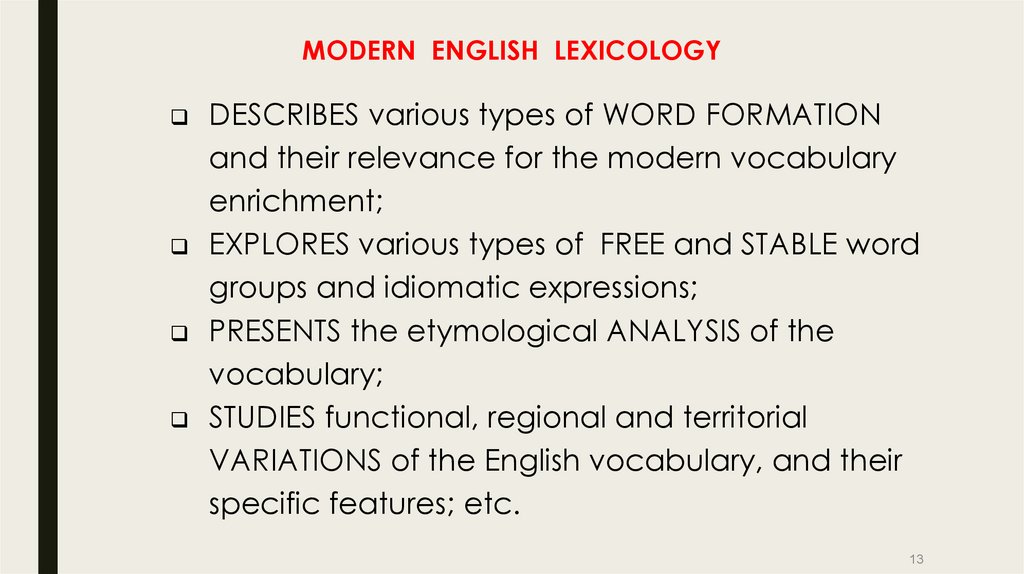
MODERN ENGLISH LEXICOLOGYDESCRIBES various types of WORD FORMATION
and their relevance for the modern vocabulary
enrichment;
EXPLORES various types of FREE and STABLE word
groups and idiomatic expressions;
PRESENTS the etymological ANALYSIS of the
vocabulary;
STUDIES functional, regional and territorial
VARIATIONS of the English vocabulary, and their
specific features; etc.
13