

 history
Similar presentations:



Tourism abdunabiyeva sevinch
1.
TourismAbdunabiyeva Sevinch
2.
2 World Tourism day3 Types of tourisms
CONTENTS
Tourism
1 General information
4 History of tourism
3.
PART. 1G e n e r a l
information
4.
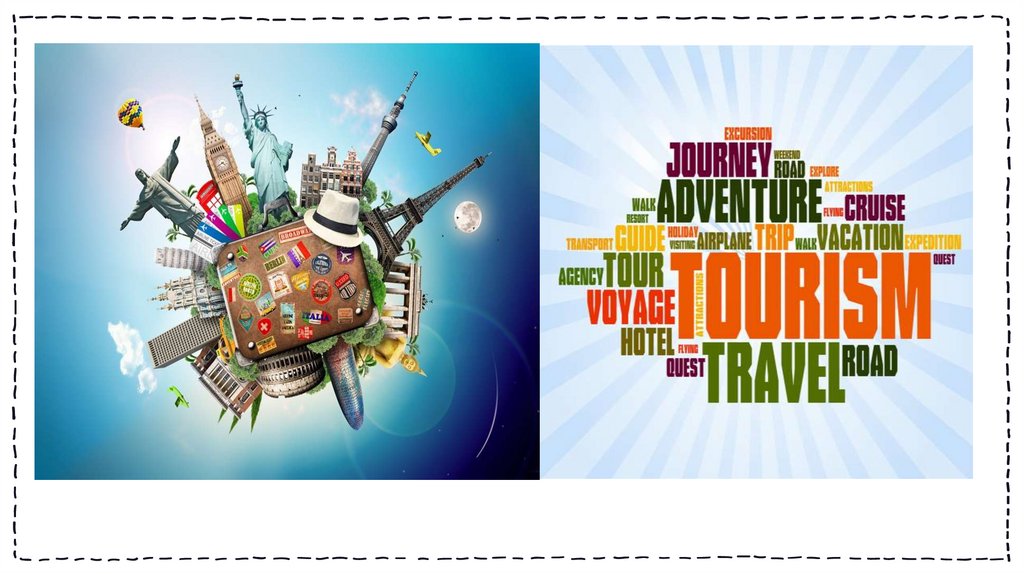
“Tourism” means the temporary short-termmovement of people to destinations outside
the places where they normally live and
work, as well as their activities during their
stay at these destinations. It should be
noted that all tourism should have some
travel, but not all travel is tourism.
5.
6.
PART. 2World Tourism day
7.
TourismWorld Tourism Day has been held on 27
September each year since 1980. The date
marks the anniversary of the adoption of the
Statutes of the Organization in 1970, paving the
way for the establishment of UNWTO five years
later.
8.
PART. 3Types of tourism
9.
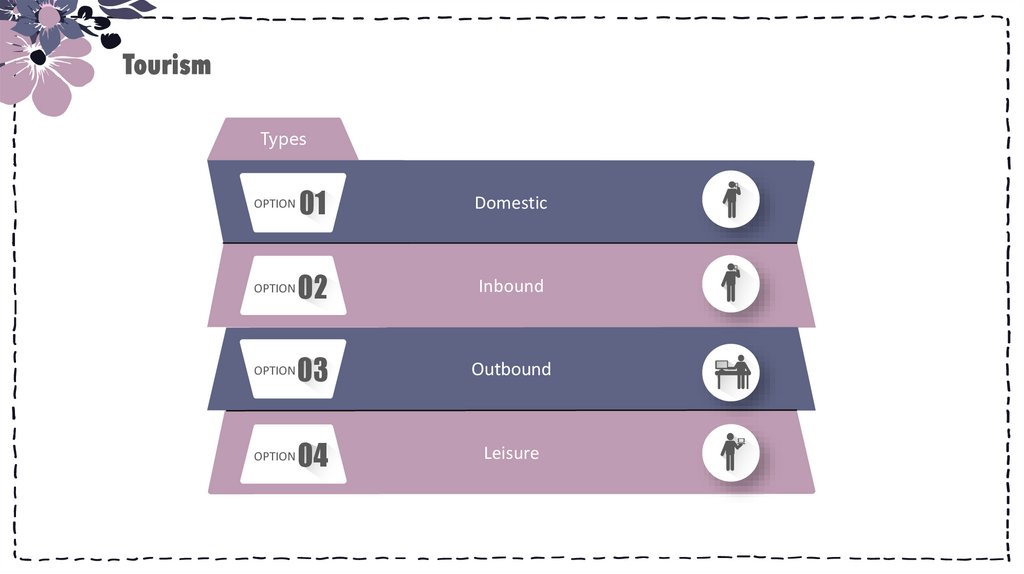
TourismTypes
OPTION
01
Domestic
OPTION
02
Inbound
OPTION
03
Outbound
OPTION
04
Leisure
10.
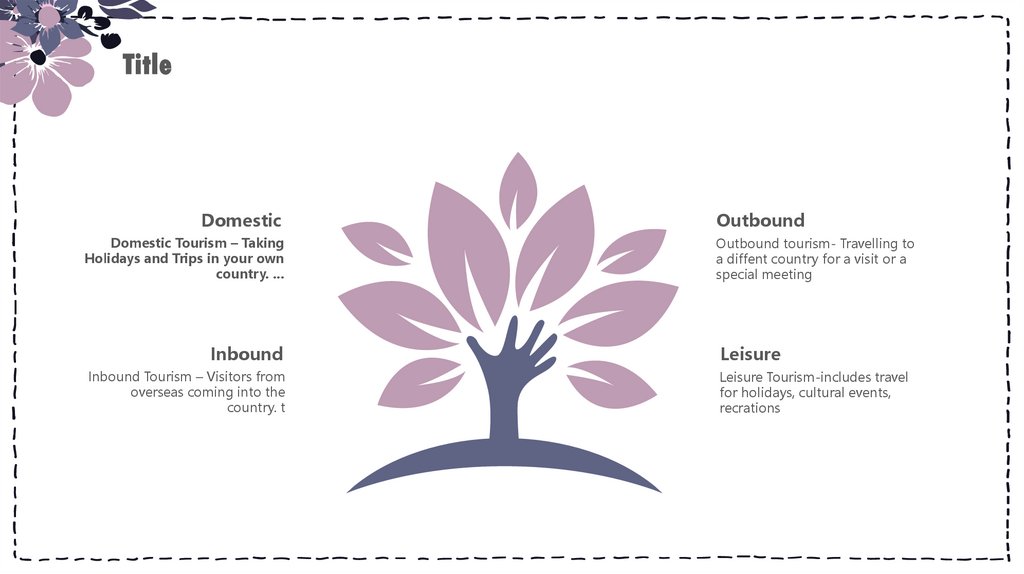
TitleDomestic
Domestic Tourism – Taking
Holidays and Trips in your own
country. ...
Inbound
Inbound Tourism – Visitors from
overseas coming into the
country. t
Outbound
Outbound tourism- Travelling to
a diffent country for a visit or a
special meeting
Leisure
Leisure Tourism-includes travel
for holidays, cultural events,
recrations
11.
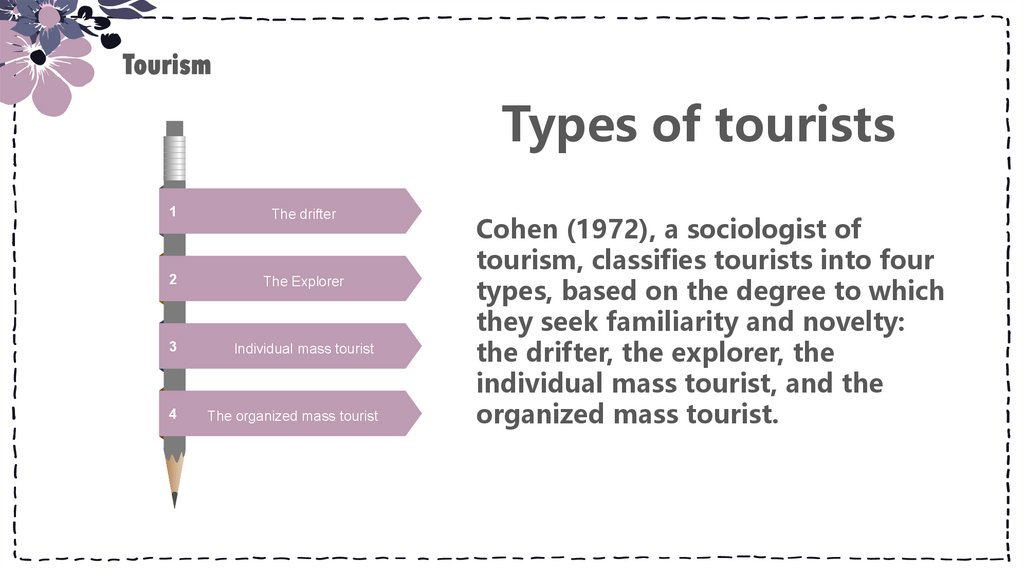
TourismTypes of tourists
1
The drifter
2
The Explorer
3
Individual mass tourist
4
The organized mass tourist
Cohen (1972), a sociologist of
tourism, classifies tourists into four
types, based on the degree to which
they seek familiarity and novelty:
the drifter, the explorer, the
individual mass tourist, and the
organized mass tourist.
12.
PART. 4Histor y of
t o u r i s m
13.
TourismIMAGE
PLACEHOLDER
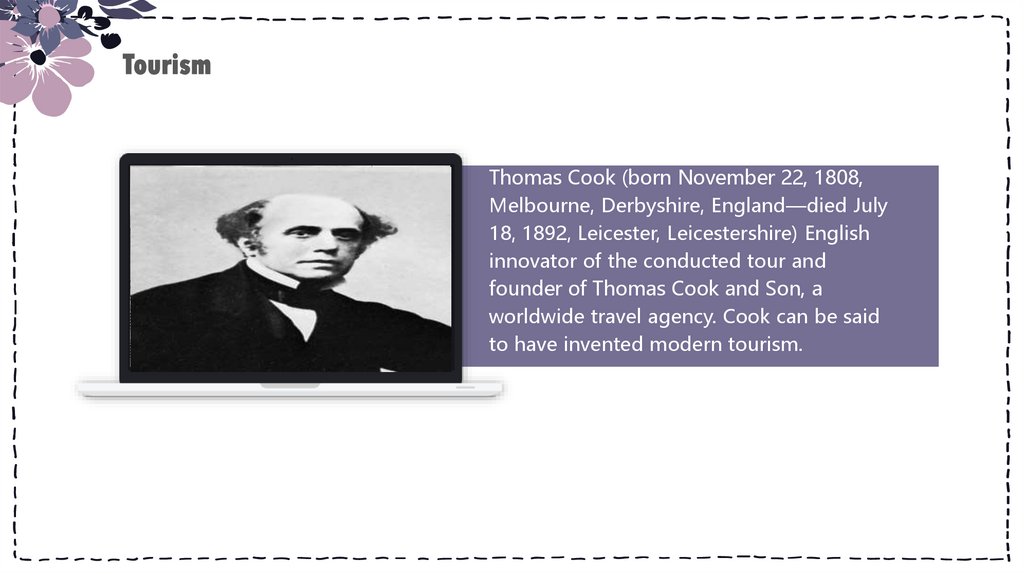
Thomas Cook (born November 22, 1808,
Melbourne, Derbyshire, England—died July
18, 1892, Leicester, Leicestershire) English
innovator of the conducted tour and
founder of Thomas Cook and Son, a
worldwide travel agency. Cook can be said
to have invented modern tourism.
14.
Etymology. The English-language wordtourist was used in 1772 and tourism
in 1811. These words derive from the
word tour, which comes from Old
English turian, from Old French torner,
from Latin tornare - "to turn on a
lathe", which is itself from Ancient
Greek tornos (τόρνος) - "lathe".
15.
THANKSBy Abdunabiyeva Sevinch