Similar presentations:









Scandinavian style
1. Scandinavian style
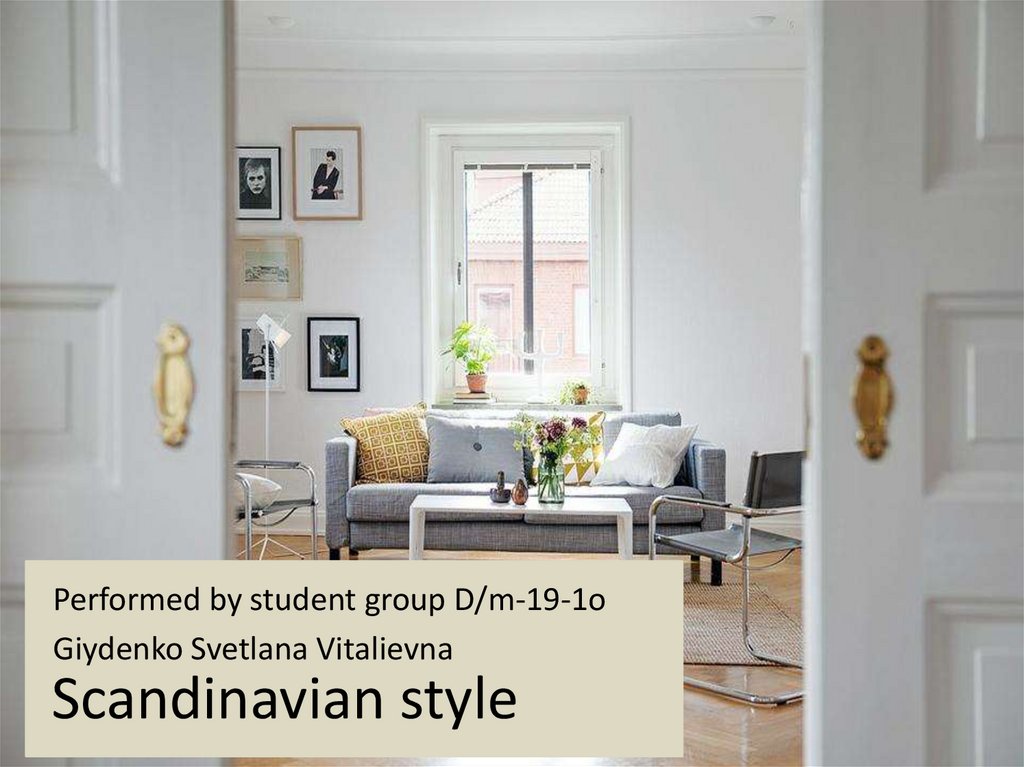
Performed by student group D/m-19-1oGiydenko Svetlana Vitalievna
Scandinavian style
2.
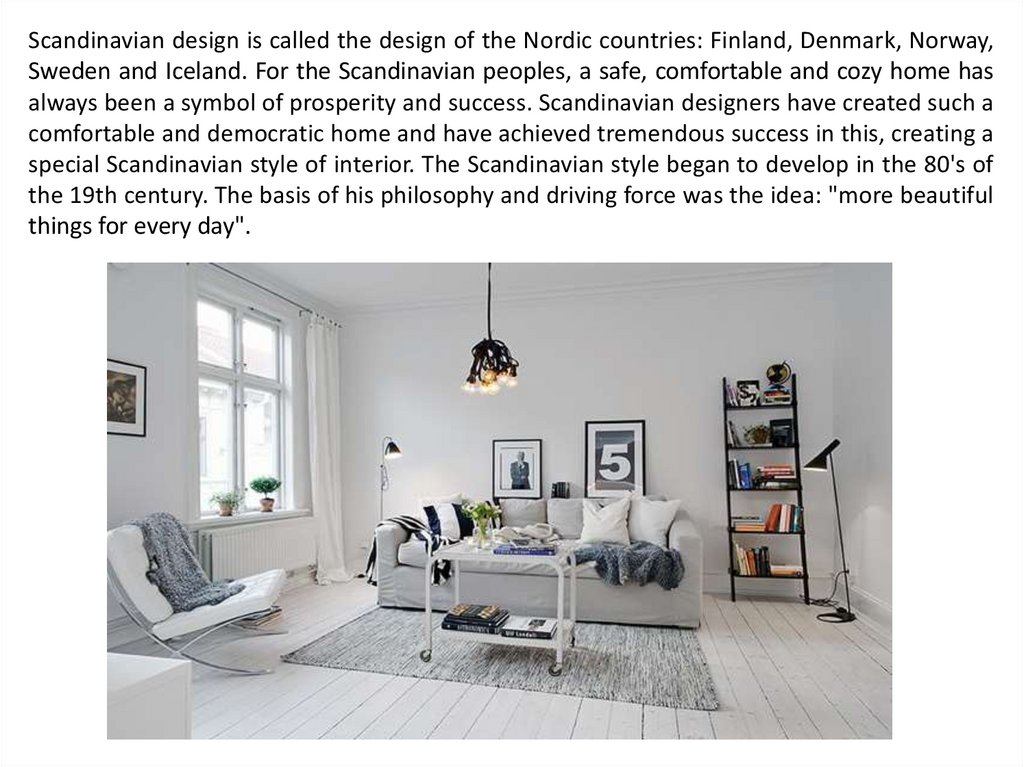
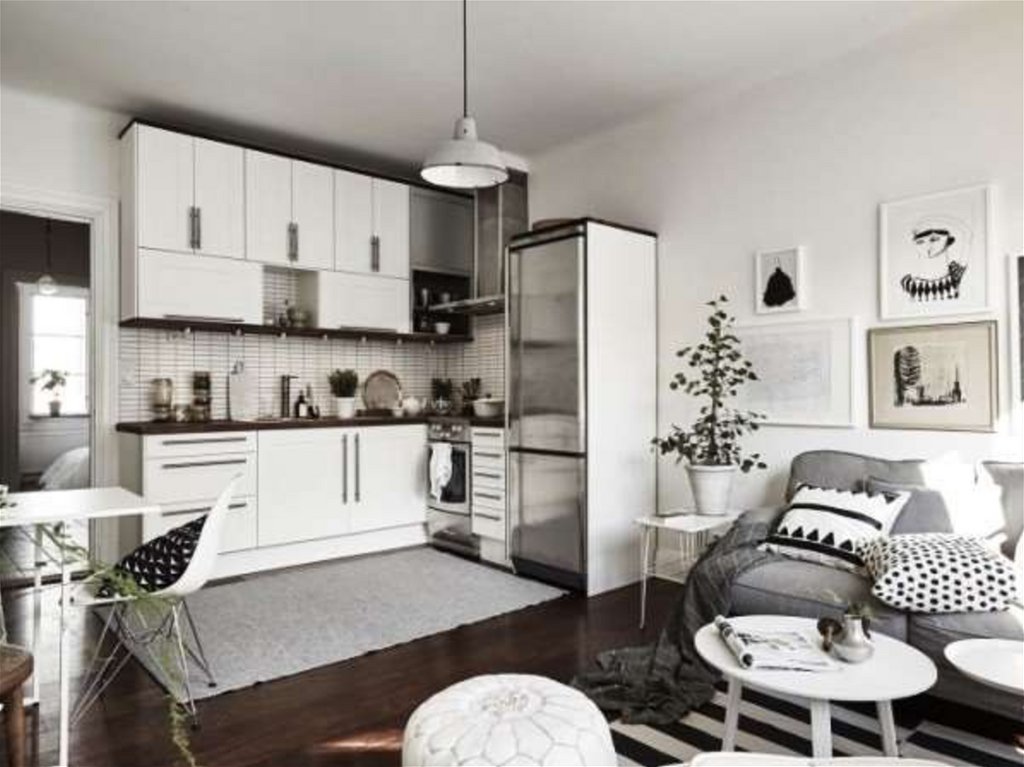
Scandinavian design is called the design of the Nordic countries: Finland, Denmark, Norway,Sweden and Iceland. For the Scandinavian peoples, a safe, comfortable and cozy home has
always been a symbol of prosperity and success. Scandinavian designers have created such a
comfortable and democratic home and have achieved tremendous success in this, creating a
special Scandinavian style of interior. The Scandinavian style began to develop in the 80's of
the 19th century. The basis of his philosophy and driving force was the idea: "more beautiful
things for every day".
3.
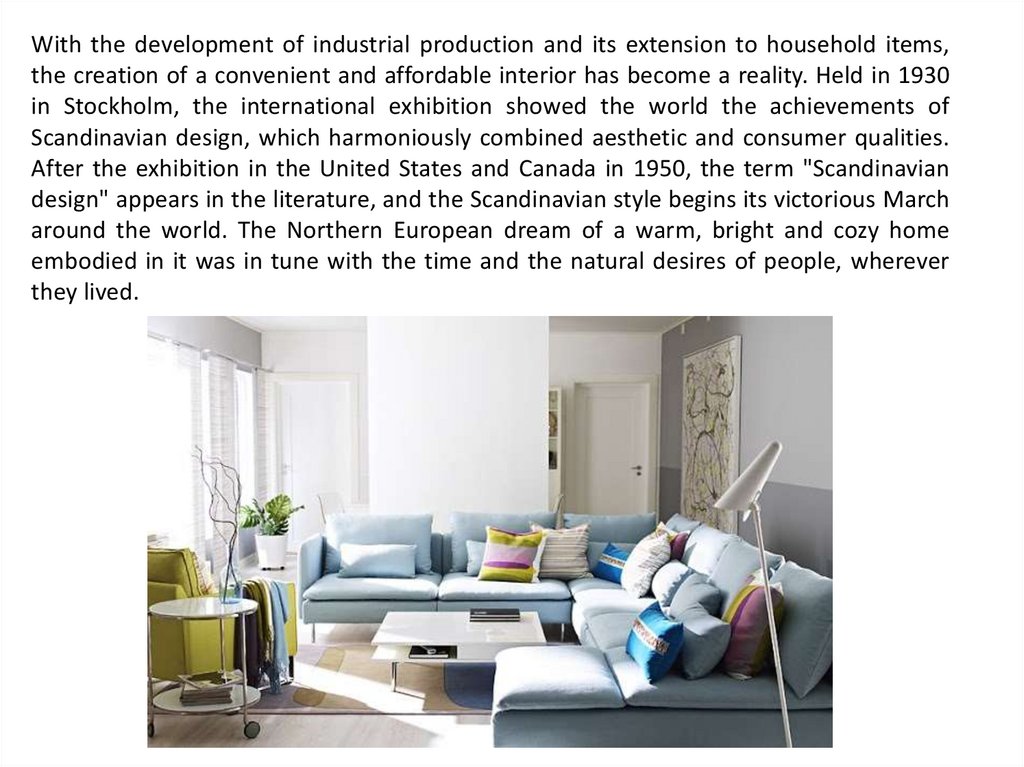
With the development of industrial production and its extension to household items,the creation of a convenient and affordable interior has become a reality. Held in 1930
in Stockholm, the international exhibition showed the world the achievements of
Scandinavian design, which harmoniously combined aesthetic and consumer qualities.
After the exhibition in the United States and Canada in 1950, the term "Scandinavian
design" appears in the literature, and the Scandinavian style begins its victorious March
around the world. The Northern European dream of a warm, bright and cozy home
embodied in it was in tune with the time and the natural desires of people, wherever
they lived.
4.
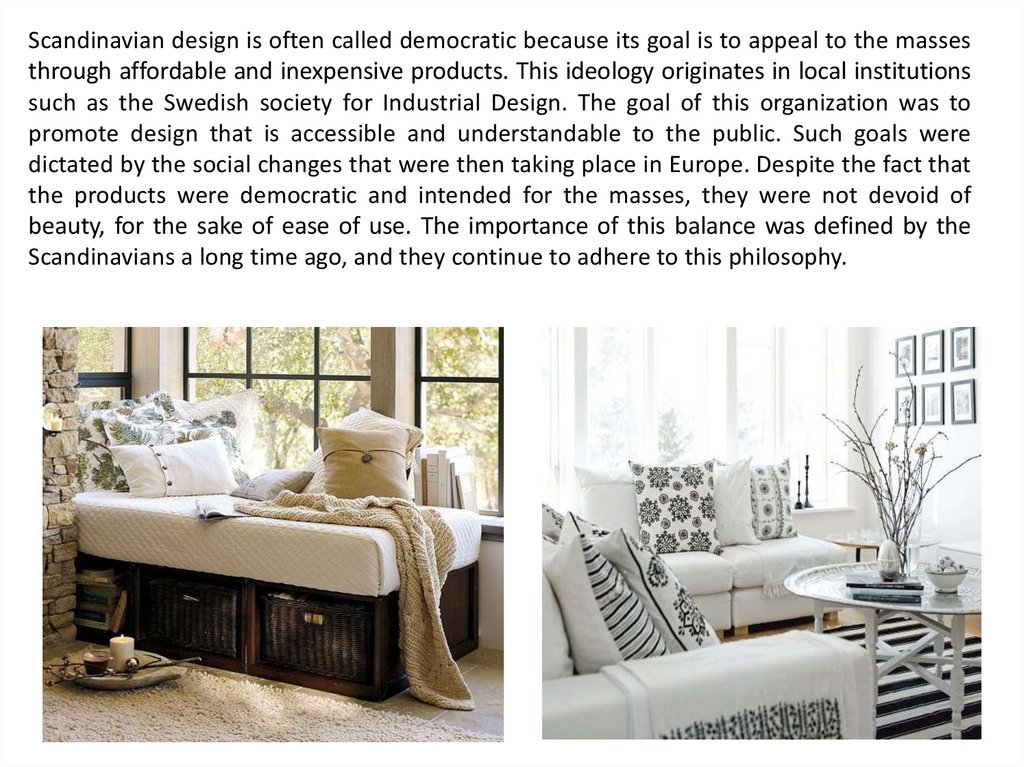
Scandinavian design is often called democratic because its goal is to appeal to the massesthrough affordable and inexpensive products. This ideology originates in local institutions
such as the Swedish society for Industrial Design. The goal of this organization was to
promote design that is accessible and understandable to the public. Such goals were
dictated by the social changes that were then taking place in Europe. Despite the fact that
the products were democratic and intended for the masses, they were not devoid of
beauty, for the sake of ease of use. The importance of this balance was defined by the
Scandinavians a long time ago, and they continue to adhere to this philosophy.
5.
6.
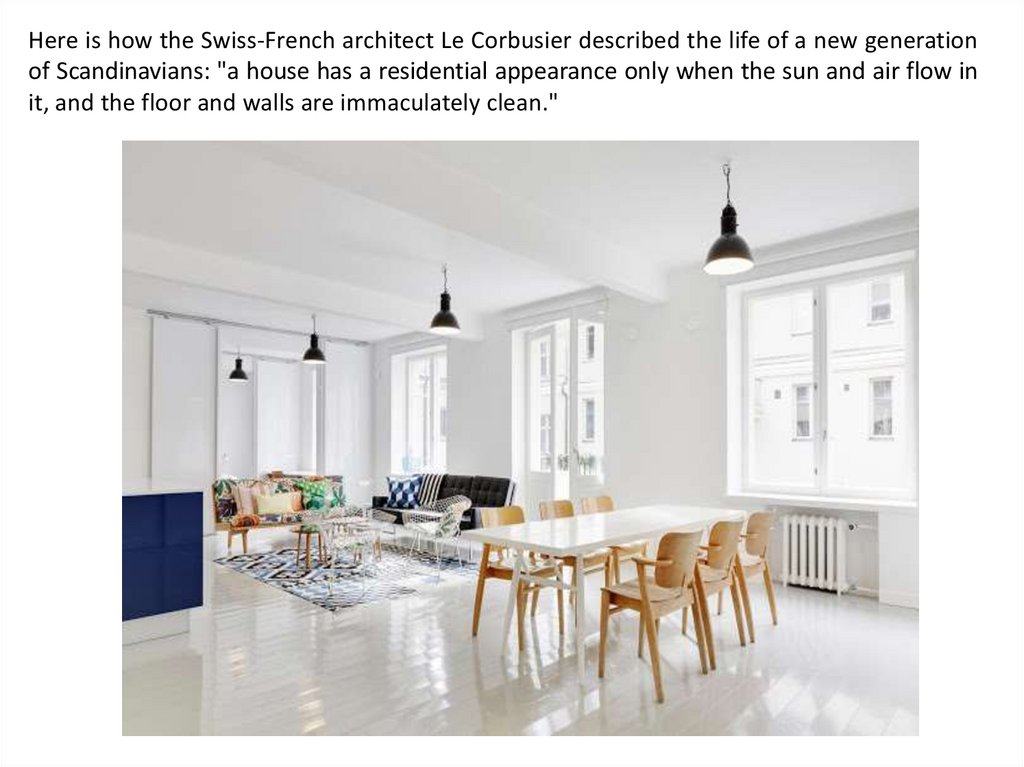
Here is how the Swiss-French architect Le Corbusier described the life of a new generationof Scandinavians: "a house has a residential appearance only when the sun and air flow in
it, and the floor and walls are immaculately clean."
7.
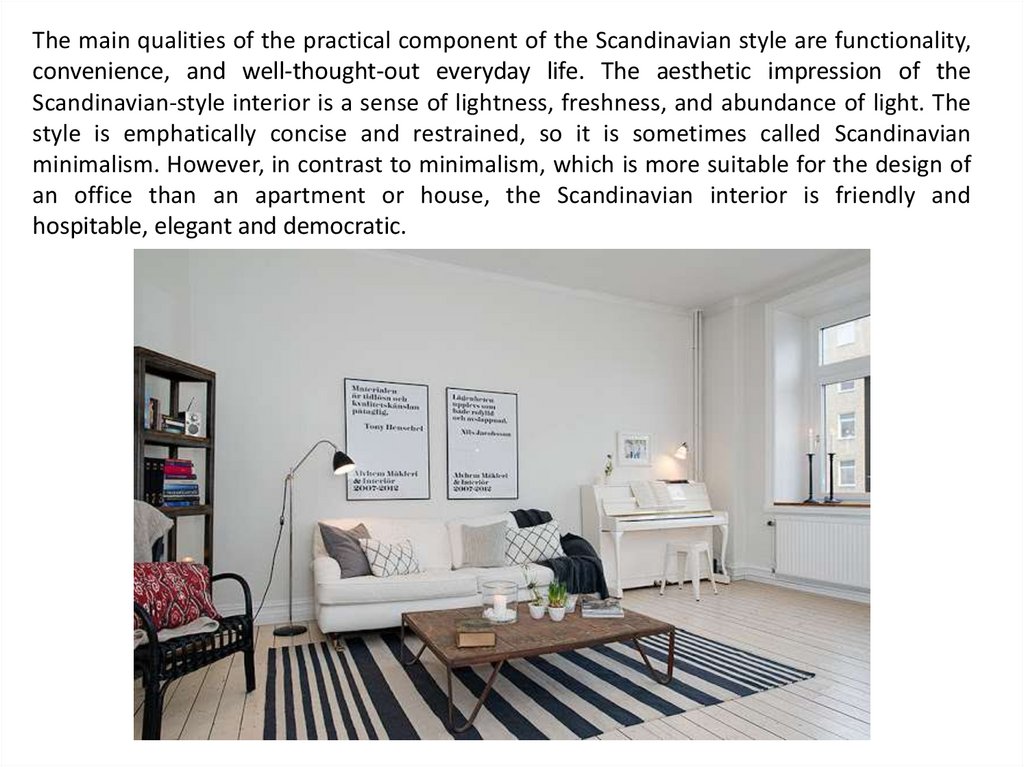
The main qualities of the practical component of the Scandinavian style are functionality,convenience, and well-thought-out everyday life. The aesthetic impression of the
Scandinavian-style interior is a sense of lightness, freshness, and abundance of light. The
style is emphatically concise and restrained, so it is sometimes called Scandinavian
minimalism. However, in contrast to minimalism, which is more suitable for the design of
an office than an apartment or house, the Scandinavian interior is friendly and
hospitable, elegant and democratic.
8.
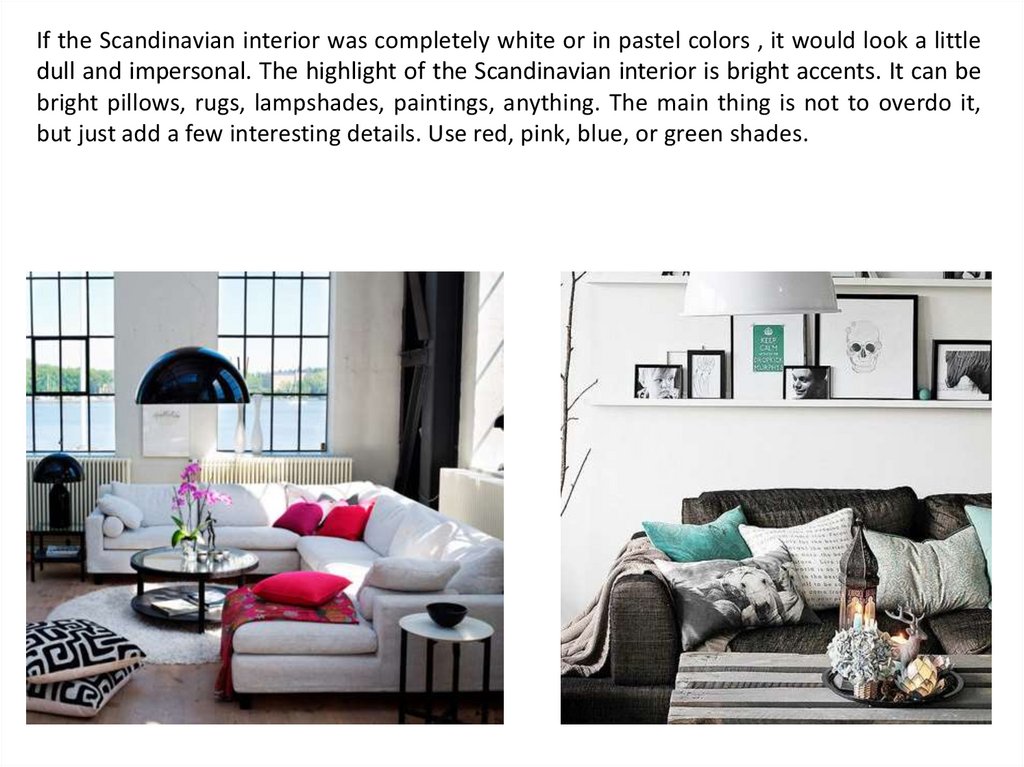
If the Scandinavian interior was completely white or in pastel colors , it would look a littledull and impersonal. The highlight of the Scandinavian interior is bright accents. It can be
bright pillows, rugs, lampshades, paintings, anything. The main thing is not to overdo it,
but just add a few interesting details. Use red, pink, blue, or green shades.
9.
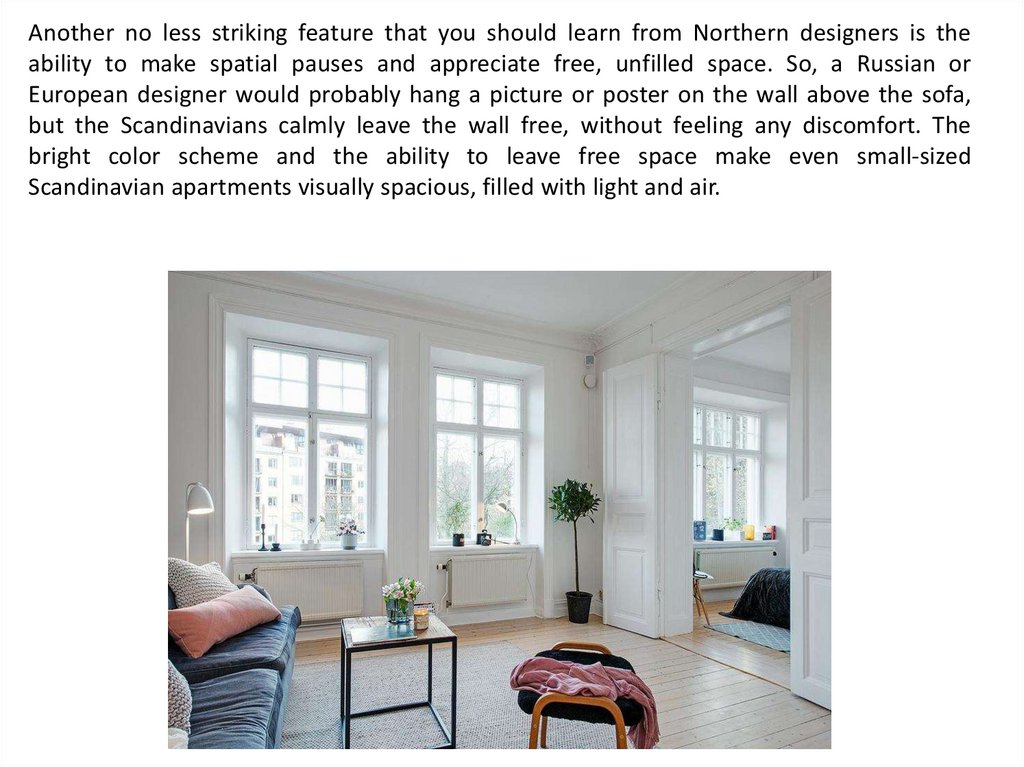
Another no less striking feature that you should learn from Northern designers is theability to make spatial pauses and appreciate free, unfilled space. So, a Russian or
European designer would probably hang a picture or poster on the wall above the sofa,
but the Scandinavians calmly leave the wall free, without feeling any discomfort. The
bright color scheme and the ability to leave free space make even small-sized
Scandinavian apartments visually spacious, filled with light and air.
10.
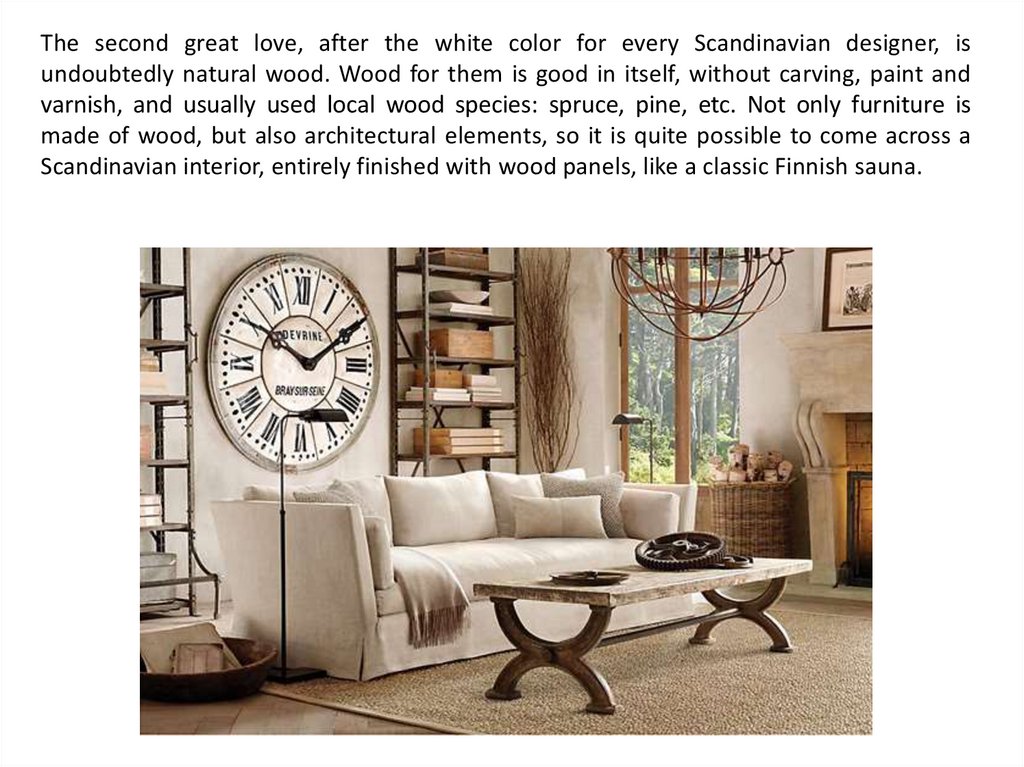
The second great love, after the white color for every Scandinavian designer, isundoubtedly natural wood. Wood for them is good in itself, without carving, paint and
varnish, and usually used local wood species: spruce, pine, etc. Not only furniture is
made of wood, but also architectural elements, so it is quite possible to come across a
Scandinavian interior, entirely finished with wood panels, like a classic Finnish sauna.
11.
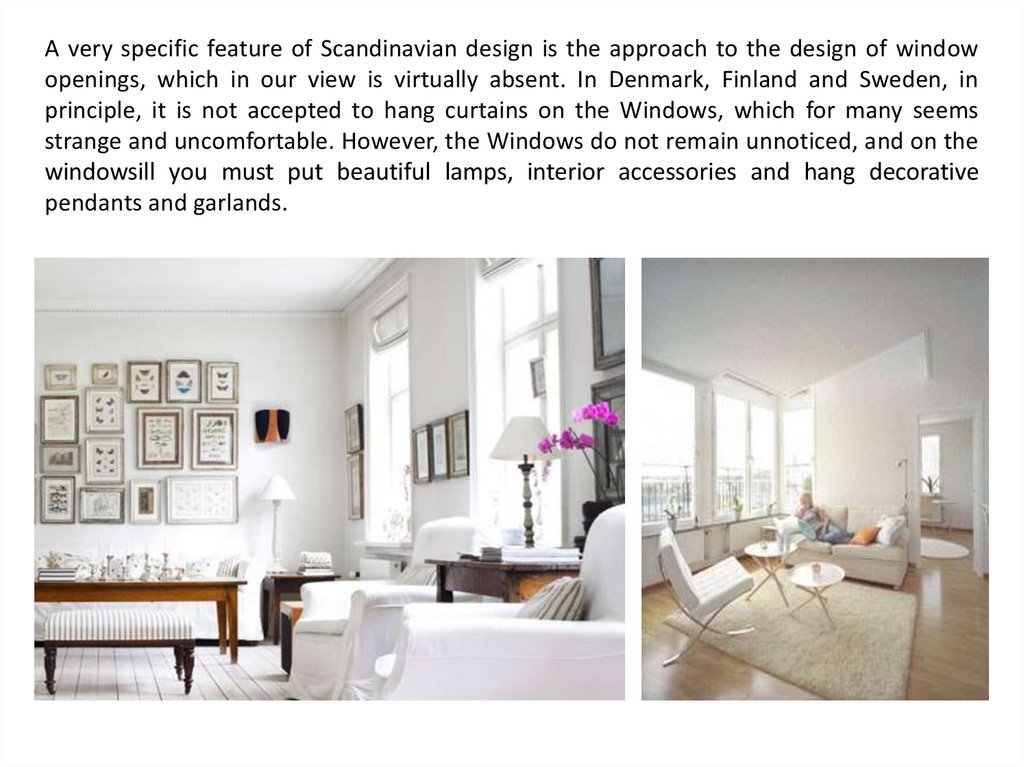
A very specific feature of Scandinavian design is the approach to the design of windowopenings, which in our view is virtually absent. In Denmark, Finland and Sweden, in
principle, it is not accepted to hang curtains on the Windows, which for many seems
strange and uncomfortable. However, the Windows do not remain unnoticed, and on the
windowsill you must put beautiful lamps, interior accessories and hang decorative
pendants and garlands.
12.
13.
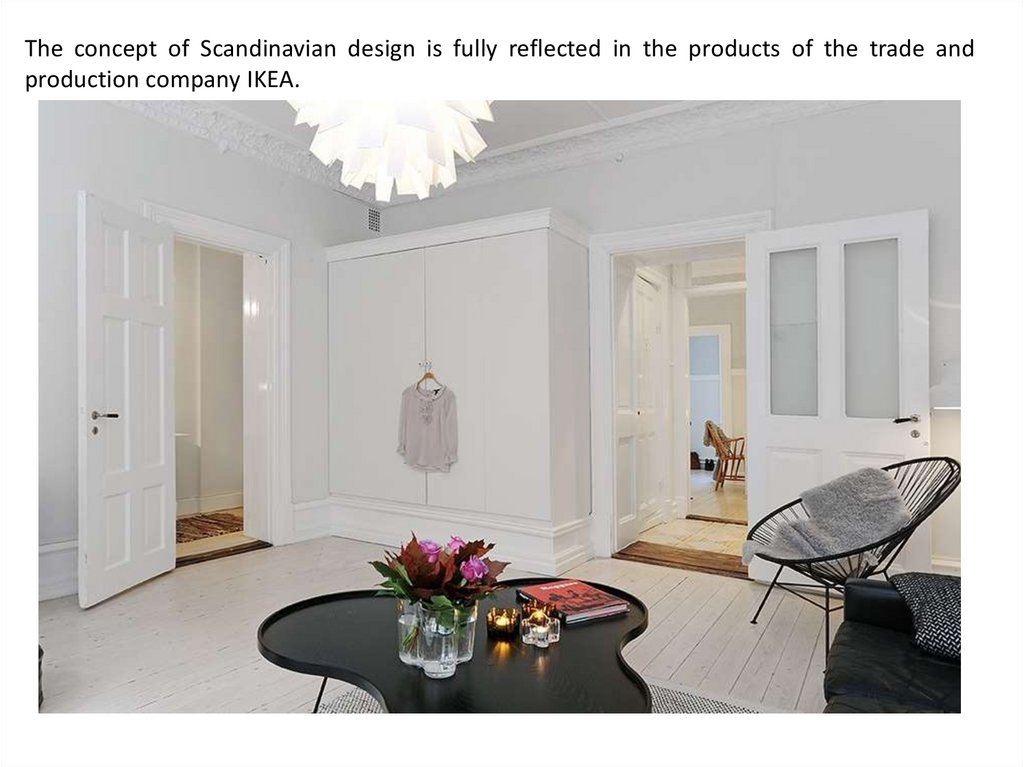
The concept of Scandinavian design is fully reflected in the products of the trade andproduction company IKEA.
14.
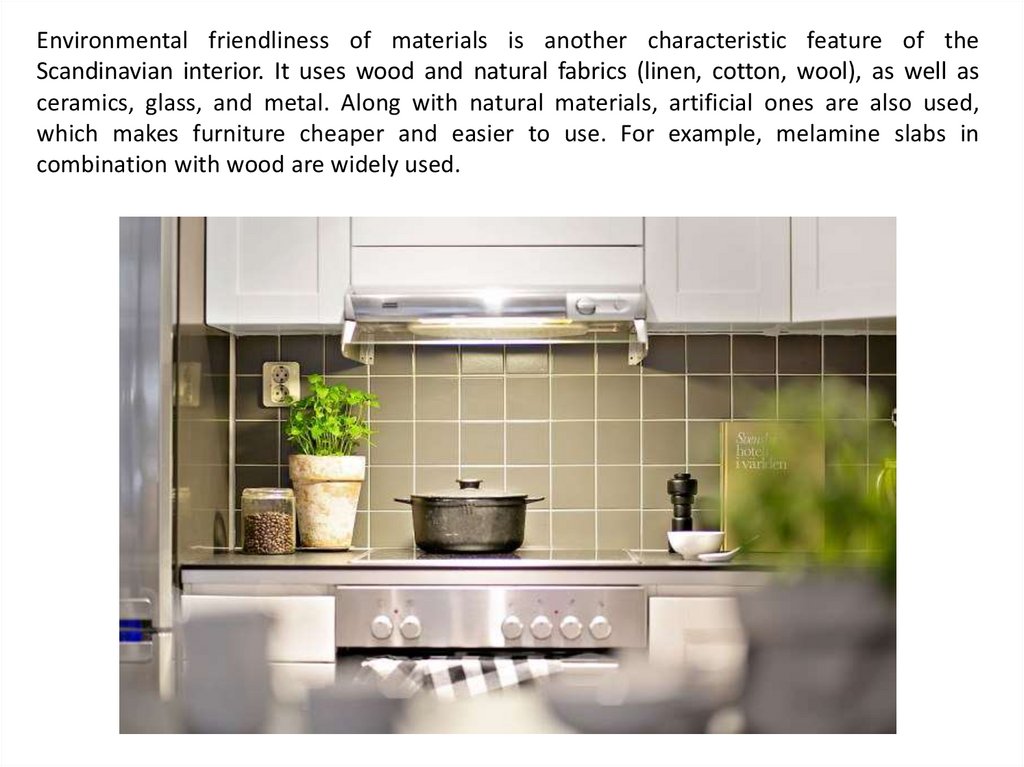
Environmental friendliness of materials is another characteristic feature of theScandinavian interior. It uses wood and natural fabrics (linen, cotton, wool), as well as
ceramics, glass, and metal. Along with natural materials, artificial ones are also used,
which makes furniture cheaper and easier to use. For example, melamine slabs in
combination with wood are widely used.
15.
16.
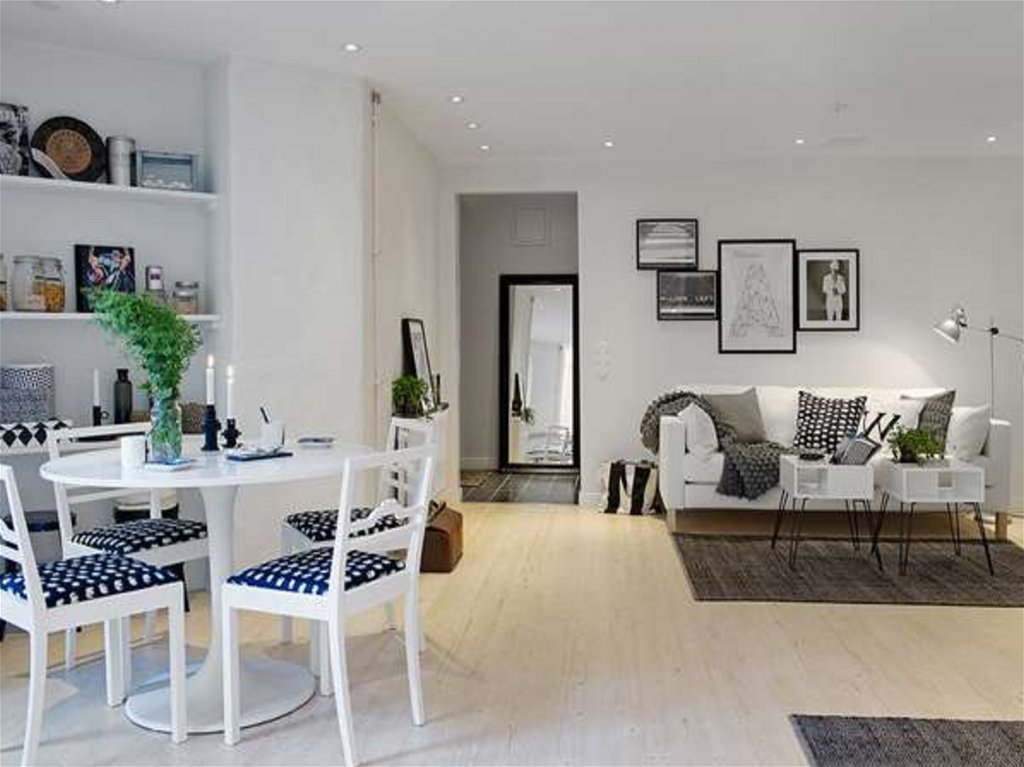
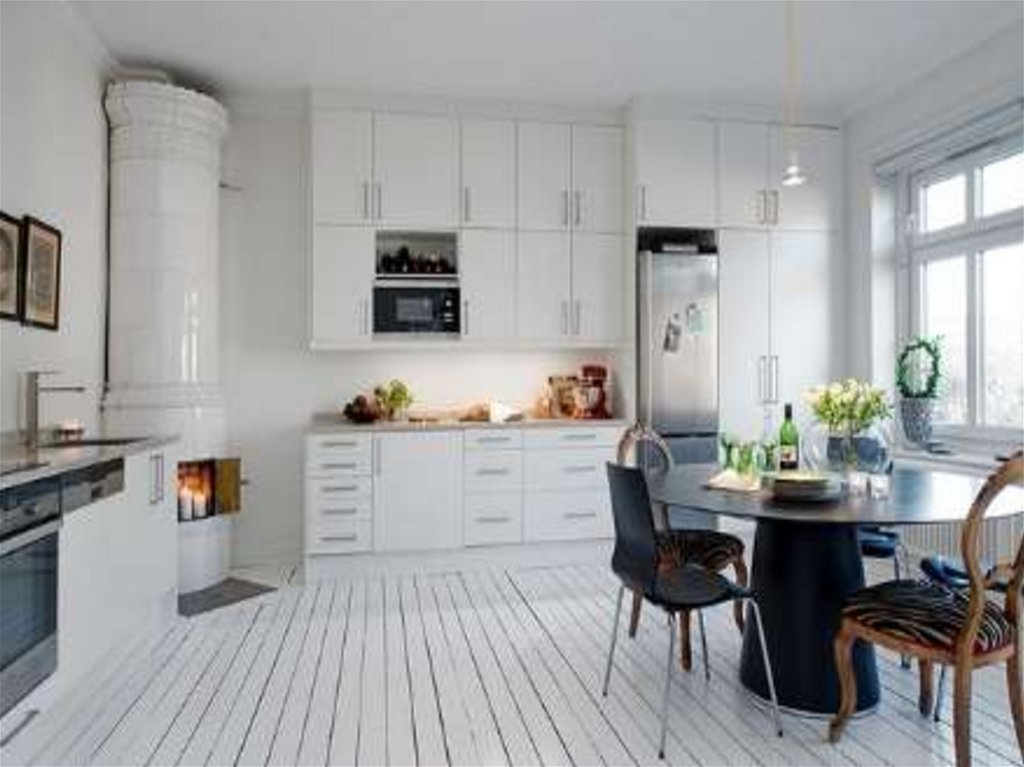
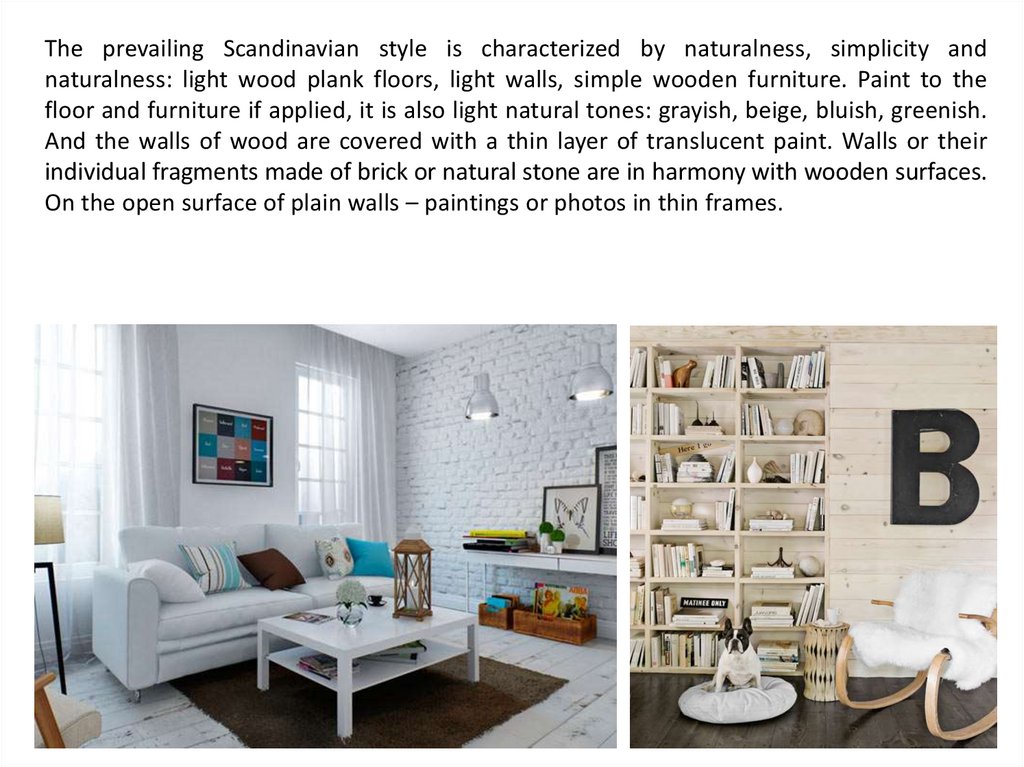
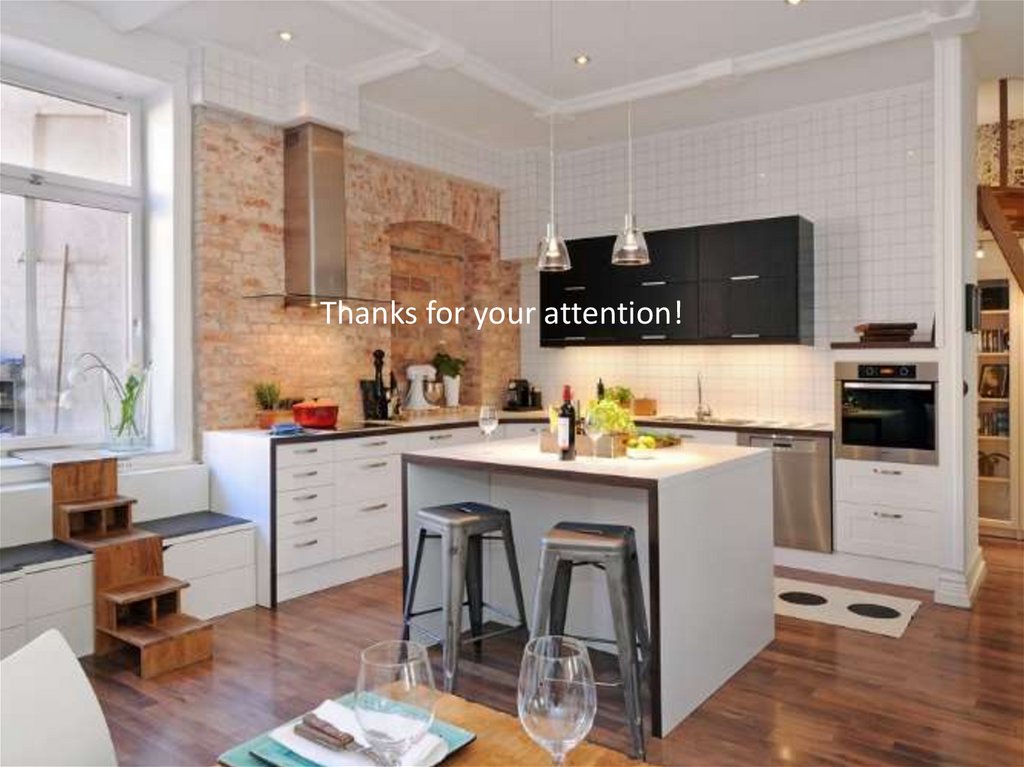
The prevailing Scandinavian style is characterized by naturalness, simplicity andnaturalness: light wood plank floors, light walls, simple wooden furniture. Paint to the
floor and furniture if applied, it is also light natural tones: grayish, beige, bluish, greenish.
And the walls of wood are covered with a thin layer of translucent paint. Walls or their
individual fragments made of brick or natural stone are in harmony with wooden surfaces.
On the open surface of plain walls – paintings or photos in thin frames.